Women's Drawstring Dresses
One tie, your fit — the drawstring-waist dress adjusts to you, packs without a crease and styles loose or cinched in seconds.
Shop Women's Drawstring Dresses Now
Shop Women's Drawstring Dresses on Amazon Shop Women's Drawstring Dresses on eBayThe Amazon and eBay links on this page are affiliate links. If you make a purchase through them, Apparel Search may earn a commission.
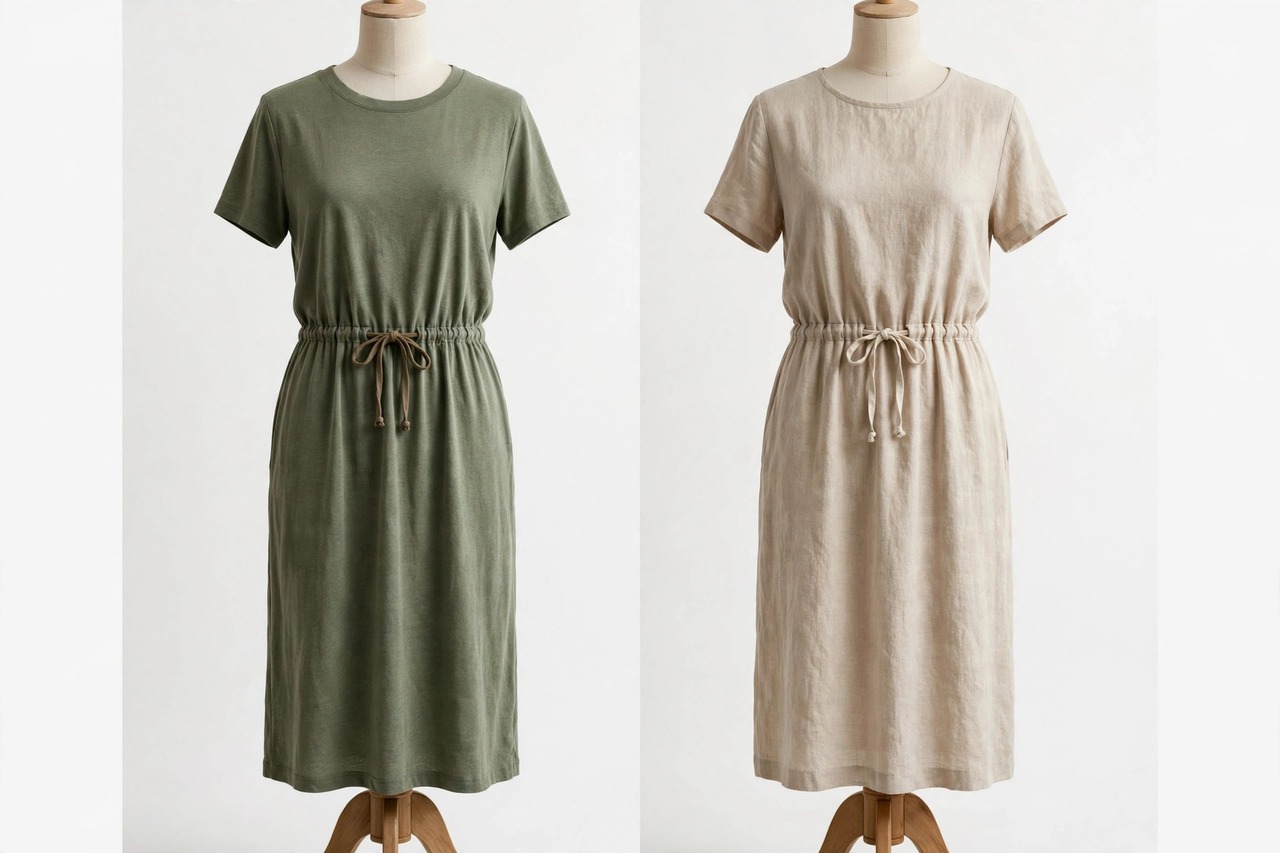
A drawstring dress defines its waist with a tie you control: a cord, tape, or self-fabric string threaded through a casing or loops at the natural waist, high empire line, or low hip, which you pull to gather the fabric as much or as little as you like. It is one of the most forgiving dress designs ever made, because the fit is not fixed by a zip or a rigid seam — it adjusts to your body, your lunch, and your preference that day.
That adjustability is why the style keeps returning in casual collections. In soft jersey it is a travel hero, in linen it is a summer staple, and in chambray it borrows the ease of denim without the stiffness. This guide covers how the drawstring changes fit and silhouette, which fabrics suit it best, how to tie and style it well, and why it may be the most practical dress you pack or own.
How the Adjustable Fit Works
The mechanism is simple, but its placement changes everything. A drawstring at the natural waist creates the most definition and suits most figures, gathering volume evenly above and below. An empire drawstring, just under the bust, lengthens the leg line and skims the stomach, while a dropped or hip drawstring gives a relaxed, blouson top over a straighter skirt. Some dresses add elastic inside the casing for gentle hold with the tie as finishing detail; true drawstrings without elastic offer the widest adjustment range.
Fit the dress by its shoulders, bust, and hip first, with the tie loose: it should skim comfortably without pulling, because cinching is for shaping, not for making a too-small dress fit. Then draw the tie until the gathers sit smoothly and the waist feels defined but easy, and check in the mirror that fabric is distributed evenly rather than bunched at the front. Between sizes, many wearers prefer sizing for comfort and letting the drawstring do the tailoring, which is exactly what the design invites.
Fabrics and Silhouettes That Suit the Tie
The drawstring needs fabric that gathers gracefully. Cotton and modal jersey gather softly and feel effortless, linen and linen blends gather with a crisp, summery texture, and chambray gives light denim character while staying supple. Rayon challis and Tencel drape into fine, fluid gathers for a slightly dressier result, while heavy denim, stiff canvas, or bulky knits bunch uncomfortably and fight the casing, so they are rarely the right match.
Silhouettes range from the straight shift that gains a waist only when tied, to A-line and fit-and-gather styles with fuller skirts, tiered maxis where the tie tames the volume, and shirt-dress versions that combine buttons with a tie waist for double adjustability. Sleeve choices run from sleeveless and cap sleeves for summer to long sleeves in jersey for cooler months. Details to value include a well-stitched casing that does not twist, metal or finished aglets or neatly knotted cord ends, and side pockets placed so they do not distort the gathers.
Styling the Tie and Wearing It Well
How you tie it is the styling. A simple bow at the centre front reads classic and neat, a single knot with long hanging ends feels relaxed and modern, and tying slightly to the side softens the symmetry for casual wear. Wear it fully cinched with sandals and a structured bag for a defined daytime look, half-loosened over trainers for weekend ease, or completely loose as a shift when you want straight, unfussy lines — three dresses from one garment.
Layering flatters the shape when you keep the waist in mind: cropped or open jackets that end above or at the tie preserve definition, while a long cardigan worn open creates vertical lines without hiding the gather entirely. Belting over the drawstring is rarely needed and can look bulky; if you want a different finish, swap the self tie for a contrasting cord or slim belt through the same casing on styles that allow it. Footwear is flexible, from flat sandals and espadrilles in summer to ankle boots and loafers as the fabric weight increases.
Travel-Friendliness and Simple Care
Few dresses travel better. A jersey or Tencel drawstring dress rolls compactly, resists hard creases because the gathers disguise light wrinkling, adapts if your fit fluctuates on a trip, and dresses up or down with a shoe change. For flights, the adjustable waist is a genuine comfort feature on long sitting days.
Care is straightforward for the usual fabrics: machine wash cold and gentle for jersey, chambray, and most linen blends, turning the dress inside out and tying the drawstring in a loose bow first so it does not tangle or pull free in the wash. Hang or lay flat to dry, smooth the casing while damp, and give linen its natural relaxed press rather than chasing a board-flat finish. Check cord ends and casing stitching occasionally, re-thread a tie easily with a safety pin if it escapes, and your drawstring dress will stay the most adaptable piece in the wardrobe.
Related Women's Guides
Photos

More to Explore on Apparel Search
Looking for Women's Clothing Stores?
This guide helps you choose women's drawstring dresses by label, style and fit. To browse where to buy, visit our women's clothing store directory, where you can find retailers that carry them.