Women's Bridal Gowns Guide
When the dress is the event — full-length gowns, sweeping trains, and the fabrics that justify the word gown.
Shop Women's Bridal Gowns Now
Shop Women's Bridal Gowns on Amazon Shop Women's Bridal Gowns on eBayThe Amazon and eBay links on this page are affiliate links. If you make a purchase through them, Apparel Search may earn a commission.
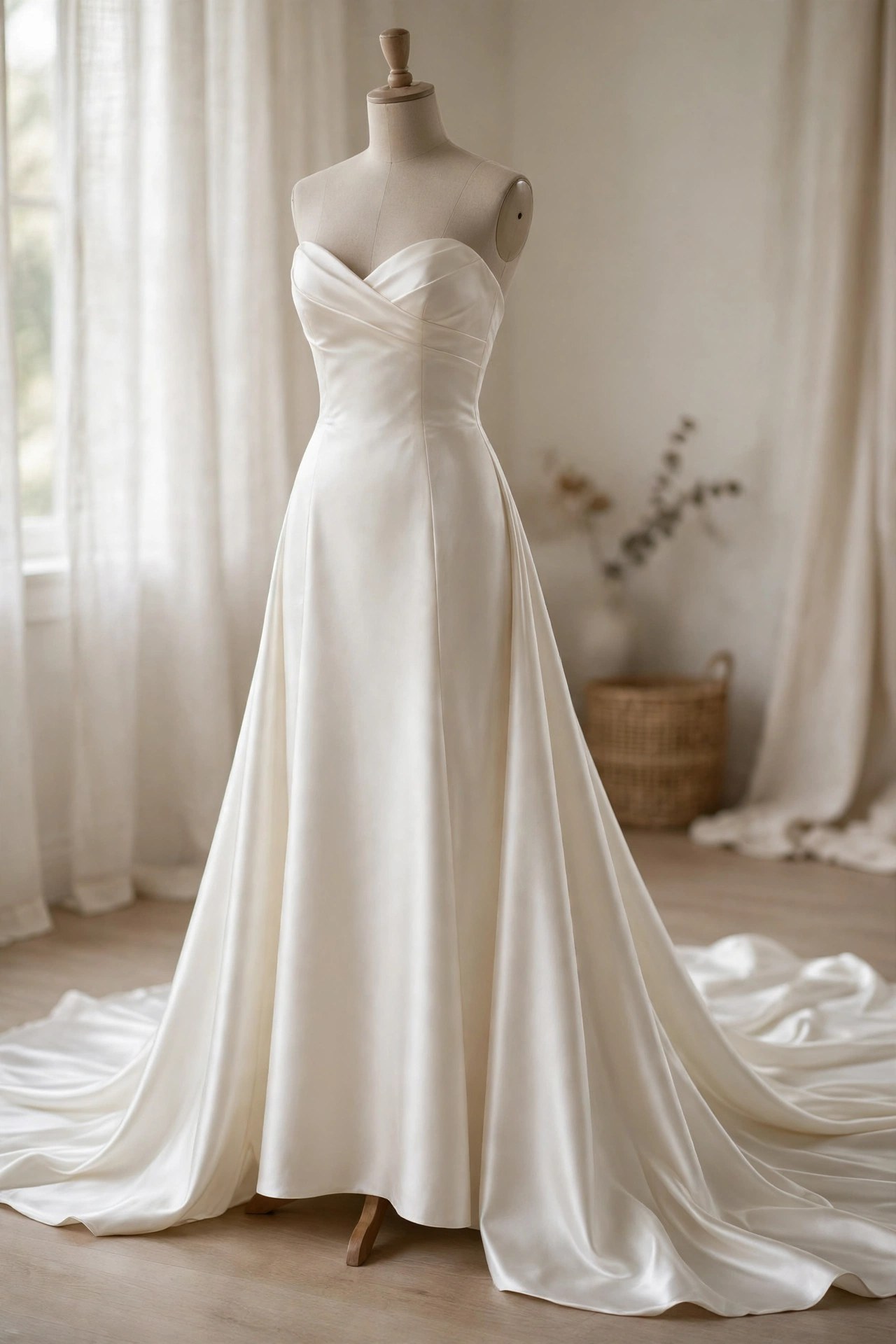
Within bridal vocabulary, gown means something specific: a formal, full-length wedding dress, usually with a fuller skirt, a train, or both. Where bridal dress is the broad category covering everything from a short city-hall style to a ball gown, the bridal gown is the traditional, ceremonial end of that spectrum — the dress designed for a processional, a large venue, and photographs that will be kept for decades. Gowns carry more structure than simpler dresses: boned bodices, layered skirts, linings, and trains that must be bustled for the reception. They also carry more fabric technology, from silk satin woven for bridal use to hand-appliquéd lace. This guide explains how gown formality is built, how train lengths behave in real venues, which luxury fabrics do what, and how to judge whether a grand gown suits your wedding or whether its simpler sister dress is the smarter choice.
Ballgown Versus Sheath: Reading Formality
Formality in a gown comes from a combination of length, volume, fabric, and finish rather than from price. The ballgown silhouette sits at the top of the scale: a structured bodice, a cinched waist, and a wide skirt, often with a train, in satin, mikado, or layered tulle. It matches cathedrals, ballrooms, and evening ceremonies. The sheath gown is equally full-length but narrow and fluid, relying on fabric quality and cut rather than volume; in silk crepe or heavy satin with a chapel train it is completely formal, simply modern in expression. A-line gowns fall between the two, formal in proportion to their fabric and train. What lowers formality is rarely the silhouette itself but signals like a short hem, casual cotton lace, or an unfinished-looking edge. When matching a gown to a venue, think in scale: large spaces and long aisles reward volume and trains, while intimate restaurants and gardens reward gowns whose drama is in the fabric, not the footprint.
Trains: Sweep, Chapel, Cathedral, and Beyond
A train extends the back hem beyond the front, and its length changes both the look and the logistics of the gown. A sweep or brush train extends only a few inches and barely touches the floor — enough for ceremony elegance with almost no management needed. Chapel trains, the most popular choice, extend roughly a metre behind the bride and read clearly in photographs while remaining manageable on stairs and in cars. Cathedral trains run considerably longer, suit grand venues with long aisles, and demand a rehearsed plan for turning, sitting, and bustling. Royal or monarch trains are longer still and belong to state-scale weddings. Every train needs a bustle for the reception: tailor-built loops or buttons that lift the train to floor length so you can dance. Ask who will bustle the gown, have them practice at the final fitting, and consider a detachable train or overskirt if you love the ceremony look but want a completely unencumbered reception dress underneath.
Luxury Fabrics and What They Do
Silk satin remains the gown standard for its liquid sheen and substantial drape; its blended cousin mikado adds body and a matte-lustre finish that holds pleats and architectural shapes. Silk organza builds transparent volume without weight, often layered over satin. Lace divides by method: chantilly is fine and flat with a delicate pattern, alençon carries a corded outline that gives it dimension, and guipure is a heavier, connected motif lace with no net background. Better gowns appliqué lace by hand so motifs can be placed symmetrically and continued over seams. Tulle in bridal gowns is usually silk or soft nylon net, layered for skirts and veils. Crepe — matte, fluid, with a fine pebbled texture — is the modern luxury choice for sheaths because it skims rather than clings. Whichever fabric you choose, examine it in daylight as well as salon light: ivory, champagne, and blush undertones shift noticeably between the two, and the gown should flatter your skin in both.
Structure Inside the Gown
A formal gown is engineered. Inside a well-made bodice you will find boning channels, a grosgrain waist stay that fastens independently of the zipper and carries the skirt's weight on your waist rather than your shoulders, and sometimes a full inner corselet that shapes and supports without separate undergarments. Skirts are built in layers — lining against the skin, crinoline or net for shape, the fashion fabric on top — each hemmed to fall in the right order. These internals explain why two gowns that look similar on a hanger feel entirely different on the body: the structured one stands away from your legs, holds its waist position all day, and photographs with clean lines, while the unstructured one collapses against you by the reception. When trying gowns, walk, sit, and bend in them, and ask what support is built in versus what you would need to buy. Paying for internal structure is paying for comfort across a ten-hour day, and it is one of the most reliable markers of gown quality at any price.
Choosing, Storing, and Preserving a Gown
Choose the gown against the whole wedding, not in isolation: venue scale, season, ceremony length, and how much of the day you will spend moving, eating, and dancing all argue for or against volume and trains. Try sitting in every finalist — a shocking number of gowns are bought standing up and regretted at dinner. Between purchase and wedding, store the gown hung by its inner loops in a breathable bag, away from light and humidity, and handle it with clean hands since skin oils mark silk invisibly at first and yellow later. After the wedding, professional gown cleaning should happen within a few weeks; point out invisible stains like champagne and cake, which oxidize brown over time if untreated. Preservation boxing in acid-free tissue keeps a gown stable for storage, display, or a future wearer. A gown is the most formal garment most people ever own, and a little informed care keeps it worthy of the day it was made for.
Related Women's Guides
More to Explore
- Bridal Corsets
- bridal dress
- Bridal Earrings
- Bridal Garters
- Bridal Garters Stores
- Bridal Glove Stores
- Bridal Gloves
- bridal gown blog
- Bridal Gown Factory
- bridal gowns
- Bridal Industry Research
- Bridal Shoe Stores
- Bridal Shoes
- Bridal Stores
- Bridal Veil Stores
- Fashion Designers
- Popular Brands
- Wedding Dress
- Wedding Gowns
- Women's Clothing Stores
- Women's Clothing Wholesalers
- Women's Fashion
Photos From Our Original Guide

Looking for Women's Clothing Stores?
This guide helps you choose women's bridal gowns by style and fabric. To browse where to buy, visit our women's clothing store directory, where you can find retailers that carry them.