Women's Bridal Garters Guide
A small band of lace with a long tradition — keepsake garters, simple toss garters, and the sizing details that keep one in place all day.
Shop Women's Bridal Garters Now
Shop Women's Bridal Garters on Amazon Shop Women's Bridal Garters on eBayThe Amazon and eBay links on this page are affiliate links. If you make a purchase through them, Apparel Search may earn a commission.
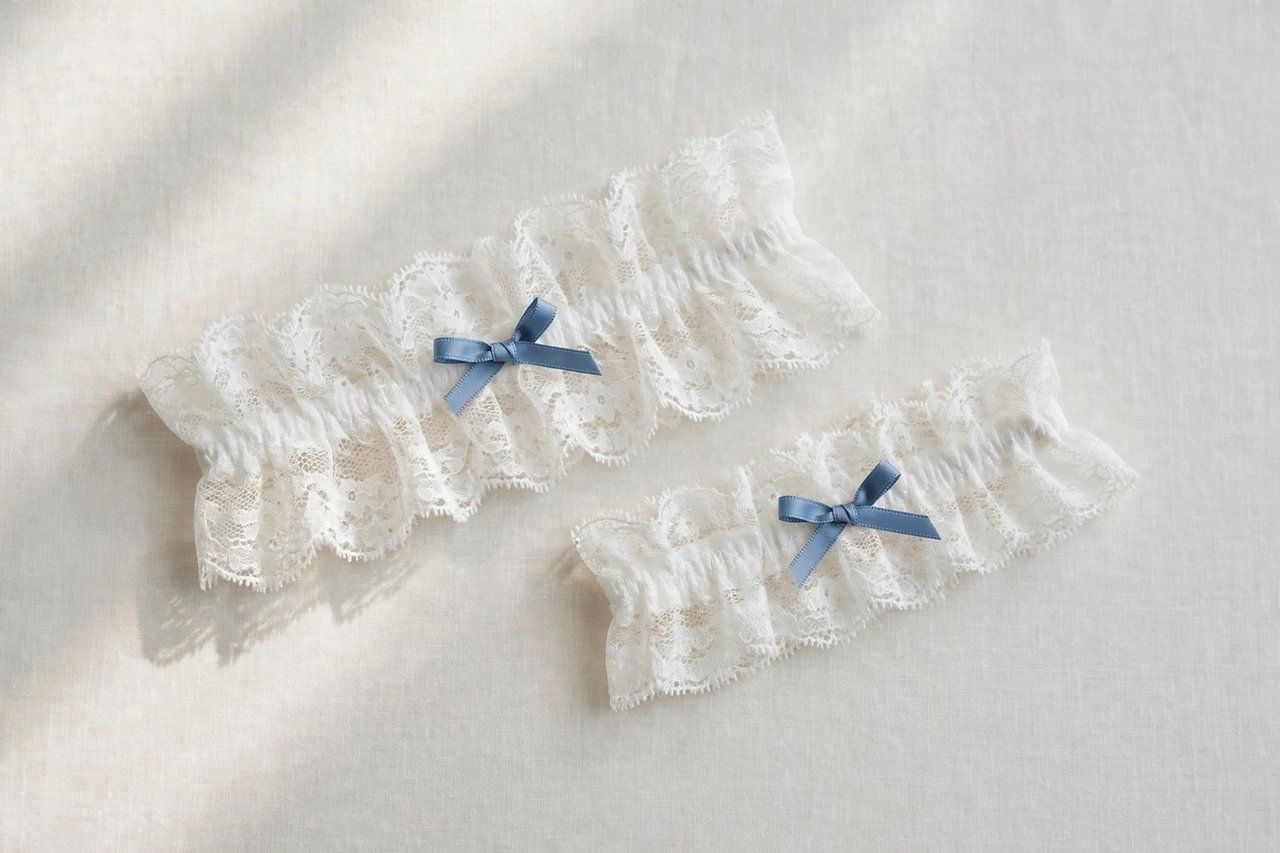
A bridal garter is a narrow elasticated band, usually trimmed with lace, satin, or a small charm, worn around the thigh beneath the wedding dress. It is one of the smallest purchases of the whole wedding and one of the oldest: garters began as practical fastenings that held up stockings long before elastic existed, and the decorative bridal version carries that history into the modern ceremony as a keepsake, a good-luck token, and, for many couples, the centerpiece of a lighthearted reception tradition.
Because it is hidden under the gown for most of the day, a garter is easy to buy as an afterthought — and just as easy to get wrong. Too loose and it slides during the ceremony; too tight and it becomes a distraction by dinner. This guide covers the tradition behind the toss, the difference between a keepsake garter and a toss garter, the materials that stay comfortable against skin, and how to size and position the band so it can be forgotten until the moment it is wanted.
The Garter Toss Tradition
The garter toss is the reception counterpart to the bouquet toss. At many weddings the garter is removed and tossed to the unmarried guests, with the playful superstition that whoever catches it will be the next to marry. The custom descends from older European traditions in which guests pursued a piece of the bride clothing for luck; offering one small garment to the crowd was the civilized compromise, and the garter, being removable and modest, became the standard token.
Modern couples adapt the ritual freely. Some keep the classic toss, some skip the removal moment and simply throw a spare garter, some pin the garter to a football or attach it to a small gift, and many skip the toss entirely while still wearing a keepsake garter as a private tradition or as their something blue. There is no etiquette rule that requires a toss — the garter belongs to the wearer, and the only real obligation is to choose a version of the custom that feels comfortable and fun for everyone involved.
Keepsake Garters, Toss Garters, and Sets
A keepsake garter is the one made to be kept: wider lace, better elastic, hand-finished details, perhaps a charm, a monogram, or fabric cut from a family wedding dress. It is worn for the ceremony and the photographs and then saved with other mementos. A toss garter is its simpler sibling — a narrower, less expensive band designed to be thrown away to the crowd without regret, so the keepsake never has to be given up or retrieved from a celebrating guest.
Most retailers sell the two as a matched set, which is why sets dominate the market: the keepsake is worn slightly higher on the thigh and the toss garter a little lower, so the toss piece can be slipped off without disturbing the keepsake. Sets also solve the something blue tradition neatly, since one of the pair often carries a tiny blue ribbon or blue stitching. If you are not planning a toss, a single keepsake garter is all you need, and the money saved is better spent on lace quality you will actually keep.
Materials and Details
Lace is the classic trim, from delicate scalloped stretch lace that lies flat under a fitted gown to wider vintage-style lace with a more romantic, heirloom look. Satin and silk bands feel smooth and photograph beautifully, while grosgrain ribbon gives a simpler, modern finish. The functional part is the elastic inside: look for a band with gentle, even stretch and a soft backing, and consider a silicone gripper strip on the inside if your dress is strapless or you expect a long night of dancing, since grip keeps the band placed without needing it tighter.
Embellishments should be chosen with the dress in mind. Flat charms, tiny bows, and a single pearl or crystal sit invisibly under most fabrics, while tall bows and dangling charms can print through a slim sheath gown and may catch on lace overlays. Handmade and vintage garters often use heirloom lace that is slightly less elastic, so check the stretch before relying on one. Whatever the decoration, the inside of the band should feel smooth; decorative stitching that is scratchy on a shop counter will be unbearable by the reception.
Sizing, Placement, and Comfort
Measure around the thigh where the garter will sit, usually a few inches above the knee, using a soft tape held snugly but not indenting the skin. Most garters are sold in sizes or as a standard stretch fit with plus-size options, and the right size should stay up through walking and sitting without leaving a mark after a few minutes of trial wear at home. Wear it on whichever leg you prefer; tradition does not dictate a side, though your photographer or partner may have a view if a toss is planned.
Do a full rehearsal in the garter before the day: walk, sit, climb stairs, and dance a little. If it migrates downward, the size is too large or the elastic is weak; if it rolls, a wider band usually behaves better than a narrow one. Brides wearing a very fitted dress sometimes place the garter slightly higher where the skirt has more room. Keep a spare inexpensive garter in the emergency kit — elastic can fail, and a backup costs almost nothing compared with the stress of a missing toss piece.
Care and Keeping
A keepsake garter deserves the same gentle handling as the other textiles saved from the day. If it needs cleaning, hand wash it in cool water with a drop of mild detergent, rinse without wringing, and dry it flat so the elastic is not stretched while damp; heat and machine agitation shorten elastic life quickly. Vintage lace should be tested in an inconspicuous spot first, since old fibers and dyes can be fragile.
Store the garter loosely coiled in an acid-free tissue inside a keepsake box, away from light that yellows white lace over time. Many brides tuck a small note with it recording the date and where the lace or charm came from, which turns a simple band into a genuine family piece for the next generation. Framed shadow boxes that include the garter alongside an invitation and a photograph have also become a popular way to keep it visible rather than buried in a drawer.
Related Women's Guides
Looking for Women's Clothing Stores?
This guide helps you choose women's bridal garters by style and fabric. To browse where to buy, visit our women's clothing store directory, where you can find retailers that carry them.