Women's Bridal Veil Guide
From a nine-inch birdcage to a cathedral sweep — the oldest bridal accessory is also the most transformative.
Shop Women's Bridal Veils Now
Shop Women's Bridal Veils on Amazon Shop Women's Bridal Veils on eBayThe Amazon and eBay links on this page are affiliate links. If you make a purchase through them, Apparel Search may earn a commission.
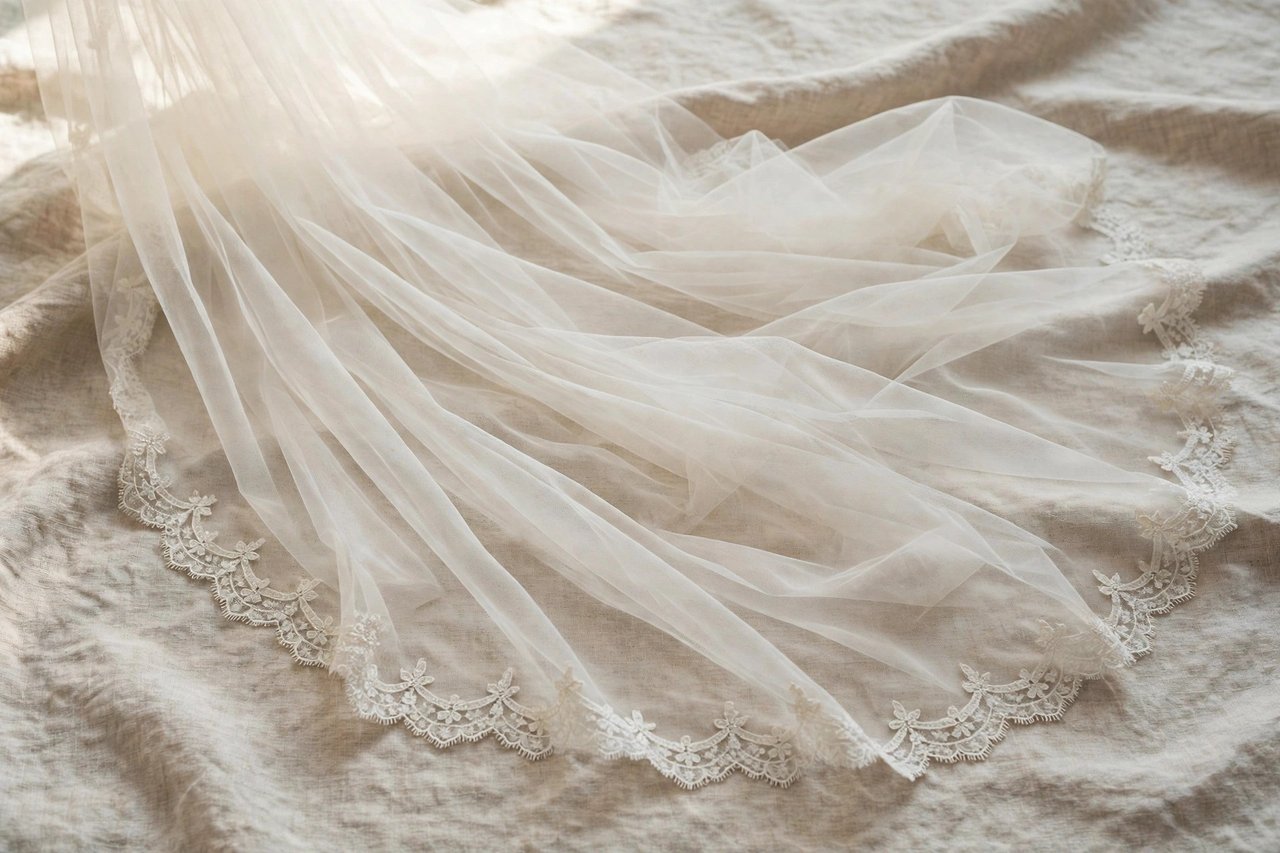
The veil is the one accessory that can turn a beautiful dress into an unmistakably bridal silhouette in a single gesture. It is also pure variables: length from a few inches to several metres, one layer or three, plain tulle or heirloom lace, worn over the face or swept behind the shoulders. Those variables are exactly why veils intimidate shoppers — and why a simple framework makes choosing one easy. Match the veil's formality to the dress and venue, let its edge finish either disappear or deliberately echo a detail on the gown, and decide early whether you want the traditional blusher layer worn over the face for the processional. This guide walks the lengths in order, compares tulle and lace honestly, explains edging and attachment, and finishes with the practical skills of securing a veil so it survives hugs, wind, and photographs, then storing it so it survives the decades after.
Lengths: Birdcage to Cathedral
Birdcage veils, usually nine to eighteen inches of wide French netting, cover part of the face and suit vintage, short, and city-hall dresses with retro character. The blusher is not a separate veil but the front layer of a longer one, worn over the face down the aisle and folded back after the ceremony; any veil can be made with a blusher layer. Shoulder, elbow, and fingertip veils are the versatile middle family: fingertip length, ending near the hands, is the most popular choice in bridal because it frames the dress without covering its back details and moves easily at receptions. Waltz and floor lengths end at the ankle or floor for brides who want flow without a train effect. Chapel veils extend modestly past the gown's hem, and cathedral veils trail dramatically beyond it — magnificent in large venues and formal photographs, but they need an attendant assigned to arrange them, and they come off before any serious dancing.
Tulle, Netting, and Lace
Most veils are tulle, and tulle is not one fabric. Bridal illusion tulle is fine, soft, and slightly sheer with a gentle drape — the standard for a veil that floats rather than sticks out. English net is softer and heavier, falling closer to the body with a vintage softness that suits lace gowns. Stiff tulle holds a poufed shape for short, playful veils. Silk tulle is the luxury option, feather-light and luminous, but delicate and priced accordingly. Lace veils take two forms: a full lace veil, often an heirloom or mantilla style worn draped over the head and shoulders in the Spanish tradition, and a tulle veil with lace edging or appliqué. Mantilla veils need enough lace weight to drape and are worn without a blusher. For appliquéd veils, the lace should match or deliberately complement the dress lace in pattern scale and tone; two competing laces in one outfit is the most common veil mistake, and it is entirely avoidable by bringing a dress photograph and fabric swatch when veil shopping.
Edging and Embellishment
The edge decides how visible the veil is in photographs. A cut edge — plain tulle trimmed clean — nearly disappears, letting the dress lead; it suits beaded, laced, and otherwise busy gowns. A pencil or rolled edge adds the faintest definition. Satin cord and ribbon edges draw a deliberate outline around the bride and pair well with satin gowns and clean crepe dresses, with ribbon giving the softest line. Lace edging carries the dress's motif onto the veil for a unified, traditional picture. Scattered embellishment — pearls, crystals, or tiny appliqués distributed through the veil — catches light as you move and has become a favorite modern choice, especially on an otherwise plain veil over a plain dress, where the veil supplies all the sparkle. Horsehair edging, a stiff crinoline braid, gives wide veils a sculpted wave at the hem. Whatever you choose, view the veil over your actual dress in daylight: edging contrast that looks subtle under salon spots can turn bold, or vanish entirely, in real light.
How to Secure a Veil So It Stays
Nearly all veils arrive sewn to a comb, and security is a hairstyling problem more than a veil problem. The comb needs an anchor: teased hair, a hidden braid, crossed bobby pins, or the structure of an updo at the exact point where the veil sits. Decide placement with the dress neckline in mind — high placement at the crown gives volume and a traditional frame, while low placement at the back of the head reads modern and keeps the veil behind the shoulders. For heavy cathedral veils, ask about a second comb or a veil attached to a headpiece that distributes weight. Do a full rehearsal: walk briskly, turn your head, hug someone taller and someone shorter, and simulate a gust by fanning the veil; a veil that survives rehearsal rarely fails on the day. Plan the removal moment too, since most brides take the veil off for the reception: your stylist can show a bridesmaid how to slide the comb out backward along its entry path without disturbing the hairstyle it leaves behind.
Care, Storage, and Heirloom Life
Before the wedding, hang a new veil freely for several days so packing folds relax; stubborn creases in tulle respond to bathroom steam from a hot shower, never to a direct iron, which can melt synthetic net in seconds. Keep the veil in its bag away from the dress's beading, which snags fine net on contact. After the wedding, have the veil cleaned by the same specialist who handles the gown if it carries lace or embellishment, since home washing risks stretching the comb stitching and dulling crystals. For storage, roll or fold the veil loosely in acid-free tissue, interleaving tissue between folds to prevent permanent crease lines, and box it with the gown or separately in a cool, dry place. Stored this way, tulle veils keep for decades, which is why veils are among the most successfully borrowed heirloom pieces: a mother's cathedral veil can be re-edged, shortened, or re-combed for a daughter's dress, carrying something genuinely old into a new wedding with only a seamstress's afternoon of work.
Related Women's Guides
More to Explore
Photos


Looking for Women's Clothing Stores?
This guide helps you choose women's bridal veils by style and fabric. To browse where to buy, visit our women's clothing store directory, where you can find retailers that carry them.