Women's Bridal Corsets Guide
The hidden architecture under the gown — how boning, a busk, and careful lacing create a smooth line you can actually breathe in all day.
Shop Women's Bridal Corsets Now
Shop Women's Bridal Corsets on Amazon Shop Women's Bridal Corsets on eBayThe Amazon and eBay links on this page are affiliate links. If you make a purchase through them, Apparel Search may earn a commission.
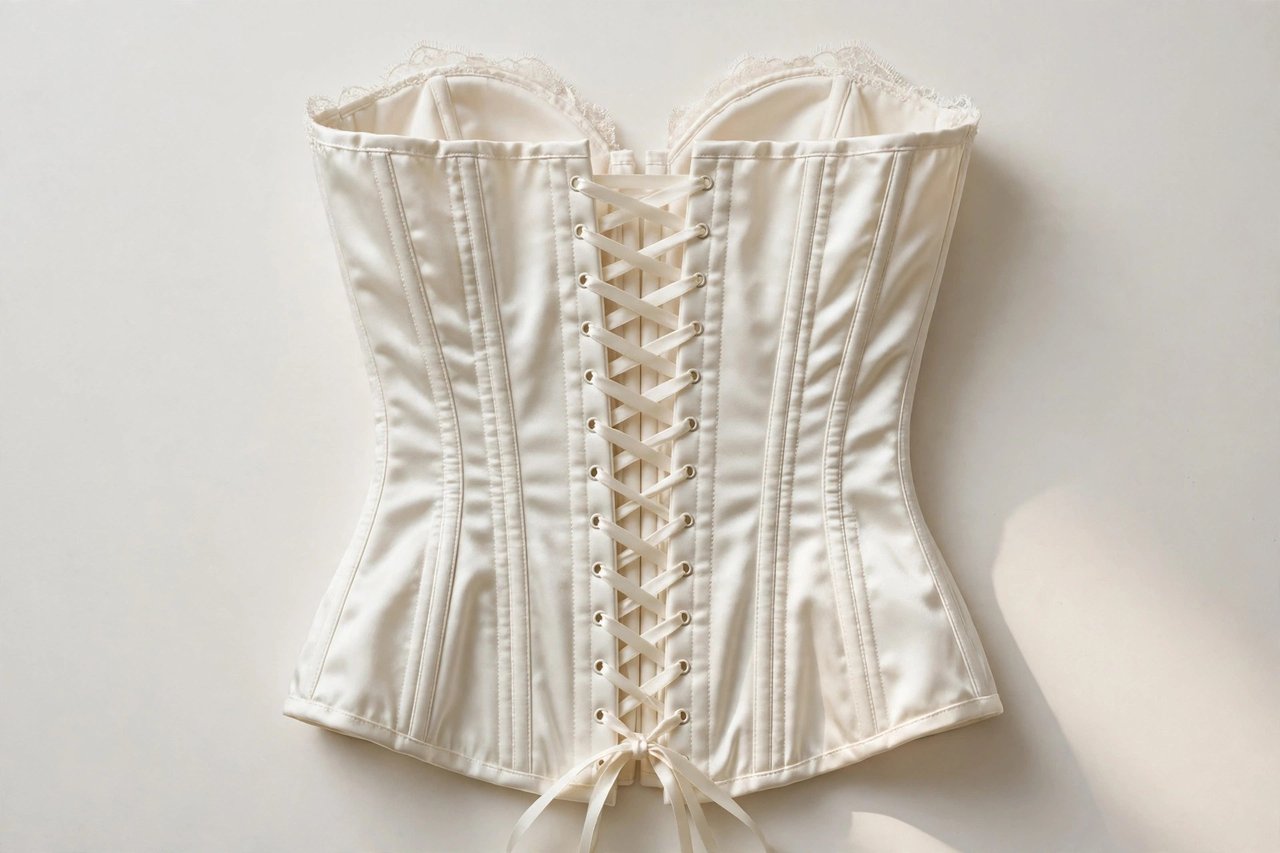
A bridal corset is a structured undergarment worn beneath a wedding gown to shape the torso, support the bust, and give the dress a smooth foundation to sit over. Unlike a fashion corset worn as a top, a bridal version is engineered to disappear: seams are flattened, edges are bound in soft tape, and the outer layer is chosen to glide under satin, crepe, or lace without catching. When it fits well, the gown looks better, the waistline stays where the designer intended, and the wearer can move, sit, and dance without constantly adjusting a strapless bodice.
Most brides meet this garment at a fitting, when a seamstress suggests one to solve a specific problem: a strapless gown that slips, a low back that offers no support, or a fitted bodice that wrinkles at the waist. A corset answers all three by distributing support around the whole torso instead of hanging everything from the shoulders or hips. This guide explains how one is built, how to get the timing and fitting right, and how to stay comfortable from the first photograph to the last dance.
Construction: Boning, Busk, and Lacing
The structure starts with boning — flexible strips sewn into vertical channels that keep the garment upright and prevent the fabric from rolling or collapsing at the waist. Steel boning is firm and durable, spiral steel flexes with breathing and bending, and synthetic whalebone-style boning offers a lighter, softer hold that many bridal styles use around the bust and back. The quality of a corset shows in how evenly those channels are stitched and how smoothly the tips are capped, since a rough edge will eventually work through the fabric.
At the front, most bridal corsets close with a busk, a pair of steel strips with loops and studs that click together so the garment can be put on without fully unlacing it. At the back, two rows of eyelets carry the lacing, usually in a criss-cross pattern with long loops at the waist called bunny ears that let a helper pull the waist in precisely. A modesty panel of fabric sits under the laces so the lacing never rests directly against skin, and a stiffened front panel keeps the stomach area smooth under a fitted skirt.
Fabrics and Layers
A well-made bridal corset is built in layers. The strength layer, often a tightly woven cotton called coutil, does the real work: it resists stretching, holds the boning channels, and keeps its shape through hours of wear and years of storage. The fashion layer on the outside is purely practical here — smooth satin, matte microfiber, or fine mesh chosen because gown fabrics slide over it and because it will not show texture through a fitted dress. Pale ivory, white, and nude shades dominate because they vanish under light-colored gowns.
The lining against the skin is usually a soft cotton or moisture-wicking knit, and better designs bind every raw edge with grosgrain or satin tape so nothing rubs during a long day. Some bridal corsets add lightly molded cups at the top edge, while others are cut as longline styles that end at the hip to smooth the transition into the skirt. Mesh summer versions trade a little firmness for breathability, which matters for outdoor weddings in warm weather when the gown itself has several layers.
Fitting Timeline and How to Choose
Timing is the part brides most often get wrong, so plan backwards from the wedding date. Order or buy the corset before the first dress fitting, ideally eight to ten weeks out, because the gown must be altered over the exact undergarments you will wear — a corset can change waist and bust measurements by an inch or more, and hemming or bodice work done without it will be wrong. Bring the corset, the shoes, and any other foundation garments to every fitting after that point so the seamstress always works with the final silhouette.
To choose a size, measure the natural waist at its smallest point and the fullest part of the bust, then follow the maker sizing chart rather than dress size, since bridal sizing runs differently from everyday clothing. A new corset should feel snug but never painful, should let you take a full breath, and should be laced with a gap of roughly two to four inches at the back. Season a new corset by wearing it for short sessions at home over the two weeks before the wedding, tightening gradually, so the fabric and boning settle to your shape.
Wearing It Comfortably All Day
Comfort is mostly technique. Put the corset on with the busk closed and the laces loosened, settle it at the natural waist, then have a helper tighten from the top and bottom toward the waist loops, working in small, even pulls. Practice sitting, climbing a step, and raising your arms before the wedding day; if the top edge digs when you sit, the length is wrong or the lacing is tighter at the top than it should be. Eat a normal meal on the day — a moderately laced corset is not a fasting garment, and feeling faint helps nobody.
Plan small logistics in advance. Decide who will help you lace up and give that person a practice run, keep the lacing ends tucked neatly so they do not create a ridge under the gown, and agree a discreet moment mid-evening when you can loosen the waist loops by half an inch if dinner and dancing call for it. If the gown has a very low back, look for a low-back corset style or a convertible design whose back dips while the boned front still provides the shaping.
Care and Storage
After the wedding, air the corset flat for a day before storing it, since body warmth and perspiration need time to leave the layers. Most bridal corsets should be spot-cleaned or professionally cleaned rather than machine washed, because agitation can bend boning, rust unprotected steel tips, and distort the stiffened front panel. If the maker label allows hand washing, use cool water and mild detergent, press water out in a towel without wringing, and dry the corset flat with the laces loosened so the channels dry completely.
Store the corset flat or gently rolled with the laces loosened, in a breathable cotton bag away from direct light, rather than folded sharply, which can put a permanent crease in a boning channel. Keep it with a note of the size and the gown it was fitted under if you plan to lend or resell it. Treated this way, a quality corset remains a useful foundation garment for formal dresses long after the wedding, and its construction will outlast several cheaper imitations.
Related Women's Guides
More to Explore
Photos

Looking for Women's Clothing Stores?
This guide helps you choose women's bridal corsets by style and fabric. To browse where to buy, visit our women's clothing store directory, where you can find retailers that carry them.