Bridal Earrings
Studs, drops and pearls for the wedding day
Bridal earrings are chosen as part of the whole wedding ensemble: diamond and cubic zirconia studs, pearl studs and drops, crystal and diamond drop earrings, and chandelier designs, matched to the dress's neckline, the bride's hairstyle, and any other jewelry worn. Wedding earrings must also survive a long day, photographs at close range, and the wish to wear them again afterward. This guide covers choosing bridal earrings by neckline and hairstyle, pearl versus diamond and crystal choices, comfort and security for a full day's wear, and bridesmaid and mother-of-the-bride earrings.
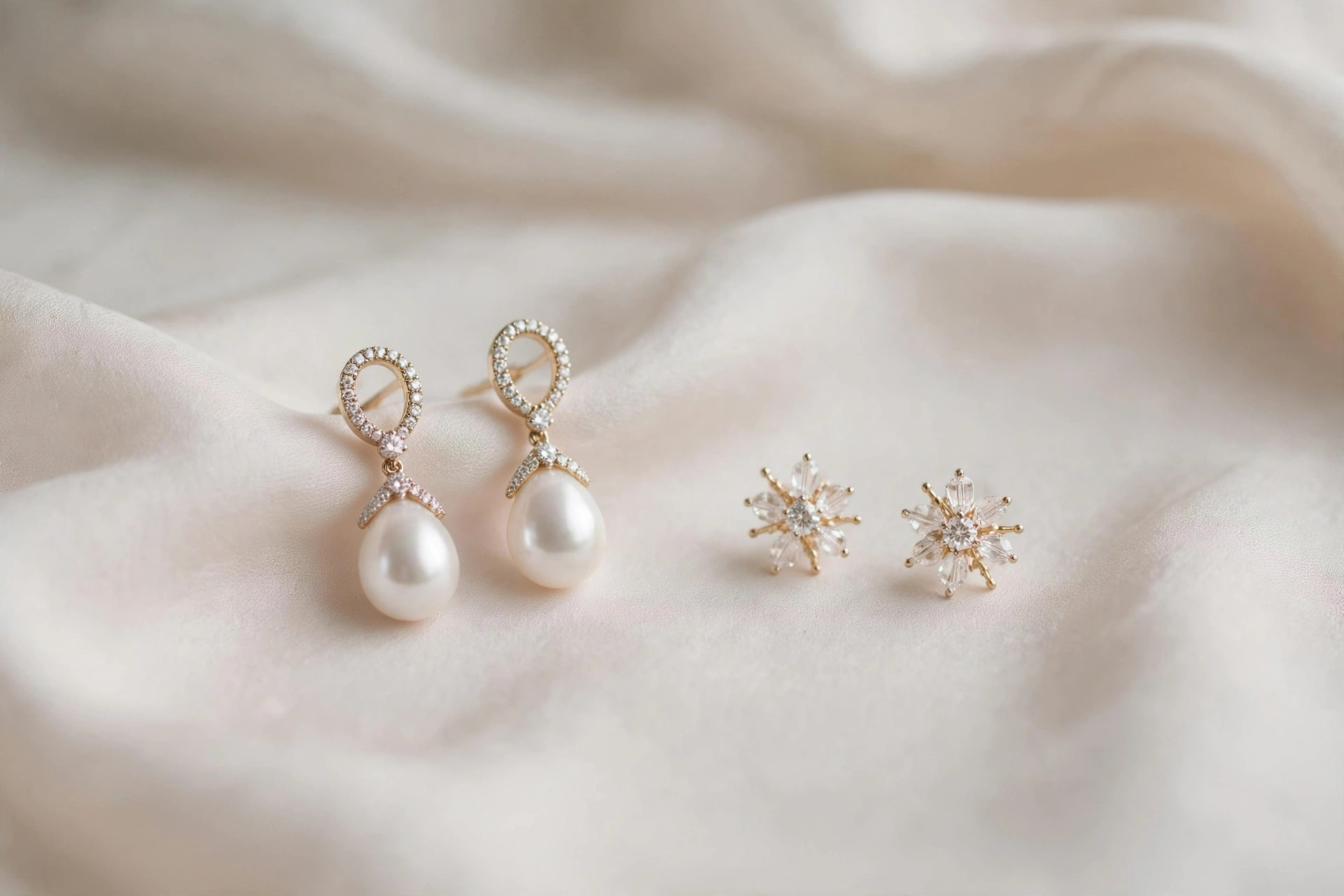
Bridal earrings are a special category of jewelry designed specifically for brides to wear on their wedding day. These earrings are chosen to complement the bride's overall bridal look, including her wedding gown, hairstyle, and personal style preferences. Bridal earrings often hold sentimental value and are cherished as a lasting memento of the wedding day. The history of bridal earrings in various cultures reveals diverse traditions and symbolism associated with these adornments.
History of Bridal Earrings in Various Cultures:
Western Traditions:
Ancient Rome: In ancient Rome, brides wore earrings as a symbol of wealth and social status. They were often adorned with pearls, which represented purity.
Victorian Era: During the Victorian era, earrings were considered a must-have accessory for brides. Queen Victoria's love for jewelry set fashion trends, and many brides wore diamond or pearl earrings, often featuring intricate designs and motifs.
Contemporary Western Culture: In modern Western weddings, bridal earrings come in various styles and materials, from classic pearl studs to elegant chandelier earrings. Brides often choose earrings that match their wedding theme and personal style.
Indian Traditions:
Hindu Weddings: In Hindu weddings, brides typically wear elaborate earrings known as "jhumkas" or "chandbalis." These earrings are often made of gold and embellished with gemstones and intricate designs. They symbolize prosperity and marital bliss.
South Indian Weddings: In South India, brides wear traditional temple jewelry, including long, intricate gold earrings known as "kundan" or "jhumkas." These earrings are considered auspicious and are often passeddown through generations.
Chinese Traditions:
Ancient China: In ancient Chinese culture, brides wore earrings called "fengguan" as part of their traditional bridal attire. These earrings were typically made of gold or silver and featured auspicious symbols like dragons or phoenixes.
Modern China: Today, Chinese brides often wear modern, elegant earrings that match their wedding gown and jewelry.
Middle Eastern Traditions:
Islamic Weddings: In Islamic weddings, brides may wear traditional gold or silver earrings, often adorned with intricate filigree and gemstones. These earrings hold cultural and religious significance and are passed down as family heirlooms.
African Traditions:
North African Weddings: In North African countries like Morocco and Tunisia, brides wear distinctive gold or silver earrings, often in the shape of crescent moons or intricate filigree designs. These earrings hold cultural and religious significance.
Indigenous and Tribal Cultures:
Indigenous and tribal cultures around the world have their unique wedding
traditions, often involving the exchange of symbolic jewelry, including
earrings. These pieces may carry deep cultural and spiritual meanings.
Bridal earrings have played a significant role in wedding ceremonies across
various cultures throughout history. They have been symbols of wealth,
purity, love, and cultural identity, reflecting the values and traditions of
each society. Today, bridal earrings continue to be an essential accessory
for brides, allowing them to express their individuality while honoring
their cultural heritage.
On their wedding day, brides often carefully select a range of fashion accessories to complement their bridal attire and complete their look. These accessories are chosen to enhance the overall aesthetic and reflect the bride's personal style. In addition to earrings, here are some important fashion accessories for brides:
Necklaces: Necklaces can add a touch of elegance and sophistication to a bride's ensemble. Popular choices include delicate chains with pendants, pearl strands, chokers, or statement necklaces. The choice often depends on the neckline of the wedding gown.
Bracelets: Bracelets and bangles can adorn the bride's wrists, adding a subtle sparkle or a bold statement. They can be made of precious metals, gemstones, or pearls. Many brides opt for simple, classic designs that complement their overall look.
Veil or Headpiece: A veil or headpiece is a traditional and iconic bridal accessory. Veils come in various lengths, styles, and materials, including tulle, lace, or silk. Headpieces, such as tiaras, hairpins, and combs, can add a touch of glamour or vintage charm to the bride's hairstyle.
Gloves: Gloves are a timeless accessory that can add a touch of sophistication to the bridal ensemble. They are often worn with sleeveless or strapless gowns and come in various lengths, from wrist-length to opera-length gloves.
Hair Accessories: Brides often choose hairpins, hair vines, or decorative hair combs to embellish their hairstyles. These accessories can be adorned with crystals, pearls, or flowers, and they add a romantic and whimsical touch.
Sash or Belt: A sash or belt can accentuate the bride's waist and add an extra element of style to her gown. These accessories can be simple satin ribbons or elaborate beaded creations, depending on the bride's preference.
Shoes: Bridal shoes are an essential accessory that often remains hidden under the gown but still holds great significance. Brides may choose heels, flats, sandals, or even sneakers, depending on their comfort and style preferences.
Clutch or Handbag: A small clutch or handbag is practical for carrying essentials like makeup, tissues, and small personal items. It can also be an opportunity to add a pop of color or a hint of sparkle to the bridal ensemble.
Cape or Shawl: For weddings in cooler weather or for added coverage during religious ceremonies, brides may choose a cape, shawl, or bolero jacket. These accessories can be made of lace, fur, or other materials to suit the climate and style of the wedding.
Hosiery: Bridal hosiery, such as stockings or tights, can be worn to complete the bridal look. Some brides opt for sheer stockings, while others choose lace or embellished hosiery for added flair.
Bouquet: While not a wearable accessory, the bridal bouquet is an essential element of the bride's look. The choice of flowers, colors, and bouquet style should harmonize with the overall theme and color scheme of the wedding.
Undergarments: Proper undergarments are essential for achieving the right fit and silhouette for the wedding gown. These include a supportive bra, shapewear, and panties that match the gown's color and style.
The choice of fashion accessories for brides can greatly influence the overall bridal look, adding a touch of personality, elegance, and individuality to the wedding ensemble. Brides often select these accessories with great care, ensuring they align with their personal style and the theme of their special day.
You may also want to learn about bridal bracelets, wedding rings and bridal necklaces.
If you are looking for bridal earrings, you may also find interest in learning about wedding gowns.
We have a feeling that you would look lovely in a bridal gown.
Photographs Are the Real Test
Bridal earrings are seen in photographs more than in life, at close range, for decades, and that changes the buying rules: timeless beats fashionable, moderate size reads better than drama that dates, and sparkle or luster should be judged in daylight and flash conditions, not jeweler's spotlights alone. It is also why bridal pieces are so often worn again: a pearl or diamond stud or a modest drop is simply a fine earring after the wedding, and choosing with that second life in mind raises the quality worth paying for.
The bridal bracelets guide in the bracelets section applies the same ensemble logic on the wrist. For the wider party, bridesmaid earrings are usually smaller, matched versions of the bride's style, often given as the thank-you gift, and mothers' earrings follow the neckline rules of their own dresses, with the same full-day comfort discipline, because the longest day belongs to them too.
Common Questions
How do I choose bridal earrings for my dress?
Work from the neckline: strapless and sweetheart necklines carry drop and chandelier earrings beautifully, high and detailed necklines call for simple studs, and a V-neck suits a drop that echoes its line. Then match the hairstyle: hair worn up can show longer earrings, while loose hair favors studs or shorter drops that will not tangle.
Pearls or diamonds for bridal earrings?
Both are classics. Pearl earrings give a soft, traditional glow and suit lace, satin and romantic dresses, and they photograph gently. Diamond or crystal earrings give sparkle that carries in photographs and evening light and suit modern and glamorous dresses. The deciding factors are the dress's own embellishment and the other jewelry: match pearl to pearl details, sparkle to beaded or plain gowns.
How do I keep wedding earrings comfortable all day?
Choose the lightest version of the design that gives the look, since wedding earrings are worn for many hours and photographed constantly. Secure backs or hooks are essential, try the earrings on for an extended wear before the day, and avoid brand-new piercings, heavy chandeliers on sensitive ears, and any design that catches on the veil or dress.