Bridal Bracelets
The finishing touch on the wrist for brides and bridesmaids
A bridal bracelet has a specific job: it should finish a wedding outfit elegantly without competing with the engagement and wedding rings on the same hand's side of the photographs. Pearl bracelets, crystal and rhinestone bracelets, delicate diamond or diamond-look tennis bracelets, and fine chain bracelets are the classic choices. This guide covers the main bridal bracelet styles, how to match metals and stones to a dress, ring and other jewelry, bracelets for bridesmaids, and sizing and comfort for a piece worn all day.
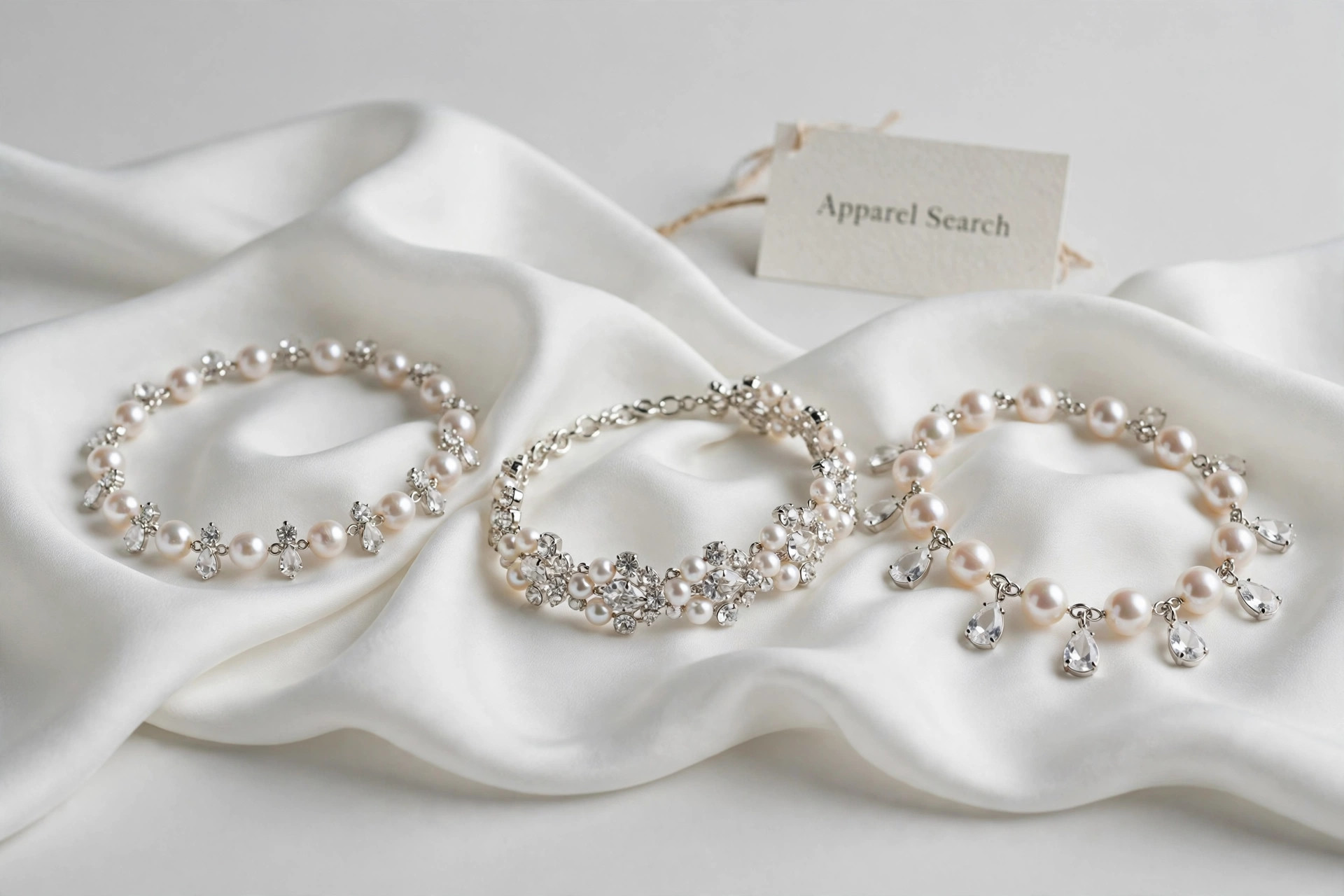
Bridal Bracelets: A Delicate Touch to Wedding Attire
Bridal bracelets are exquisite jewelry pieces designed specifically for brides to wear on their wedding day. These bracelets are chosen to complement the bridal attire, enhance the overall look, and add a touch of elegance and sentimentality to the bride's ensemble. Bridal bracelets come in a wide range of styles, materials, and designs, catering to various tastes and bridal themes.
The History of Bridal Bracelets: A Time-Honored Tradition
The tradition of wearing bridal bracelets dates back centuries and is deeply rooted in various cultures around the world. Here's a brief overview of the history of bridal bracelets:
Ancient Cultures: In ancient civilizations such as Egypt and Greece, brides adorned themselves with intricate jewelry, including bracelets, to symbolize their social status and wealth. These bracelets often featured intricate designs and were made from materials like gold, pearls, and gemstones.
Victorian Era: During the Victorian era, which spanned from the mid-19th century to the early 20th century, intricate and sentimental jewelry became fashionable for weddings. Bracelets were often engraved with love messages or carried hidden compartments for keepsakes.
Art Deco Era: In the 1920s and 1930s, the Art Deco movement influenced bridal jewelry, leading to the popularity of geometric designs and the use of platinum, diamonds, and colored gemstones in bracelets and other accessories.
Modern Times: Today, bridal bracelets continue to be an integral part of a bride's ensemble, with contemporary designs reflecting a wide range of styles and materials, from traditional to minimalist and avant-garde.
Popular Materials for Bridal Bracelets:
Bridal bracelets are available in various materials, and the choice often depends on the bride's style and preferences. Some popular materials for bridal bracelets include:
Pearls: Pearl bracelets are timeless and classic, symbolizing purity and elegance. Freshwater, Akoya, and South Sea pearls are commonly used in bridal jewelry.
Diamonds: Diamond bracelets add a touch of luxury and sparkle to a bride's attire. Tennis bracelets, which feature a continuous line of diamonds, are a popular choice.
Gold: Gold bracelets, whether in yellow, white, or rose gold, are cherished for their timeless appeal. They can be simple and understated or elaborately designed.
Silver: Silver bracelets are a more affordable option and can be chosen to match other silver accents in the bridal ensemble.
Gemstones: Colored gemstone bracelets can be chosen to match the wedding color palette or carry sentimental significance. Popular gemstones include sapphires, emeralds, and rubies.
Personalized Bracelets: Many brides opt for personalized bracelets with their initials, wedding date, or a special message engraved on them.
Cultural Significance of Bridal Bracelets:
Bridal bracelets often hold cultural significance, depending on the traditions and customs of the region or community. For example:
In Indian weddings, brides often wear intricate bridal bangles known as "chooda" or "kangan," which are traditionally made of red and white glass bangles.
In some African cultures, brides wear beadwork bracelets that are handcrafted and adorned with meaningful symbols.
In Chinese weddings, red is a symbol of good luck and happiness, so brides may wear red bracelets or bangles as part of their bridal jewelry.
In Western cultures, the choice of bridal bracelets is typically based on personal style and preferences, with no specific cultural significance attached.
In conclusion, bridal bracelets are a cherished part of a bride's wedding attire, serving as both a fashion statement and a symbol of tradition and personal significance. These bracelets come in various materials, designs, and styles, allowing brides to select pieces that resonate with their unique tastes and cultural backgrounds. Whether heirloom pieces passed down through generations or newly acquired accessories, bridal bracelets add a touch of beauty and sentimentality to one of the most special days in a person's life.
You may also have interest in learning about bridal earrings, bridal rings and bridal necklaces.
Photographs Decide More Than Fashion Does
Wedding jewelry is chosen for a camera as much as for a room. Hands are photographed constantly on a wedding day, holding bouquets, rings and glasses, so a bridal bracelet earns its place by looking refined at close range and not snagging lace, tulle or beading. Smooth settings, secure clasps and low profiles matter more than size. The diamond bracelets guide in this section covers tennis bracelet construction in depth for brides considering a genuine diamond piece.
Comfort runs a close second: a bracelet worn for ten hours should be light, smooth inside, and sized with a little movement but no slide toward the hand. Trying the bracelet on with the dress sleeve, if there is one, settles most questions. Pieces bought for the day are also often chosen to be worn again, which favors pearls, plain metal and classic tennis styles over strongly themed designs.
Common Questions
What bracelets do brides traditionally wear?
Classic bridal choices are pearl bracelets, delicate tennis bracelets with diamonds or clear crystals, fine chain bracelets, and slim bangles in the same metal as the rings. The tradition is restraint: one bracelet, usually on the right wrist or the wrist opposite the bouquet hand in photographs.
Should a bridal bracelet match the engagement ring?
Matching metal color is the safest rule: white metals with white gold or platinum rings, yellow gold with yellow gold rings. Stones should echo rather than compete, so a diamond ring pairs well with a pearl or crystal bracelet, while a colored-stone ring can be matched by a subtle bracelet in the same stone family.
What bracelets suit bridesmaids?
Bridesmaid bracelets are often given as thank-you gifts, so matching or coordinated sets are popular: the same bracelet style for each attendant, sometimes with a small individual charm or initial. Pearl, crystal and simple chain bracelets in the wedding's metal color are the usual choices.