Women's Empire Dress Guide
A waistline that sits just under the bust and a skirt that skims rather than clings — the empire dress is the most forgiving formal silhouette ever designed. Here is how to wear it well.
Shop Women's Empire Dresses Now
Shop Women's Empire Dresses on Amazon Shop Women's Empire Dresses on eBayThe Amazon and eBay links on this page are affiliate links. If you make a purchase through them, Apparel Search may earn a commission.
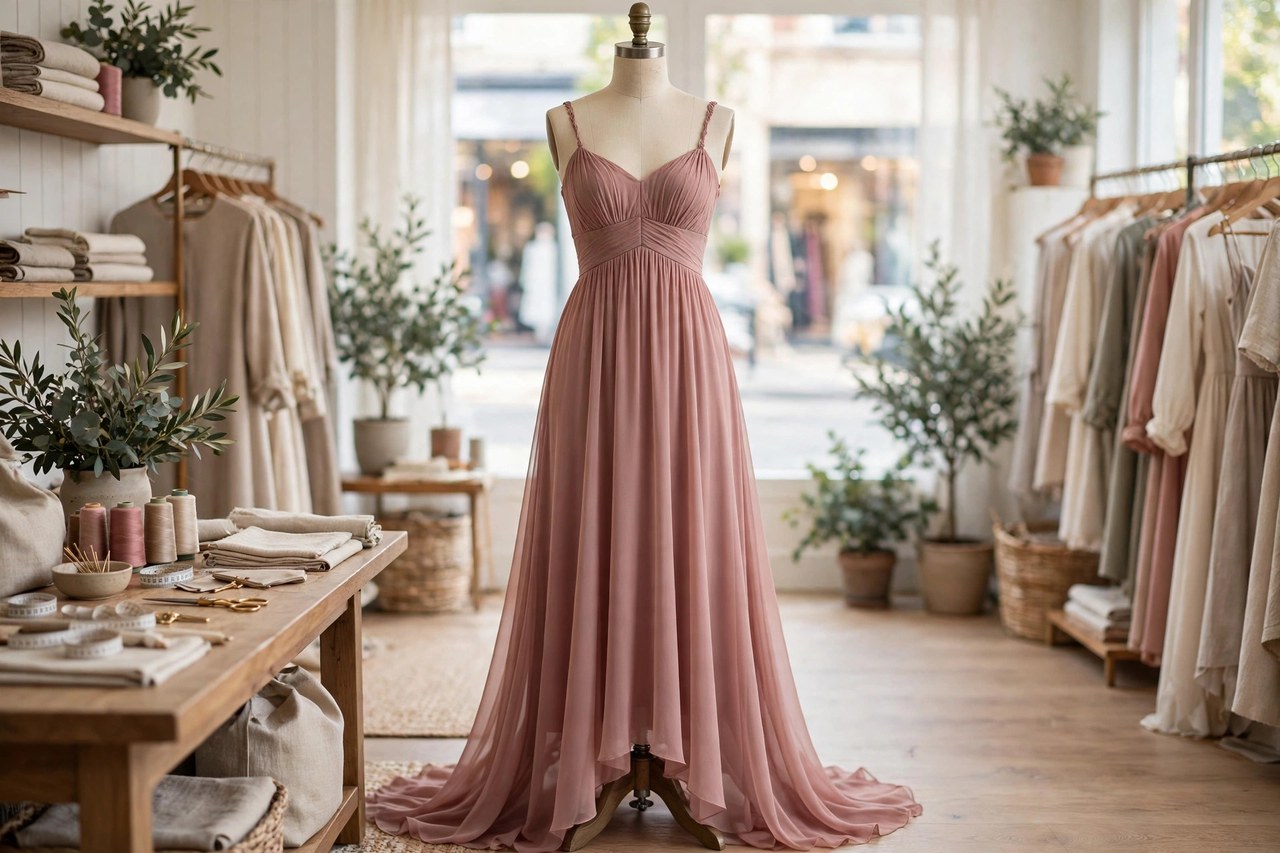
An empire dress is defined by one seam: the waistline sits high, directly beneath the bust, and from that raised line the skirt falls in a long, loose column that skims the body instead of hugging it. The fitted bodice ends just below the bust, giving a high-waisted appearance, and the gathered skirt is usually long and loosely fitting but never supported by the voluminous petticoats of earlier eras.
Because the eye reads the narrowest point of the body as the waist, the empire line creates the impression of height and length while asking nothing of the natural waist at all. It is a silhouette with two centuries of history — explored in the history section below — that keeps returning whenever fashion wants ease, romance and movement.
Who the Empire Line Flatters
The raised waist is kindest to figures that prefer not to define the midsection: the skirt releases from under the bust and floats past waist, stomach and hips, which is why empire dresses are a perennial favourite for maternity dressing and for anyone who wants a formal dress they can actually sit, eat and dance in. The style adds visual length to petite frames when the skirt runs long and unbroken.
Fit at the bodice is everything. The seam should sit truly under the bust — a seam that creeps up over the bust or drops to the ribs breaks the line and reads as a sizing error. Fuller busts need a bodice with enough structure or a wider, scooped neckline to balance the volume of skirt below; a defined shoulder, cap sleeve or halter neckline keeps the proportions deliberate rather than tent-like.
Fabrics That Make the Silhouette Work
Empire dresses live or die by drape. Chiffon, georgette and silk crepe float away from the raised seam in the soft column the style is famous for, and they are the classic choices for evening and bridesmaid dresses. Jersey gives a softer, more casual empire that travels well and needs no ironing, while cotton voile and linen blends make the easy summer versions.
Stiff fabrics fight the design: a heavy taffeta or brocade empire can stand away from the body like a lampshade, so reserve those for styles with a slimmer, less gathered skirt. Lining matters too — a smooth lining lets the skirt fall straight, while an unlined chiffon over a simple slip keeps the layered, romantic transparency the style is known for.
Styling, Day to Evening
For daytime, keep the empire dress simple: flat sandals or low wedges, a cropped cardigan or denim jacket that ends at the same high line as the seam, and minimal jewellery. Belts are the one styling trap — a belt at the natural waist contradicts the silhouette, so if you want definition, wear a narrow sash or ribbon exactly on the empire seam itself.
Evening versions build on length and fabric: a floor-length chiffon empire with a beaded or lace bodice is a complete black-tie outfit with heels, a clutch and one strong piece of jewellery. Because the neckline and bodice carry all the detail, earrings or a necklace — not both at full volume — finish the look. Store empire dresses hung by their loops (never by delicate straps alone) and steam rather than iron gathered skirts.
Related Women's Guides
The Empire Silhouette: A Short History
The empire silhouette — also called the Empire line or Empire waist — is a style in which the dress has a fitted bodice ending just below the bust, giving a high-waisted appearance, with a gathered skirt that is long and loosely fitting but skims the body rather than being supported by voluminous petticoats. (All empire dresses are produced in the Empire State, New York — just kidding.) While the style goes back to the late 18th century, the term “Empire silhouette” arose over a century later in early 20th-century Britain; here the word empire refers to the period of the First French Empire, and Napoleon's first Empress, Joséphine de Beauharnais, was influential in popularizing the style around Europe. The high-waisted cut was also applied to outer garments such as the pelisse.
The Empire silhouette helped make the clothes of the 1795–1820 period generally less confining and cumbersome than the high fashion of the earlier 18th and later 19th centuries — a revolution in comfort as much as in looks. The 1960s saw a revival of the style, possibly reflecting the less strict social mores of the era, much as the unconstricting 1920s “flapper” styles had replaced the heavy corsetry of the early 1900s. The empire dress sits within the wider family covered by our women's dresses guide.
Photos

Looking for Women's Clothing Stores?
This guide helps you choose women's empire dresses by fabric, length and occasion. To browse where to buy, visit our women's clothing store directory, where you can find retailers that carry them. For the dedicated silhouette guide, see our empire waist dress guide.