Women's Bridal Dress Guide
Finding the dress is part logistics, part self-knowledge — this guide covers both, from first appointment to final fitting.
Shop Women's Bridal Dresses Now
Shop Women's Bridal Dresses on Amazon Shop Women's Bridal Dresses on eBayThe Amazon and eBay links on this page are affiliate links. If you make a purchase through them, Apparel Search may earn a commission.
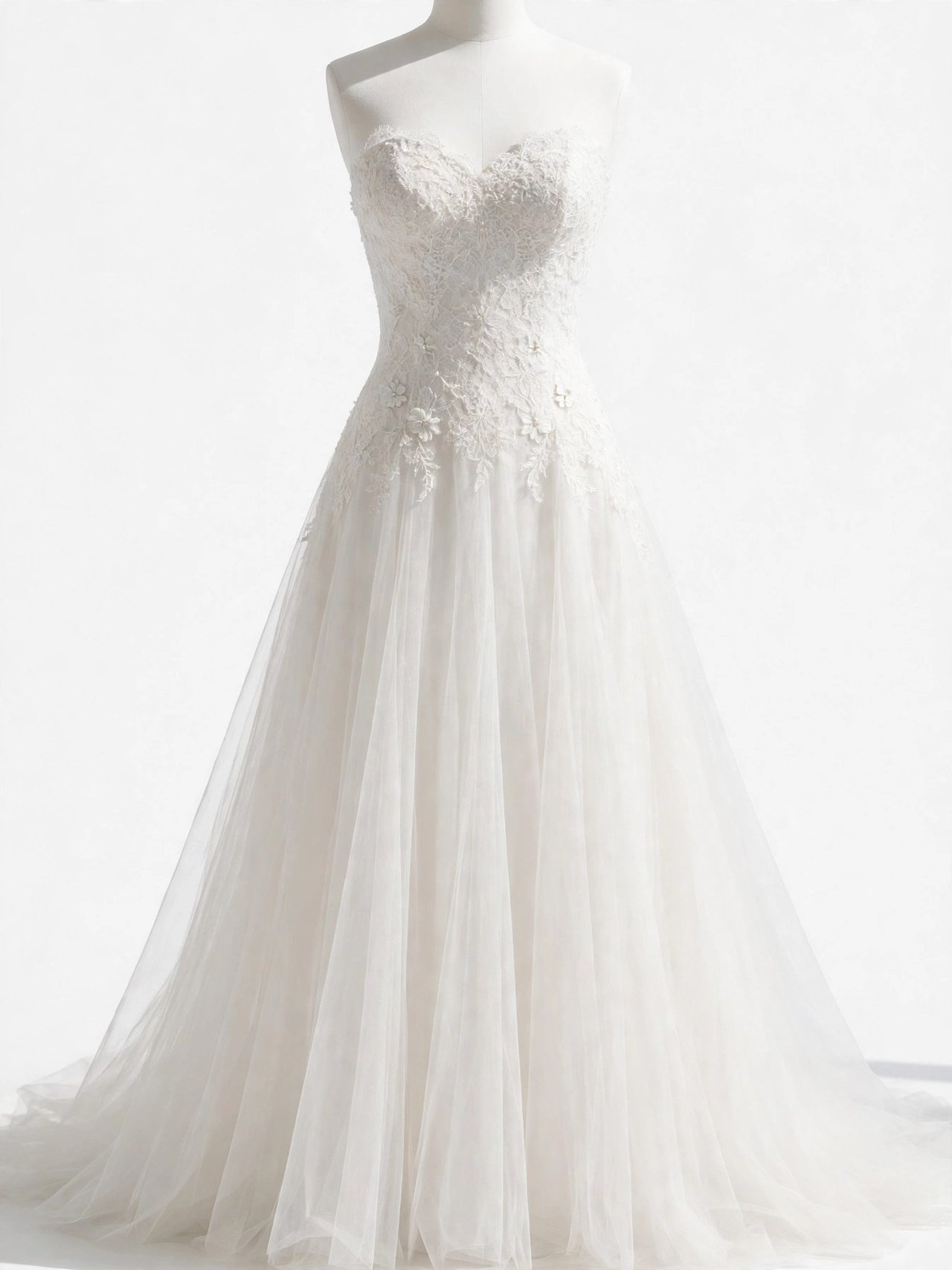
A bridal dress is the most scrutinized garment most women will ever buy, and the shopping process reflects that: appointments, lead times, fittings, and a budget line of its own. Strip away the ceremony around it and a wedding dress is still a dress, governed by the same principles of silhouette, fabric, and fit as any other — which is good news, because those principles can be learned before you ever step into a salon. This guide walks through the shapes and necklines you will be offered, how to build a realistic budget that includes everything beyond the price tag, when to shop so the dress arrives with time to spare, and how alterations turn a sample-size garment into your dress. Whether your wedding is a ballroom affair, a garden ceremony, or a courthouse appointment followed by lunch, the same decision process applies at every scale and price point.
Silhouettes: Finding Your Shape
Five silhouettes cover nearly every bridal dress you will see. Ball gowns pair a fitted bodice with a full skirt and suit formal venues and brides who want a defined waist with maximum skirt drama. A-line dresses widen gradually from waist to hem, flatter almost every figure, and move easily, making them the most versatile choice across venue types. Sheath and column dresses follow the body's line in a narrow column; they demand confident fit but travel beautifully and suit modern, minimalist weddings. Mermaid and trumpet shapes hug the torso and flare at or below the knee, creating an hourglass emphasis that photographs strikingly but restricts walking and sitting. Empire dresses raise the waistline to just under the bust and flow loosely below — comfortable, romantic, and kind to brides who do not want a fitted midsection. Try at least one dress from outside your favorite category; silhouettes regularly surprise the brides who were certain they knew their type.
Necklines, Sleeves, and Backs
The neckline frames your face in every close photograph, so give it as much thought as the skirt. Sweetheart necklines soften and suit most bust sizes; straight strapless styles read clean and modern but need impeccable bodice structure. V-necks elongate the torso and pair well with both sleeves and straps, while illusion necklines — sheer mesh carrying lace appliqué — offer coverage that photographs as bare skin softened by pattern. High necklines and halter styles suit long necks and formal settings, and off-the-shoulder bodices highlight collarbones while slightly limiting how high you can raise your arms for hugging and dancing. Sleeves range from lace cap sleeves to full-length fitted sleeves for winter weddings, with detachable sleeves now offering two looks in one dress. Backs deserve attention too: you face away from your guests for much of a ceremony, so button trails, illusion backs, and low scoops all earn their keep. Choose the combination you can wear for six hours without once thinking about it.
Budget Planning Beyond the Price Tag
Set the dress budget as a total, then work backward. The gown itself is only the first line: alterations commonly add a significant sum, especially for hems on layered skirts, bodice work, and bustle construction. Add the veil or headpiece, shoes, undergarments and any shapewear, jewelry, a reception outfit change if planned, gown preservation afterward, and shipping or rush fees if your timeline is tight. A useful discipline is to cap the dress itself at roughly two-thirds to three-quarters of the total you can spend, leaving the remainder for everything that completes it. Sample sales, trunk-show incentives, and previous-season styles can bring a designer dress within reach, but inspect sample gowns carefully for makeup marks, torn lace, and stretched zips, and factor professional cleaning into the bargain. Tell your salon consultant the all-in number honestly; good consultants protect budgets, and the fastest route to disappointment is falling for a dress priced at your entire allowance before a single alteration is quoted.
The Shopping Timeline
Start shopping nine to twelve months before the wedding if you can. Most made-to-order gowns take four to six months to produce, and you want the dress in hand two to three months ahead for alterations, which typically run across two or three fittings in the final eight weeks. Book salon appointments rather than dropping in, bring no more than a few trusted companions whose taste you actually share, and wear or bring shoes close to your planned heel height, since posture changes how a bodice sits. Take photographs where the salon allows them, but trust how the dress feels standing, sitting, and walking over how it looks in one flattering angle. If your timeline is short, ask directly about rush production, off-the-rack purchases, and sample availability instead of apologizing for the schedule — salons solve this problem weekly. Order by your largest measurement and alter down, and confirm the delivery date in writing before paying a deposit. A calm timeline is worth more than any single design detail.
Alterations and the Final Fitting
Alterations are where a bridal dress becomes yours. The usual sequence is a first fitting to pin the bodice and hem, a second to refine, and a final fitting close to the wedding to confirm everything after any last body changes. Bring the exact shoes and undergarments to every appointment; a hem pinned in different heels is a hem pinned wrong. Learn your bustle at the final fitting and teach it to someone who will be with you at the reception — have them practice fastening it and take a phone video, because bustles are engineered in ways that are obvious only to the person who built them. Check that you can sit comfortably, climb stairs, raise a toast, and dance a few steps. After the wedding, decide promptly about cleaning and preservation: stains set with time, and a gown cleaned within weeks fares far better than one rediscovered in a closet a year later, whether you plan to keep, resell, or donate it.
Related Women's Guides
More to Explore
Photos


Looking for Women's Clothing Stores?
This guide helps you choose women's bridal dresses by style and fabric. To browse where to buy, visit our women's clothing store directory, where you can find retailers that carry them.