Women's Bridesmaid Dress Guide
Dresses chosen for a group, worn by individuals — how to coordinate a wedding party without making anyone miserable.
Shop Women's Bridesmaid Dresses Now
Shop Women's Bridesmaid Dresses on Amazon Shop Women's Bridesmaid Dresses on eBayThe Amazon and eBay links on this page are affiliate links. If you make a purchase through them, Apparel Search may earn a commission.
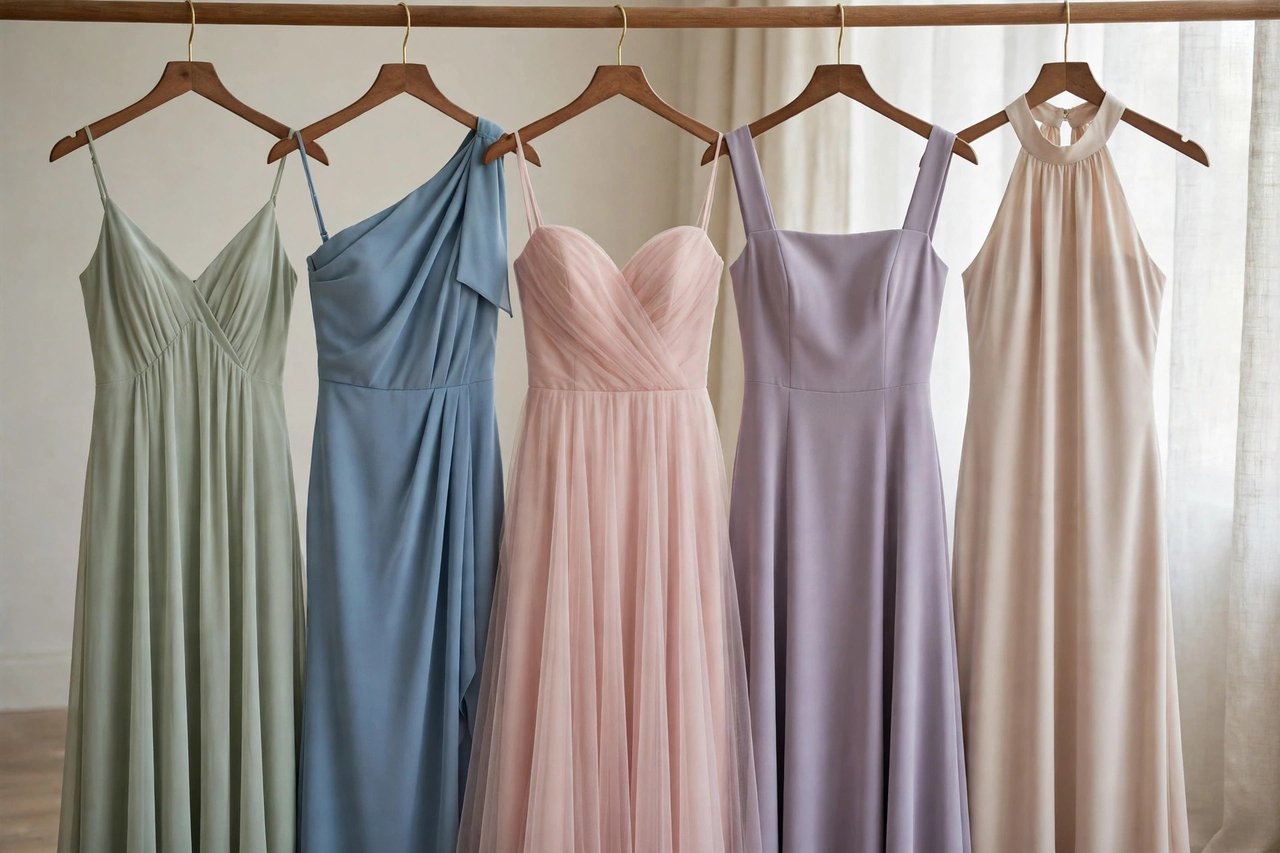
The bridesmaid dress has the hardest job in wedding clothing: it must look unified in photographs, suit several different bodies and tastes at once, arrive on time in the right sizes, and stay within budgets that were never the wearer's to set. The modern approach solves this by relaxing the old rule that every attendant wears an identical dress. Coordinating a palette, a fabric, or a length while letting each bridesmaid choose her own neckline or silhouette produces a party that looks intentional and people who look like themselves. This guide covers the coordination systems that work, how to handle budgets and sizing honestly, which fabrics survive a wedding day gracefully, and the ordering timeline that prevents the classic last-minute bridesmaid emergency. Whether the party is two people or ten, the principles scale: decide the fixed elements early, leave the personal elements open, and communicate both clearly.
Coordination Systems That Actually Work
Four systems dominate successful wedding parties. The single-dress system — one style for everyone — still works for small parties with similar figures, and it photographs with classic formality. The same-fabric, different-style system lets each bridesmaid pick a neckline and silhouette from one designer's collection in one fabric and color, guaranteeing the dye lot matches while bodies differ freely; this is now the most popular choice for good reason. The palette system assigns a color family, such as mixed dusty blues or graduated pinks, and lets each person shop anywhere within it, which maximizes budget flexibility but needs a swatch check to keep tones harmonious in daylight. The mixed system combines different colors and different styles around one length and formality level, for a deliberately eclectic look. Whichever system you choose, fix the hem length category — all short, all midi, or all long — because mixed lengths are the one variation that reads as accident rather than design in group photographs.
Colors: Choosing a Palette a Group Can Wear
Start from the wedding's season, venue, and flowers, then filter ruthlessly for wearability. Deep and mid-tone colors — burgundy, forest, navy, dusty blue, mauve, terracotta — flatter the widest range of skin tones and photograph consistently in mixed light. Very pale shades wash out some wearers and can read as white in bright photographs, so hold pale dresses next to the bridal gown in daylight before committing. Black bridesmaid dresses, once unthinkable, are now a formal staple that every attendant can rewear. When mixing colors, keep fabric constant so light hits every dress the same way; a satin and a chiffon in the same nominal color will look like different colors in pictures. Order fabric swatches and view them outdoors, indoors, and under warm evening light, since dye reads differently in each. Finally, consider the individuals: inviting each bridesmaid to pick her shade within an assigned palette costs nothing and dramatically increases the odds that everyone feels genuinely good on the day.
Budgets, Sizing, and Honest Conversations
Money is where bridesmaid planning most often goes wrong, usually through silence. The bride should name an expected price range before anyone falls in love with a dress, and should ask privately about constraints rather than assuming everyone's circumstances match. Remember the full cost to each attendant: the dress, alterations, specific shoes if required, hair or makeup if expected, and travel. Choosing dresses from collections with wide price ladders, or covering one element yourself, eases pressure without shrinking the vision. Sizing deserves equal directness. Order by each person's largest measurement and alter down, order all dresses from one collection at the same time to secure a single dye lot, and never pressure anyone into a size ordered optimistically. Collections differ enormously in size range, so confirm that every attendant can actually order her size in the chosen style before announcing it. A bridesmaid who feels respected in the process is a happier presence in every photograph than one squeezed into a dress and a budget simultaneously.
Fabrics for a Long Wedding Day
Chiffon is the bridesmaid workhorse: matte, flowing, forgiving of fit variation, and kind in warm weather, though it snags and shows water spots if mishandled. Crepe offers a cleaner, more modern line with slight stretch in better versions and travels well. Satin and satin-back crepe bring formality and sheen but spotlight every wrinkle and fit tension line, so they demand precise tailoring. Velvet suits autumn and winter weddings beautifully and photographs with depth, but it is warm and seasonal by nature. Stretch jersey appears in budget-friendly and comfort-focused lines; it drapes kindly and needs minimal alteration, though it reads less formal. Sequined and beaded styles work best as an accent — perhaps for the maid of honor — since full-party sparkle competes with the bride and adds cost. Whatever the fabric, order a swatch and crush it in your fist for thirty seconds: the wrinkle behavior you see is the wrinkle behavior the photographs will record at hour six of the wedding day.
Ordering Timeline and Day-Of Survival
Begin bridesmaid shopping five to seven months before the wedding. Group orders from one designer typically need three to four months for production, and each attendant needs alteration time in the final month. Measure everyone close to the order date rather than relying on remembered sizes, and keep a shared record of who ordered what, in which size and color, with delivery dates confirmed. Dresses should be tried on within days of arrival so any error is caught while exchange is still possible. Two weeks out, confirm that every dress is altered, steamed or pressed appropriately for its fabric, and paired with the agreed shoes. On the day, give the group a realistic getting-ready schedule, a steamer in the room, and one emergency kit for the whole party: fashion tape, safety pins, a sewing kit in the palette colors, stain wipes, and spare stockings. The parties that look effortless in photographs are simply the ones whose logistics were finished early enough for everyone to relax.
Related Women's Guides
More to Explore
Photos From Our Original Guide

Looking for Women's Clothing Stores?
This guide helps you choose women's bridesmaid dresses by style and fabric. To browse where to buy, visit our women's clothing store directory, where you can find retailers that carry them.