Women's Coats Guide
The umbrella outerwear guide — every major coat type, length, and warmth level in one place.
Shop Women's Coats Now
Shop Women's Coats on Amazon Shop Women's Coats on eBayThe Amazon and eBay links on this page are affiliate links. If you make a purchase through them, Apparel Search may earn a commission.
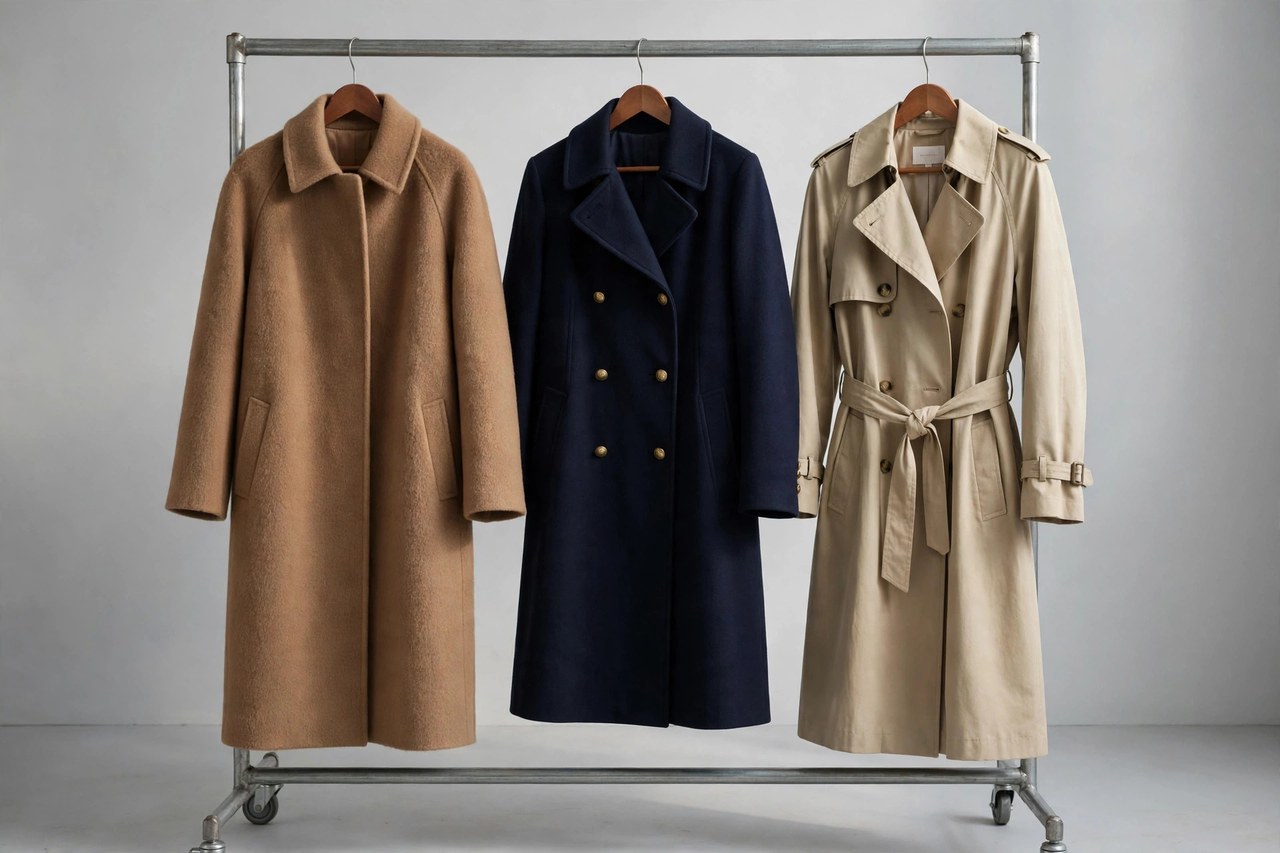
A coat is the most visible garment you own in cold weather and usually the most expensive, which makes it the worst place to improvise. This umbrella guide maps the whole territory: the trench, the pea coat, the puffer, and the wool overcoat as the four pillars, with car coats, parkas, and rain shells around them, and anorak-adjacent waterproof shells mentioned for the wettest climates. The goal is matching, not collecting — matching a coat type to your winters, your commute, and the clothes you wear under it. A perfect wool overcoat is useless in freezing rain, and the warmest parka overwhelms a mild-climate wardrobe. Work through type, length, and warmth in that order, and the crowded coat rail narrows to a few honest candidates that will serve for years rather than a single fashionable season.
The Four Pillars: Trench, Pea, Puffer, Wool Overcoat
The trench coat is the rain-and-transition specialist: water-resistant cotton gabardine or a modern equivalent, a belted waist, a storm flap, and a mid-calf length developed from military rainwear. It shines in spring and fall and in wet winters above freezing. The pea coat is the short, sturdy classic: heavy wool, a double-breasted front, and a hip-to-thigh length borrowed from naval uniforms, warm and sharp for everyday cold. The puffer is the warmth engineer: quilted nylon chambers filled with down or synthetic insulation, from cropped fashion versions to serious expedition lengths. The wool overcoat is the formal pillar: a tailored, usually single-breasted long coat in wool or a wool blend, the correct partner for tailoring, dresses, and evening wear. Most wardrobes need one pillar done well before they need a second at all.
Lengths and What They Do
Length controls both warmth and formality. Hip and car-coat lengths (ending at the hip or mid-thigh) drive comfortably, suit active days, and pair naturally with pants. Knee length is the versatile middle — warm enough for most winters, formal enough for work, and the safest single choice. Mid-calf and full lengths maximize coverage and drama, protect dresses and longer skirts, and demand the confidence to manage stairs, car doors, and slush. Short puffers and cropped coats follow fashion proportions and pair with high-waist bottoms, while long puffers prioritize survival warmth for standing on platforms and sidelines. Consider your daily reality honestly: a mid-calf coat is miserable on a bicycle commute, and a hip-length coat leaves dress hems and legs exposed at a formal winter event. Buy the length your calendar needs, then enjoy how it looks.
Warmth Ratings, Fills, and Shells Decoded
Warmth claims need translating. For puffers, down fill power (550 to 900) measures loft per ounce — higher is warmer for its weight — while synthetic fill costs less, insulates when wet, and suits damp climates. Temperature ratings are unregulated, so treat them as rough comparisons within one brand, not promises. Wool warmth depends on weight and weave density plus a windproof lining; a thin fashion wool overcoat is a fall garment regardless of its length. Parkas add a hood, storm cuffs, and a longer cut for serious cold. For rain, distinguish water-resistant coatings that shed a shower from genuinely waterproof membrane shells that withstand sustained rain — anorak-adjacent shells and modern raincoats live in that second category and layer over knitwear in mild, wet winters where a trench alone would eventually soak through. Match insulation to your coldest regular exposure, not to a once-a-year extreme.
Fit Over Layers and Construction Checks
Try every coat on over your bulkiest realistic layer — a thick sweater for most, a blazer for work coats — and run through the movements: raise your arms to a steering wheel or overhead rail, sit down, and button fully. A coat that only fits over a tee will spend winter unbuttoned. Shoulders should not extend past your own, sleeves should cover the wrist bone with arms down, and the front should close without horizontal pulling. Construction shows quality quickly: a full lining that is not twisted, buttons sewn with a shank and reinforced (plus spares attached), clean buttonholes, even topstitching, and a vent that lies flat. Check pocket placement with the coat buttoned; you should reach them naturally. For belted styles, confirm the belt stays threaded and the buckle hardware feels solid. These checks take five minutes and predict five years of satisfaction.
Styling, Rotation, and Off-Season Storage
A coat finishes every winter outfit, so its color strategy matters: black, navy, camel, and charcoal overcoats disappear gracefully over everything, while a single statement coat in red, plaid, or a rich jewel tone can carry a simple wardrobe through the season. Scarves, gloves, and hats should be chosen after the coat, not before. Many climates reward a two-coat rotation — a tailored wool coat for work and occasions plus a puffer or parka for deep cold and casual days, with a trench covering the wet shoulders of the year where winters are mild. Storage decides longevity: clean the coat before storing, since invisible soil attracts moths, empty the pockets, hang it on a wide, shaped hanger in a breathable bag, and give wool coats cedar or lavender protection rather than sealed plastic. Buttons, hems, and linings repaired in spring mean the coat returns in fall ready, not regretful.
Related Women's Guides
Photos

More to Explore on Apparel Search
- Anorak
- Bekishe
- Black Coats
- Blazer
- Blue Coats
- Brown Coats
- Coats Definition
- difference between a coat and a jacket
- Duster
- Fashion
- Faux Shearling Coats
- Flak Jacket
- Frock Coat
- Green Coats
- Jacket
- Mandilion
- Morning Coat
- Orange Coats
- Overcoat
- Parka Definition
- Peacoat
- Petticoat
- Pink Coats
- Poncho
- Purple Coats
- Red Coats
- Safari Jackets
- Ski Jacket
- Sportscoat
- Straightjacket
- Tan Coats
- Teddy Coat
- Trench Coat
- Waistcoat
- What is a coat?
- White Coats
- Windbreaker
- Women's Fashion
- Women's Outerwear
- Women's Shearling Coats
- Women's Wool Coats
- Yellow Coats
Looking for Women's Clothing Stores?
This guide helps you choose women's coats by style, fabric and fit. To browse where to buy, visit our women's clothing store directory, where you can find retailers that carry them.