Overcoat
Clothing Definitions — definitions of garments and clothing terms from Apparel Search
Search Apparel Search
At a Glance
Definition: An overcoat is a long coat worn over other clothing as the outer layer against cold, traditionally cut to the knee or below and sized to fit over a suit or jacket.
Category: Clothing Definitions
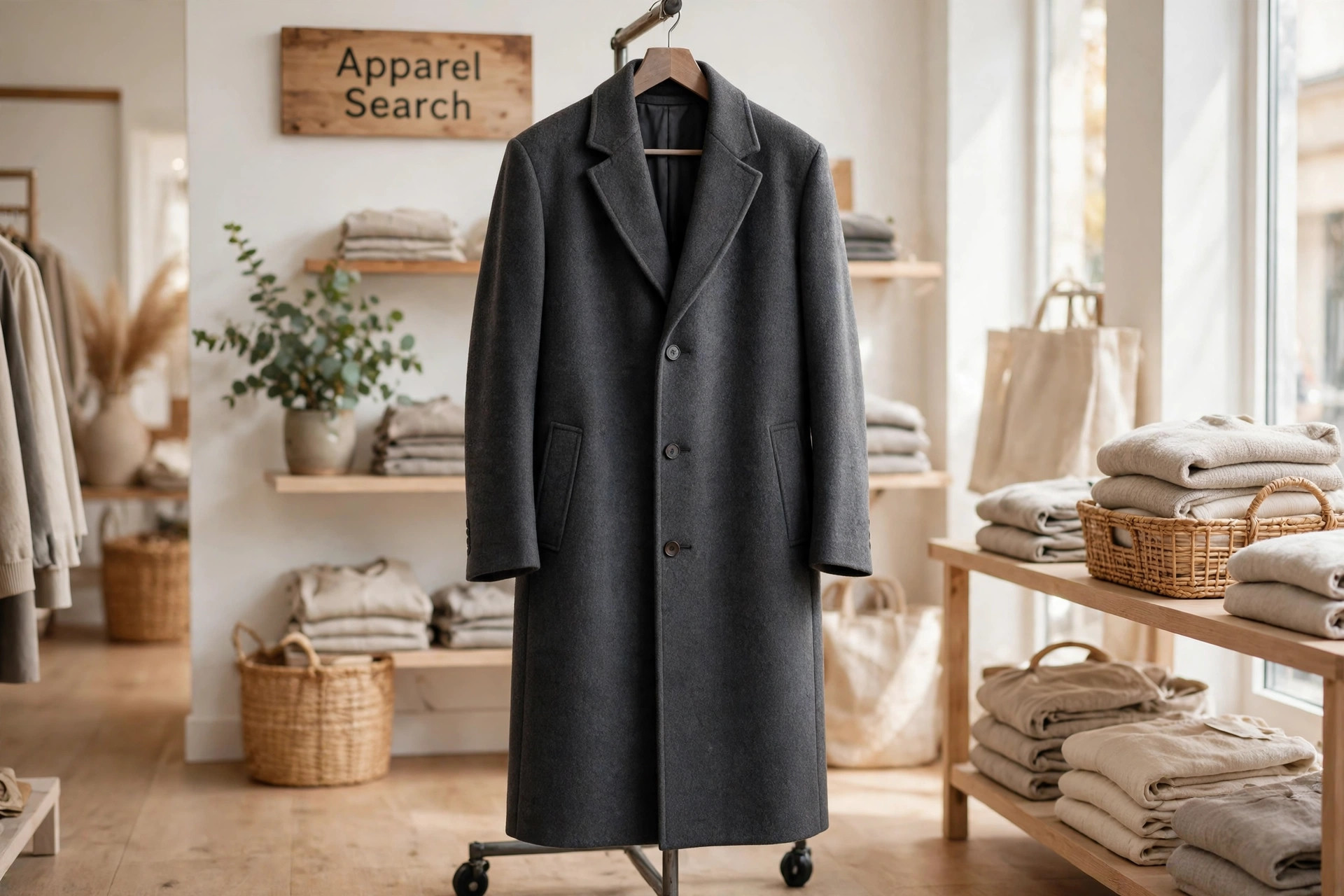
An overcoat is a long coat worn over other clothing. Overcoats were previously known as topcoats and occasionally greatcoats, and the three names mark out a family of long outer coats graded by weight and warmth: the overcoat proper for cold weather, the lighter topcoat for milder days, and the heavy greatcoat at the warmest extreme. This page explains the overcoat's place among coats, the cloths and styles it is made in, and how to judge length, fit and lining when choosing one.
Cloths, Styles and Weight
The overcoat is a woollen garment first and a fashion garment second, because its job is insulation over a full outfit. Classic overcoating cloths are heavy wool and wool-blend weaves: melton, with its dense, wind-resistant felted surface; tweeds for country wear; and finer worsteds and cashmere blends for city coats. Weight is the honest specification. A true winter overcoat cloth is far heavier per yard than suiting, and the coat's warmth comes from that cloth plus its lining, which may be a plain smooth lining for sliding over a jacket, or quilted and insulated in coats made for severe weather. Interlinings and wind resistance matter more than fashion detail in a coat bought for a cold commute.
Style names describe the cut laid over that cloth. The Chesterfield, named for the Earl of Chesterfield who popularised it in the nineteenth century, is the classic single-breasted city overcoat, straight in the body, with a velvet collar on formal versions and a fly front that hides its buttons. Double-breasted coats add an overlapping front that doubles the cloth over the chest and reads more formal and more military. The greatcoat is the heaviest member of the family, full-length and often double-breasted with a deep collar, descended from the coats of soldiers and watchmen who stood outdoors for hours. A wardrobe in a cold climate usually holds the family in two weights: a topcoat for autumn and spring and a full overcoat for winter.
Details follow the same practical logic as the cloth. Collars are cut to turn up and close at the throat, cuffs and pocket flaps keep out wind, and the back often carries a centre vent or an inverted pleat so the long skirt of the coat opens when the wearer walks or sits. Raglan sleeves, set in diagonally from the collar, slide more easily over a jacket than set-in sleeves and suit the looser country and travelling coats. None of these features is decoration first: on a garment whose whole purpose is to be the last layer between its wearer and the weather, every one of them is weatherproofing.
The Overcoat Among Outer Coats
The overcoat's neighbours divide the bad weather between them. The trench coat and the raincoat overlap the overcoat's role in wet rather than cold weather, lighter and made to shed water rather than to insulate. The parka replaces the overcoat at the casual, hooded extreme, and the tailored country role below the overcoat belongs to jackets such as the safari jacket. Older and simpler outer garments stand further off: the cloak, a loose sleeveless or enveloping wrap, and the poncho, a blanket with a head opening, both of which the tailored overcoat historically displaced in city dress.
The distinction that matters when buying is the one the confuse box below sets out: within the long tailored coats themselves, topcoat, overcoat and greatcoat are one family in three weights. The jacket family stops at the hip and is not part of it; an overcoat begins where a jacket ends, in length, in weight and in its purpose of covering a complete outfit rather than forming one.
Fit, Length and Care
Fitting an overcoat means trying it over the thickest clothing it will cover. Shoulders should sit at the natural shoulder over a jacket, sleeves should cover the jacket cuff and the shirt cuff beneath it, and the front should close without pulling when the wearer is seated. Length is chosen by use: knee length is the versatile standard, longer coats are warmer and more formal, and shorter car-coat lengths suit drivers, who sit in the coat for long periods.
Care follows the cloth. Brush wool after wearing, rest the coat between wearings on a broad hanger that supports the shoulders, and store it clean in summer against moths. Sponge marks rather than washing: a structured overcoat, with canvas, lining and shoulder padding inside it, is a dry-clean garment. A well-made wool overcoat is one of the longest-lived garments in a wardrobe, and its plain, conservative styling is deliberate, since the coat must outlast several changes of fashion beneath it.
Not to Be Confused With
The three names grade one long-coat family by weight, and they are best kept apart by the weather each is for. A topcoat is the lighter long coat, for cool rather than freezing days. An overcoat is the standard mid-to-heavy member, the winter coat worn over a suit or jacket. A greatcoat is the heaviest member, full-length and usually double-breasted, descended from the coats of soldiers and watchmen made for standing outdoors in severe cold. All three are long coats worn over other clothing; the difference is cloth weight and warmth, not kind.
Common Questions
What is an overcoat?
An overcoat is a long coat worn over other clothing, including a suit or jacket, as the outer layer against cold. Overcoats were previously known as topcoats and occasionally greatcoats.
What is the difference between an overcoat, a topcoat and a greatcoat?
The names grade the same long-coat family by weight. A topcoat is a lighter long coat for cool rather than freezing weather, an overcoat is the standard mid-to-heavy coat, and a greatcoat is a heavy, full-length coat, historically a military and guard coat, made for severe cold.
How long should an overcoat be?
An overcoat is cut long enough to cover the clothing beneath it, traditionally to the knee or below, so that trouser legs and jacket skirts stay protected. It is sized to fit over a jacket, so it is bought by chest measure with room allowed for the layers under it.