Norfolk Jacket
Clothing Definitions — definitions of garments and clothing terms from Apparel Search
Search Apparel Search
At a Glance
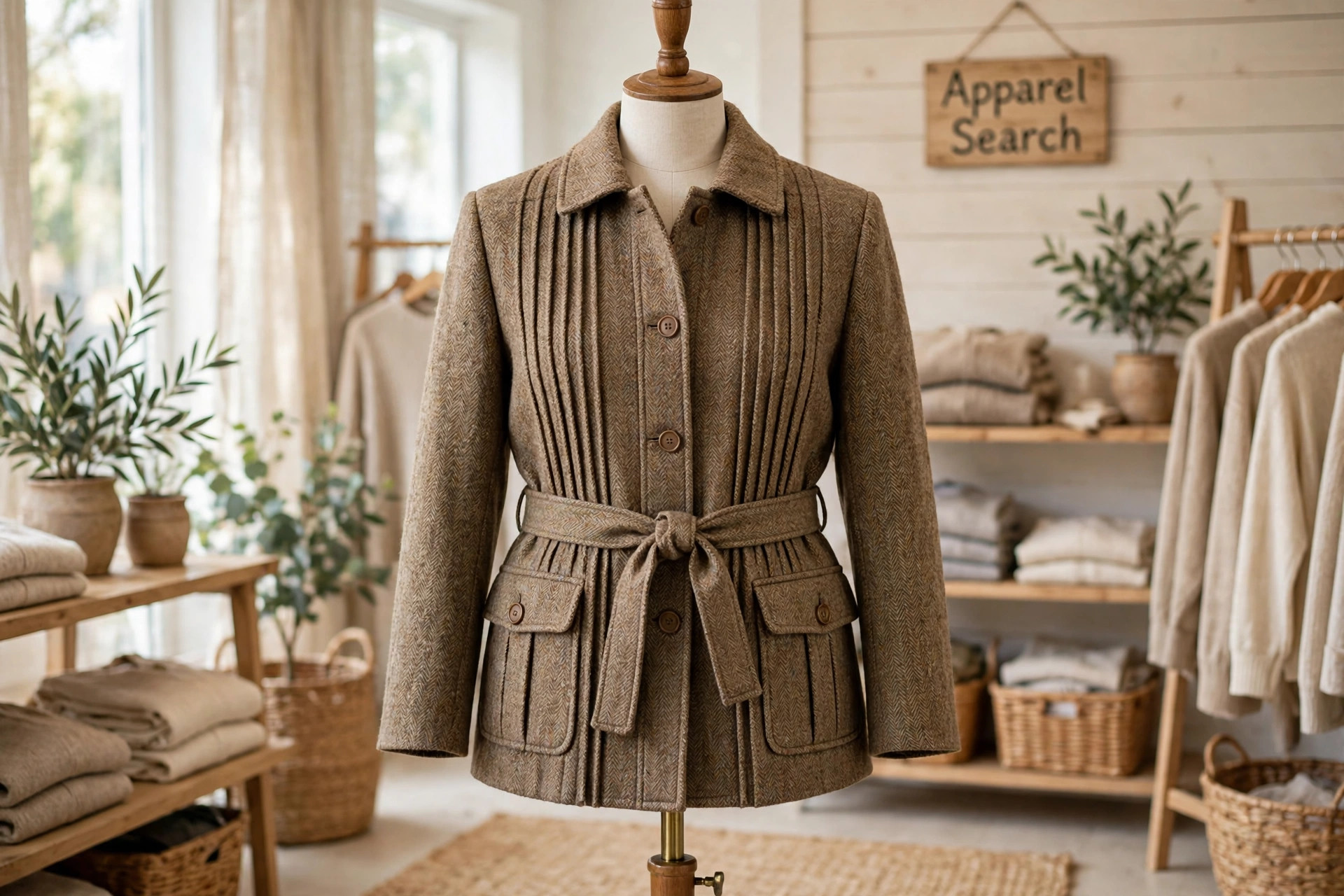
Definition: A Norfolk jacket is a loose, belted, single-breasted jacket with vertical box pleats at the back and often the front, originally made as a shooting coat that would not bind when the wearer raised an arm to fire.
Category: Clothing Definitions
Word Origin
Named either for the Duke of Norfolk or for the county of Norfolk — the two explanations the name has always carried. The style was made fashionable after the 1860s in the sporting circle of the Prince of Wales, later Edward VII.
The Norfolk jacket is a jacket designed around a single problem: how to shoot in a tailored coat. It is loose, belted and single-breasted, with box pleats running vertically down the back and often the front, and it began as a shooting coat that would not bind when the elbow was raised to fire. From the shooting field it spread to country fashion, to boys' clothing and to uniform wear. This page explains how the pleats and belt do their work, where the name comes from, and how the jacket travelled so far from its first purpose.
Construction: Pleats, Belt and Pockets
The defining feature is the pleating. Box pleats, usually two, run the full length of the back from shoulder to hem, stitched down at the top and bottom and free in between, and many Norfolk jackets carry a matching pair at the front. The body itself is cut loose, looser than any ordinary coat or jacket of its period, and the looseness is controlled by a belt of the same cloth worn at the waist, or in later and modern versions by a half-belt across the back only.
The rest of the construction serves the field. Pockets are large, often with bellows or pleated expansion, sized for cartridges and game-season necessities, with flaps that keep the contents in when the wearer bends. The cloth was traditionally a hard-wearing tweed, thornproof and quiet in movement, in the greens and browns of country dress. Lapels are notched and the front closes with the belt over a short buttoned fastening, so nothing strains or gaps when the body twists.
A Shooting Coat by Design
Every feature answers a movement. Mounting a gun and swinging it across the body pulls an ordinary fitted jacket tight across the back and shoulders at exactly the moment the shot is taken. The Norfolk's box pleats open like bellows as the arms rise, giving the extra cloth the movement needs, then fold flat again as the arms fall, so the jacket looks neat at rest and gives freely in action. The belt holds the loose body closed against weather without buttons taking the strain.
That combination, freedom above the waist and control at it, is why the Norfolk pattern outlasted its sport. Any work that needs a smart jacket the wearer can move in, reaching, lifting and turning, has the same requirement the shooting field had, and the pleated, belted answer transfers directly, which is the short history of the jacket's later lives in uniform and work dress.
From Field to Fashion, School and Uniform
The style was made fashionable after the 1860s in the sporting circle of the Prince of Wales, later Edward VII, and the Norfolk suit, the jacket worn with matching knickerbockers or trousers as a suit for the country, became standard sporting dress. As fashion it sits beside the sports coat, the less formal tailored jacket for country and leisure wear, and its belted field cousin the safari jacket, cut lighter for hot climates with four bellows pockets.
The full Norfolk suit was an outfit, not just a jacket: the belted, pleated jacket over knickerbockers or plus-fours, with a shirt, tie, long woollen stockings and a flat cap or soft hat, all in matching or harmonising tweed. Worn complete, it was the recognised uniform of the shooting party, the cycling tourist and the country weekend for half a century, and its completeness is why the jacket alone still reads as sporting even when worn with ordinary trousers. The pleats and belt, designed for a gun, became the visual shorthand for the outdoor life itself.
Boys' clothing took the style up even more durably than men's fashion did. For decades the Norfolk jacket was the classic schoolboy and holiday jacket, made in cheaper cloths but keeping the pleats and belt as the style's signature, and generations of boys were photographed in it. Uniformed services kept a version too, in some military and police dress, where the pleated, belted jacket reads as smart while allowing movement. The modern descendants are the tweed country jackets with pleats and half-belts still sold for shooting and country wear, and the softened form the style takes in the blazer end of the modern wardrobe, while the full cold-weather role above it belongs to the overcoat.
Not to Be Confused With
Two belted sporting jackets are regularly mixed up. A Norfolk jacket is a tailored shooting jacket whose back, and often front, carries full-length box pleats that open when the arms rise, closed by a cloth belt or half-belt. A safari jacket is a belted field jacket of lighter cloth, recognised by its four large bellows patch pockets and shoulder epaulettes, made for hot-climate wear. Pleats for movement mark the Norfolk; pockets for carrying mark the safari jacket.
Common Questions
What is a Norfolk jacket?
A Norfolk jacket is a loose, belted, single-breasted jacket with box pleats on the back and sometimes on the front. It was designed as a shooting coat and is still used in some military and police uniforms.
Why does a Norfolk jacket have pleats and a belt?
The box pleats let the jacket expand across the shoulders and back when the arms are raised to fire a gun, while the belt holds the loose body in place. The design goal was a coat that did not bind when the elbow was raised.
Where does the name Norfolk jacket come from?
The jacket was named either for the Duke of Norfolk or for the county of Norfolk. It was made fashionable after the 1860s in the sporting circle of the Prince of Wales, later Edward VII.