Single-Breasted
Miscellaneous Definitions — the coat or jacket front with one row of buttons and a narrow overlap of fabric, from Apparel Search
Search Apparel Search
At a Glance
Definition: Single-breasted refers to a coat, jacket or similar garment having one row of buttons and a narrow overlap of fabric.
Category: Miscellaneous Definitions
In clothing, single-breasted refers to a coat or jacket or similar garment having one row of buttons and a narrow overlap of fabric. In contrast, a double-breasted coat has a wider overlap and two parallel rows of buttons. The term describes how the fronts of the garment meet and fasten, rather than the fabric, colour or overall cut of the coat. It applies to everyday suits and jackets as well as to more specialised garments such as tuxedo jackets and sports coats, and it is the most common front arrangement in modern tailored clothing today. This page covers what the narrow overlap means in wear, how the two breasted forms compare, and the range of garments the term covers.
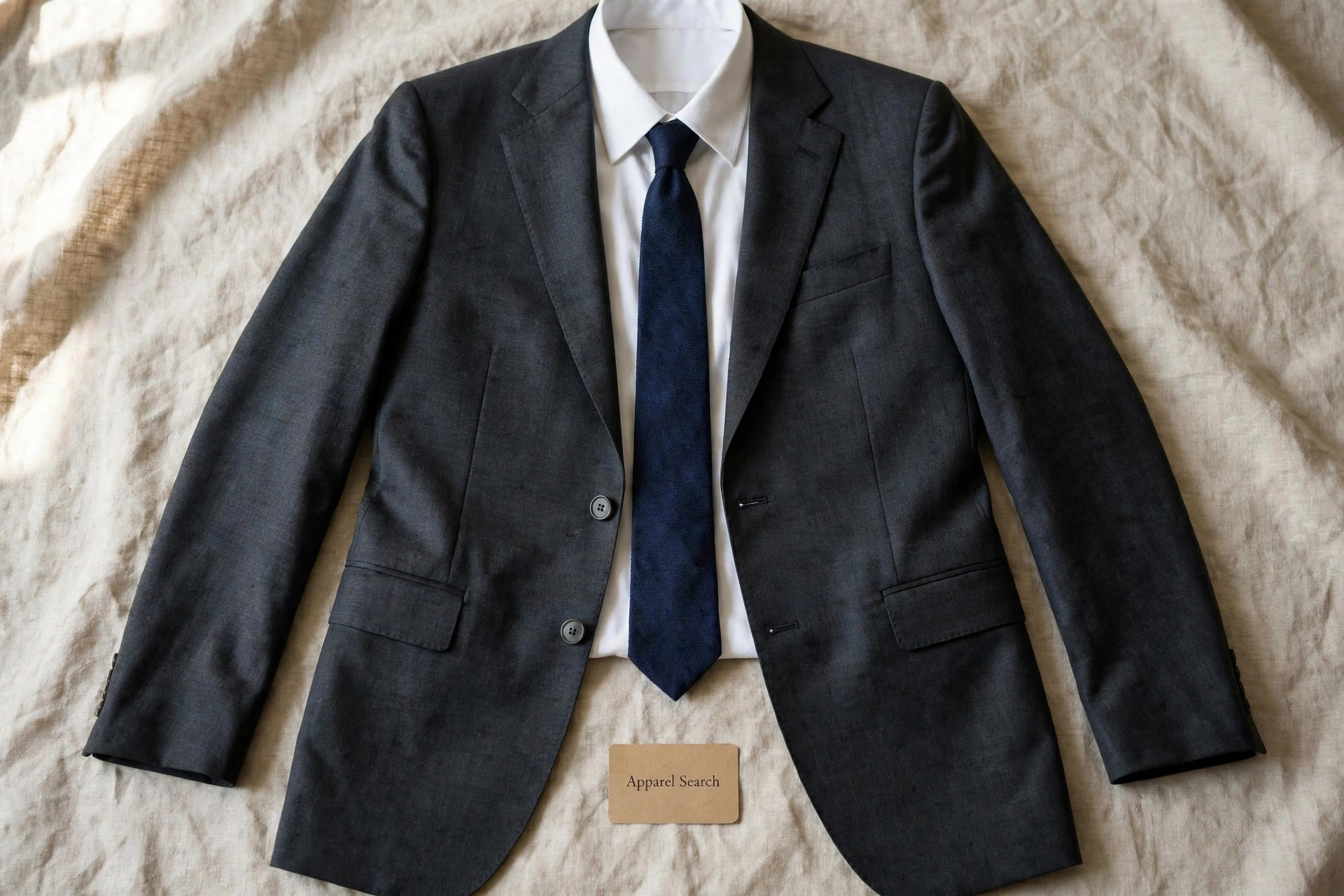
One Row of Buttons, a Narrow Overlap
The "breasted" in single-breasted describes the front of a tailored garment: how its two fronts overlap across the chest and how they are buttoned. A single-breasted coat or jacket has one row of buttons and a narrow overlap of fabric. The left and right fronts meet close to the centre line of the body, one edge lying just over the other, and the single row of buttons fastens through that modest overlap. Because so little fabric crosses over, the closed front presents a clean, vertical opening above the fastening point — typically a V through which shirt and tie show on a suit jacket — and the garment opens and closes quickly with little bulk at the waist. The definition covers the fastening architecture only: a single-breasted garment may be long or short, formal or informal, made in any suiting or coating material, and cut slim or generously, without changing what the term means.
That narrow overlap has practical consequences a wearer feels daily. Less doubled fabric across the stomach means a lighter, cooler front and a jacket that sits closer to the body, which is one reason the single-breasted form became the default for the modern lounge suit, the sports coat and the everyday blazer. Button stance — where the fastening button sits in relation to the natural waist — shapes the proportions of the whole outfit, lengthening or shortening the apparent torso. One, two or three buttons may be provided in the single row, but only the fastening arrangement, not the button count, defines the style. When the jacket is worn open, the narrow fronts fall away cleanly to each side, another reason the form suits less formal dress.
Single-Breasted and Double-Breasted Compared
The contrast term defines the boundary. A double-breasted coat has a wider overlap and two parallel rows of buttons: one row fastens the garment, the broad front wraps well across the body, and the second row is substantially decorative, giving the chest a squared, layered, more formal presence. Against that, single-breasted reads as simpler, lighter and more versatile.
Choosing between the two is therefore a decision about effect rather than quality. Double-breasted fronts add warmth through their doubled cloth, project ceremony, and suit wearers who want breadth at the chest emphasised. Single-breasted fronts travel better between occasions, layer more easily over knitwear, show more of what is worn beneath, and adapt to a wider range of body shapes without adjustment. Tailors treat the two as parallel traditions rather than rivals, and most wardrobes that contain both use them on different days for different purposes. The enduring dominance of the single-breasted jacket in modern dress does not make the double-breasted form obsolete; it simply reflects how often dress calls for the narrower overlap, the single row of buttons, and the unobstructed line that the term describes.
Where the Single-Breasted Front Appears
Two named applications in the original mark the form's range. The single-breasted suit is the working default of tailored dress: the narrow overlap keeps the jacket light over a shirt, the single row is quick to fasten, and the open V above the button shows the shirt and tie that complete the outfit. The single-breasted tuxedo applies the same front to evening dress, where the clean, unbroken line suits formal occasions precisely because it adds nothing decorative across the chest. Between those poles the form adapts without changing its name, because the name describes only the fastening — which is why a buyer can ask for a single-breasted front on garments as different as a business suit, a sports coat and a smoking jacket and be understood exactly in each shop.
The form crosses levels of formality with ease. The same construction appears in a single-breasted suit for business, in a single-breasted tuxedo jacket for evening dress, in sports coats for informal wear, and in country and leisure forms such as the Norfolk jacket, with its belted, pleated practicality, and the smoking jacket worn at home. Few tailoring terms cover so much ground with so small a structural difference — one row of buttons and a narrow overlap, repeated across the whole range of the tailored jacket.
Not to Be Confused With
Not to be confused with double-breasted: count the rows of buttons. A single-breasted front has a narrow overlap and one row of buttons, its fronts meeting near the centre of the body with only enough overlap to button. A double-breasted coat overlaps widely and shows two parallel rows of buttons, with extra layers of fabric across the opening. Narrow overlap and one row: single-breasted; wide overlap and two rows: double-breasted.
Common Questions
What does single-breasted mean?
Single-breasted refers to a coat, jacket or similar garment having one row of buttons and a narrow overlap of fabric. The fronts meet near the centre of the body and fasten in a single line.
How does single-breasted differ from double-breasted?
A double-breasted coat has a wider overlap and two parallel rows of buttons. A single-breasted garment has a narrower overlap and only one row of buttons.
What garments are described as single-breasted?
The term is used for coats and jackets and similar garments, including single-breasted suits and tuxedo jackets, sports coats, Norfolk jackets and smoking jackets.
Does the number of buttons in the row change the definition?
No. One, two or three buttons may be provided in the single row; what defines the style is the fastening arrangement — a single row and a narrow overlap — not the button count.