Double-Breasted
Miscellaneous Definitions — accessories, trims, tools and general fashion terms from Apparel Search
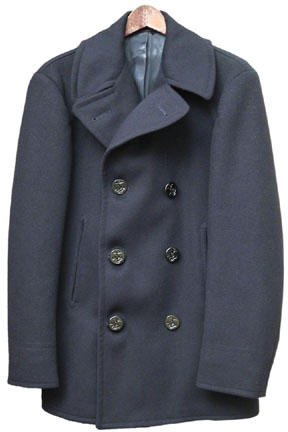
In clothing, double-breasted refers to a coat or jacket or similar garment having a wide overlap in the front with two parallel rows of buttons. The wide overlap puts extra layers of fabric where the opening occurs to retain body heat. In contrast, a single-breasted coat has a narrower overlap and one row of buttons, and pea coats and some trench coats are traditionally double-breasted.
In clothing, double-breasted refers to a coat or jacket or similar garment having a wide overlap in the front with two parallel rows of buttons. The wide overlap puts extra layers of fabric where the opening occurs to retain body heat.
In contrast, a single-breasted coat has a narrower overlap and one row of buttons.
Pea coats and some trench coats are traditionally double-breasted.
See also suit.
| The above article is licensed under the GNU Free Documentation License. From Wikipedia, the free encyclopedia (https://en.wikipedia.org/wiki/double-breasted) 1/14/06 |
 |
| Textile & Clothing definitions and Glossaries: |
Wide Overlap, Two Rows of ButtonsA double-breasted garment is defined by how its front closes. The two front panels cross over each other by a wide margin, so a substantial width of one panel lies over the other across the chest and torso, and the closure is displayed as two parallel rows of buttons running down that overlap. Typically one row does the actual fastening while both rows show, giving the front a symmetrical, doubled appearance that a single closure line cannot produce. The wide overlap changes the garment's whole look: the chest reads broader, the front reads more formal and structured, and the buttons become a deliberate pattern of the design rather than a single functional line down the center. Lapels on a double-breasted jacket are arranged to match, folding back from the crossover point so the doubled front is framed rather than hidden. The contrast term makes the definition exact. A single-breasted coat has a narrower overlap and one row of buttons: its fronts meet near the center of the body with only enough overlap to button, which gives a lighter, simpler front and a longer visible opening of shirt and tie when worn as a jacket. Neither construction is a variation of the other by decoration alone. The overlap width is built into the pattern, affecting how much cloth is cut for the fronts, where the buttonholes are placed, and how the garment wraps the torso, so a coat is double-breasted or single-breasted from the cutting table onward, not by a styling choice made in front of a mirror. Warmth at the Opening, and the Pea Coat TraditionThe wide overlap is not only style. It puts extra layers of fabric where the opening occurs to retain body heat, and the front opening is precisely where a coat is weakest against cold and wind: a single layer at a buttoned edge gaps and leaks air, while a doubled overlap keeps two thicknesses of cloth and an air space over the chest and abdomen. That practical origin shows in the garments that keep the style most faithfully. Pea coats, the heavy wool coats of naval tradition, are traditionally double-breasted, because a sailor on a cold deck needs the doubled front as working insulation, and the broad collar and overlap together seal the torso. Some trench coats are traditionally double-breasted as well, where the storm heritage of the garment makes the same wind-shedding, double-layered front a functional feature rather than an ornament. In tailored dress the double-breasted form carries a set of associations a wearer can use deliberately. It reads as more formal and more assertive than a single-breasted jacket of the same cloth, it suits broader builds by giving the chest a structured frame, and it is usually worn buttoned, since an open double-breasted front lets the wide panels fall untidily where a single-breasted jacket hangs acceptably open. The style moves in and out of fashion in cycles, prominent in some decades and scarce in others, but it never disappears, because its two sources of value do not date: a warmer, better-sealed front for coats, and a broader, more ceremonial front for jackets. See also the suit, jacket, coat and sports coat definitions for the garments this closure most often serves. Common QuestionsWhat does double-breasted mean?Double-breasted refers to a coat or jacket or similar garment having a wide overlap in the front with two parallel rows of buttons. A single-breasted coat, by contrast, has a narrower overlap and one row of buttons. Why does a double-breasted coat have a wide overlap?The wide overlap puts extra layers of fabric where the opening occurs to retain body heat. The front opening is where a coat loses the most warmth, so doubling the fabric across it serves a practical purpose as well as a stylistic one. Which coats are traditionally double-breasted?Pea coats and some trench coats are traditionally double-breasted. The style is also standard on many formal suits, blazers and overcoats in the tailored tradition. More to ExploreMore from Apparel Search: Miscellaneous Definitions | Clothing Industry Glossary | Fashion Terms | Apparel Search Home
|