Women's Outdoor Apparel Guide
Outdoor apparel is clothing engineered for weather and movement: the layering system of base, insulation and shell that keeps a hiker, camper or skier warm, dry and moving.
Shop Women's Outdoor Apparel Now
Shop Women's Outdoor Apparel on Amazon Shop Women's Outdoor Apparel on eBayThe Amazon and eBay links on this page are affiliate links. If you make a purchase through them, Apparel Search may earn a commission.
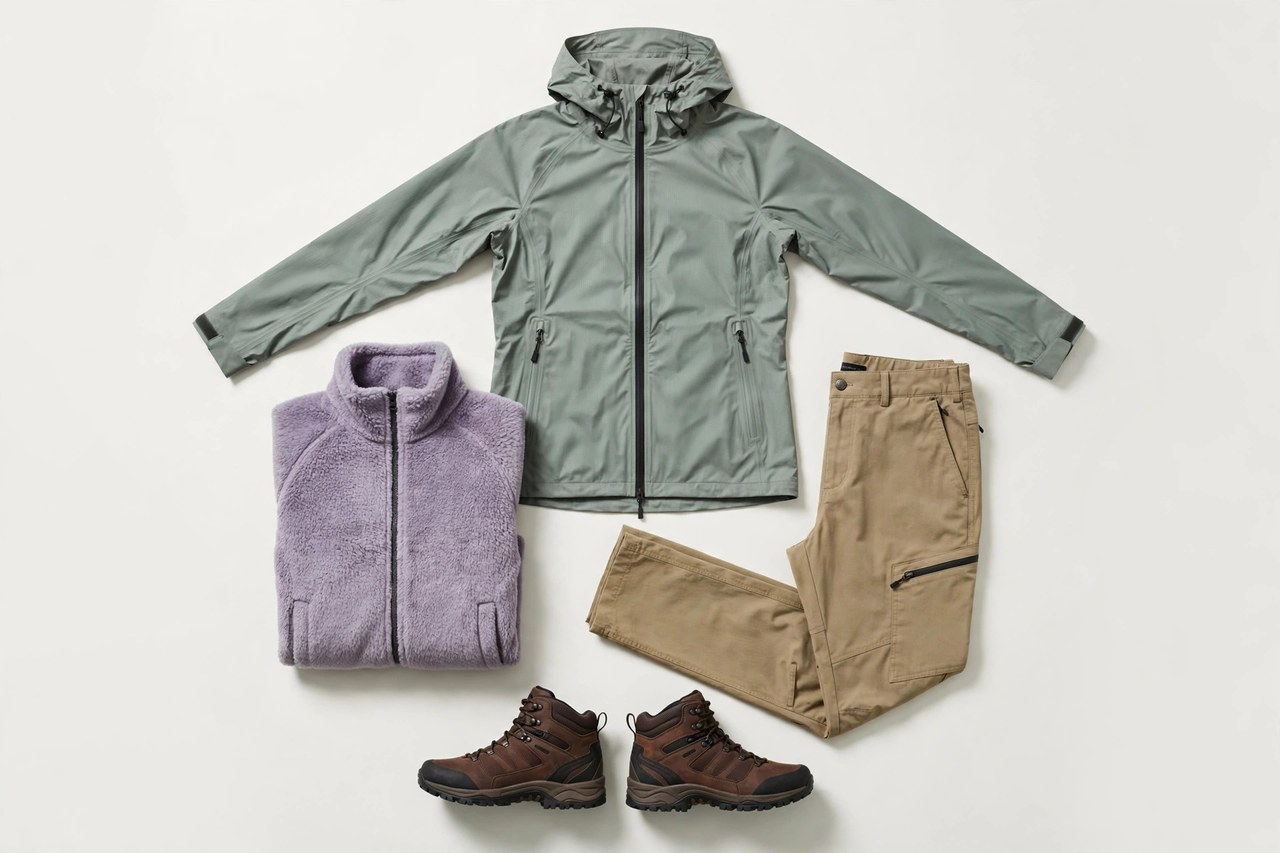
Outdoor apparel is the technical branch of the women's wardrobe: clothing designed for activities in weather — hiking, camping, climbing, paddling, skiing and trail running — where the garment's job is thermoregulation and protection rather than appearance. Its governing idea is the layering system, three functional layers that combine and separate as conditions change. Understand the system and every individual purchase in the category becomes simple, because each garment has exactly one job in it.
This guide explains the system layer by layer, the fabrics and ratings that matter (and the marketing numbers that matter less), and how outdoor apparel differs from the general outerwear in our outerwear guide: outerwear is the coat over your day; outdoor apparel is equipment for a specific environment, and it is bought like equipment.
The Layering System
The base layer sits on the skin and manages moisture: it must move sweat away so evaporation does not chill you. The working fabrics are merino wool (naturally temperature-regulating and odor-resistant) and synthetic knits (polyester or nylon, faster-drying and cheaper). Cotton is the one wrong answer — it absorbs water, holds it against the skin and chills, which is why outdoor culture's oldest saying is that cotton kills. Fit base layers close, in a weight matched to temperature: lightweight for summer effort, midweight and expedition weights as it gets colder.
The mid layer insulates: it traps the warm air your body heats. Fleece is the versatile standard (graded by weight, breathable, warm when damp), down is the warmest insulator per gram in dry cold and packs smallest, and synthetic insulation keeps working when wet, suiting damp climates and high-output stops and starts. The shell layer stops weather: waterproof-breathable jackets and overtrousers with membranes or coatings, seam sealing and storm flaps. A shell's job is to shed rain and wind while letting sweat vapor escape — ratings for waterproofness (in millimetres) and breathability are printed by reputable makers, and fully taped seams are the feature that separates a true shell from a water-resistant jacket.
Legs, Feet and Women's-Specific Design
Outdoor trousers are built to move: articulated knees, gussets, stretch panels and abrasion-resistant fabrics, in softshell (breathable, weather-shedding, for most hiking) and hardshell (fully waterproof, for storms) versions. Zip-off and roll-up legs serve variable days; a good belt or integrated adjustment matters because packs ride on the waistband. Shorts and skorts cover summer trails. On the feet, the system is socks (merino or synthetic, never cotton) and footwear matched to load and terrain: trail shoes for light and fast, mid boots for loads and rough ground, with fit judged by toe room for descents, when feet swell and slide forward.
Women's-specific outdoor design has matured past shrink-and-pink. The best makers cut shells with room for a mid layer without swamping the shoulders, place hip-belt clearance into jacket hems, offer trousers in multiple inseams and rises, and cut boots on a women's last with a narrower heel. When trying outdoor apparel, test it in the system: base plus mid plus shell together, with the pack you will carry, reaching, stepping high and sitting. A layer that works alone and binds in combination is the wrong size in the only sense that matters.
Choosing by Activity, and Care
Buy for your actual weather statistics, not the expedition photograph. Day hikers in temperate hills need a breathable softshell, one fleece and a packable waterproof far more than expedition down. Winter walkers reverse the priorities. Skiers split the category again into resort (insulated, durable) and touring (light, breathable) systems. The discipline is to list your coldest, wettest, windiest realistic day, equip for it, and resist paying weight and money for conditions you will never meet — in outdoor apparel, unnecessary features are quite literally a burden you carry.
Care preserves the technical finishes you paid for. Wash shells and insulation with technical or gentle detergents (standard detergents and fabric softeners clog membranes and strip water-repellent finishes), tumble shells warm to reactivate the durable water repellent coating, and re-proof when water stops beading. Store down uncompressed, hang shells rather than stuffing them for months, and patch small tears with repair tape early — outdoor garments are designed to be repaired, and a patched shell has decades of trail in it. Equipment culture treats care as part of the sport, and it is right.
Related Women's Guides
Photos

Looking for Women's Clothing Stores?
This guide helps you choose women's outdoor apparel. To browse where to buy, visit our women's clothing store directory, where you can find retailers that carry them.