Women's Hiking Boots Guide
Boots built for trails: a raised, supportive shaft, a waterproof build and a lugged sole. Weight classes from day hikers to mountaineering boots, and how to fit and break them in.
Shop Women's Hiking Boots Now
Shop Women's Hiking Boots on Amazon Shop Women's Hiking Boots on eBayThe Amazon and eBay links on this page are affiliate links. If you make a purchase through them, Apparel Search may earn a commission.
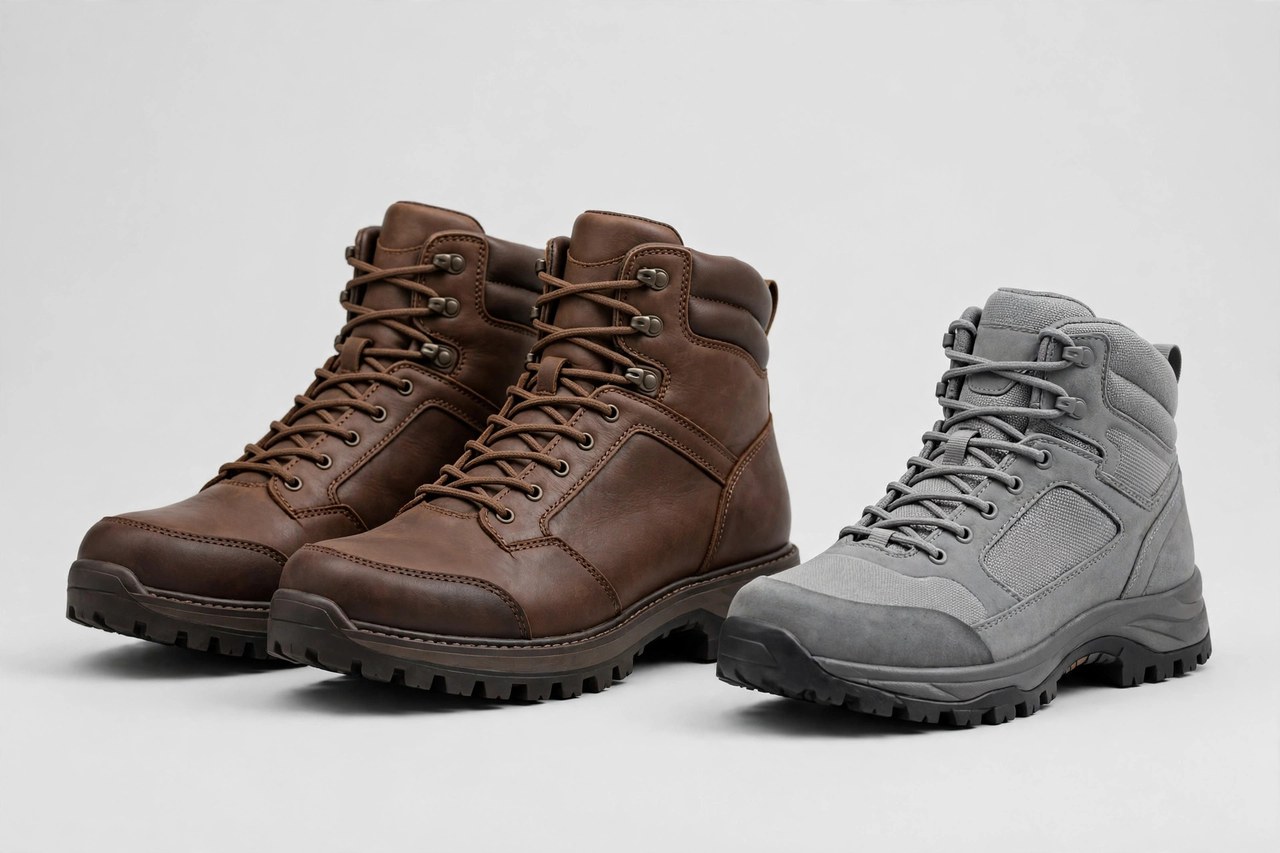
A hiking boot is footwear engineered for a job: hiking means long, vigorous walks on trails that can be flat, steep or rocky, with tree branches and roots on the ground. Hiking boots are designed for protecting the feet and ankles during outdoor walking, and they are one of the most important items of hiking gear, because their quality and durability can decide whether a hiker covers long distances without injury.
This guide covers the boot form only: footwear that covers the foot and the ankle. The lighter, low-cut alternative is a different purchase with different trade-offs, covered in our hiking shoes guide — and choosing between the two is the first decision in this category, so it gets a section of its own below.
Ankle Support and the Boot's Structure
The defining feature is the raised collar. A mid- or high-cut shaft wraps the ankle, limits sideways rolling on uneven ground, and works with the lacing to lock the heel down, which is what prevents both turned ankles and the heel-lift blisters that end hikes early. Cushioned collars, padded tongues and a structured heel counter complete the support system.
Underfoot, a hiking boot is built on a stiff shank and a firm midsole that spread the pressure of sharp rocks across the whole foot instead of letting you feel every stone. Backpacking boots are stiffer still, because a loaded pack multiplies the force through the foot. If you can twist a boot like a trainer, it is a walking boot for paths, not a trail boot for mountains.
Waterproofing: Membranes and Leather
Most hiking boots answer wet ground one of two ways. Waterproof-membrane boots line a fabric or split-leather upper with a waterproof-breathable membrane (sold under names like Gore-Tex and own-brand equivalents): light, soft from the first wear, and the standard for wet climates. Full-grain leather boots keep water out with the leather itself plus regular waxing: heavier, slower to dry once soaked through, but famously durable and re-soleable.
Waterproof is not the same as suitable for every trip. Membranes run warm, so desert and hot-weather hikers often choose non-waterproof, breathable boots that dry fast after stream crossings. Match the boot to the wettest day you actually expect, not the wettest day you can imagine.
Tread and Outsoles
A hiking sole grips with lugs: deep, widely spaced blocks of rubber that bite into mud and loose soil and shed it as you walk. Wide spacing matters — a clogged sole is a smooth sole. Heel lugs are angled to brake on descents, toe lugs to pull on climbs, and the rubber compound trades grip against wear, with softer compounds gripping wet rock better and harder ones lasting longer.
Check the sole against your terrain. Rocky alpine trails reward a firmer, more protective sole with a rubber toe cap; muddy woodland rewards depth of lug above all. A boot that excels at one can be merely adequate at the other, and honest retailers say so.
Weight Classes and Breaking In
Boots sort into three working classes. Day-hiking boots are the lightest, often fabric-and-leather mids, flexible enough for unloaded miles. Backpacking boots add stiffness, height and durability for multi-day loads, built for waterproof protection and excellent support at a low weight for weekend backpacking trips. Mountaineering boots are a specialist class of their own — rigid, insulated and crampon-compatible — and are the wrong purchase for ordinary trails.
Breaking in is part of the purchase. Leather boots especially need graduated wear: short walks, then longer ones, building distance over weeks, never a first outing of ten miles. Membrane day boots need less, but every pair needs its fit proven under a loaded pack before a real trip. Buy boots in the afternoon, wear your hiking socks and any orthotics, and allow a thumb's width ahead of the toes for descents, where feet slide forward and blackened toenails are the traditional souvenir of a boot bought too short.
More Trail & H Guides
Photos

Looking for Women's Clothing Stores?
This guide helps you choose women's hiking boots. To browse where to buy, visit our women's clothing store directory, where you can find retailers that carry them.