Women's High Heel Boots Guide
The heel is only half the story on a boot: shaft height, heel shape and sole decide the rest. Stilettos, blocks and platforms on ankle boots, knee boots and over-the-knee styles.
Shop Women's High Heel Boots Now
Shop Women's High Heel Boots on Amazon Shop Women's High Heel Boots on eBayThe Amazon and eBay links on this page are affiliate links. If you make a purchase through them, Apparel Search may earn a commission.
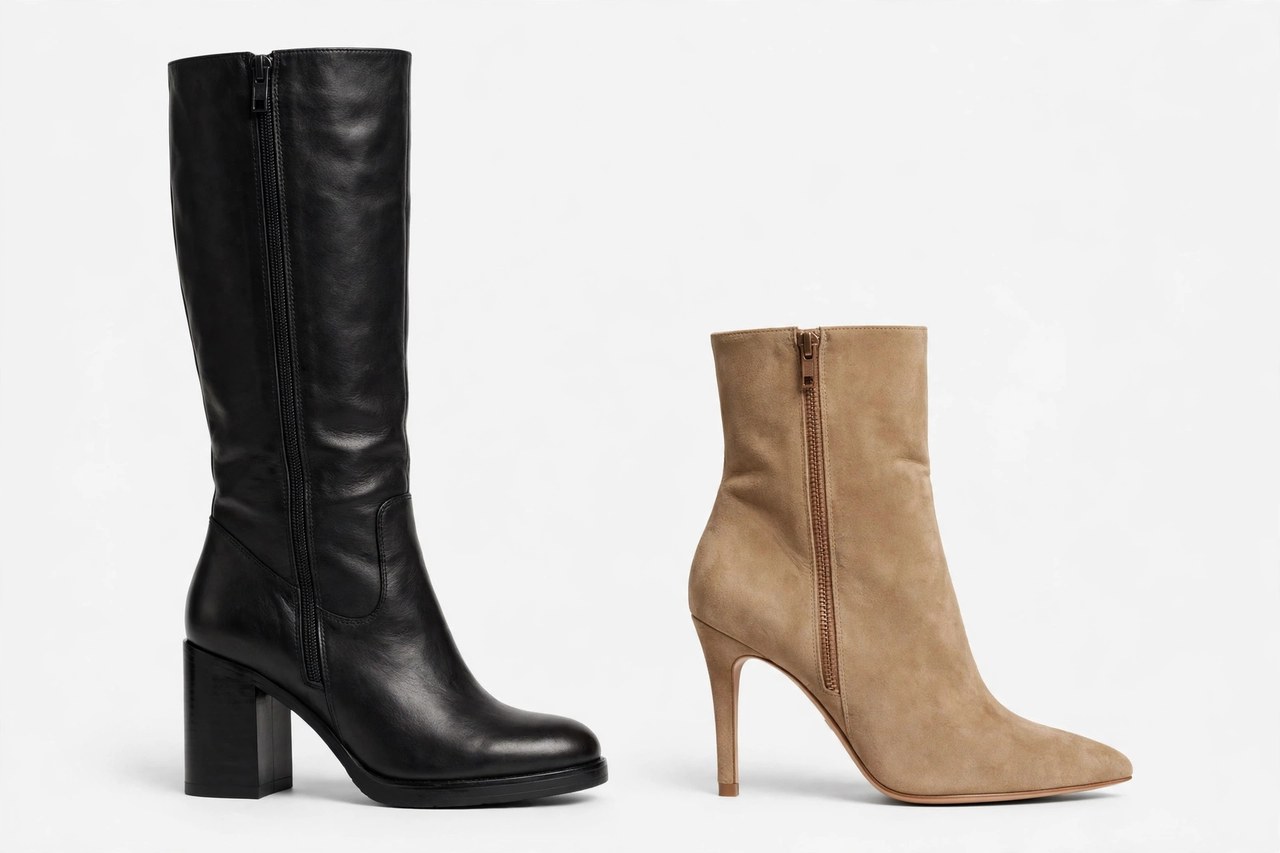
A high heel boot is two garments in one purchase: a boot, with a shaft that covers the ankle and some or all of the calf, built on a raised heel that lifts the back of the foot well above the toe. Either half can be the point of the pair. This guide covers heeled boots only; for heeled shoes and pumps without the shaft, see our high heel shoes guide — the heel vocabulary overlaps, but the fitting and styling questions are different.
Tall heels change the way the wearer stands, lengthening the leg line and creating a slimmer, leaner silhouette — and a boot extends that line unbroken from toe to knee. That is why heeled boots anchor so many autumn and winter outfits.
Heel Types on Boots
The stiletto boot puts a narrow heel under a structured shaft: dramatic, dressy, and the least forgiving on cobbles, grates and long evenings. The block heel — wide, straight and stable — is the practical favourite for surefootedness, carrying height through a full day because the weight spreads over a real footprint. Wedge boots run the support from heel to toe in one piece, and cone and sculpted heels sit between stiletto and block in both look and stability.
Platform boots raise the toe as well as the heel, so a boot that measures five inches at the heel may walk like three — the effective pitch, not the tape-measure height, is what your feet feel. When comparing pairs, compare pitch first and headline height second.
Shaft Heights: Ankle, Knee and Over-the-Knee
Ankle boots (booties) end at or just above the ankle and work with everything from cropped trousers to dresses. Mid-calf and knee boots are the classic heeled silhouettes, cut to sit just below the knee, and they ask the most of fit: a shaft that fits the calf standing may bind when sitting. Over-the-knee and thigh boots turn the boot into the outfit's main event and pair best with short hemlines or skinny trousers tucked in.
Stretch panels, back zips and pull loops are fitting features, not decoration. Measure your calf at its widest over the trousers or tights you will wear, and check the stated shaft circumference — boot shafts are the most common reason heeled boots go back to the shop.
Stability, Soles and Walking
A boot is inherently steadier than a heeled shoe at the same height, because the shaft holds the ankle and stops the foot rolling sideways in the shoe. That support is real but not unlimited: a high stiletto ankle boot still concentrates balance on a narrow heel, and its grip depends on the sole. Look for textured or rubber-tipped soles and heel caps, especially in leather-soled dress boots that turn slippery on wet stone and marble.
Pitch and heel placement matter as much as height. A heel set directly under the ankle bone walks better than one angled back; a slight platform or a cushioned insole takes the sting out of the forefoot. If a pair feels unsteady standing still in the shop, no amount of practice will fix it.
Styling and Care
Heeled boots style by proportion. Knee boots with a block heel ground midi dresses and skirt suits; stiletto ankle boots sharpen tailoring and evening trousers; over-the-knee styles need the leg on show, so hemlines rise or trousers go skinny. Match the boot's formality to its heel: a rugged lug sole with a heel reads casual, a slim heel on smooth leather reads dress, whatever the shaft height.
Care for the shaft as much as the foot. Use boot shapers or rolled magazines so tall boots stand instead of folding at the ankle, keep leather conditioned and suede brushed and sprayed, and replace heel caps at the first click of metal — a worn cap damages the heel stem itself, which is the expensive repair.
More Footwear Guides
Photos

Looking for Women's Clothing Stores?
This guide helps you choose women's high heel boots. To browse where to buy, visit our women's clothing store directory, where you can find retailers that carry them.