Women's Boots Guide
From ankle booties to knee-high riding boots, this guide explains boot heights and styles, how a shaft should fit your calf, when each type earns its keep, and how to care for leather.
Shop Women's Boots Now
Shop Women's Boots on Amazon Shop Women's Boots on eBayThe Amazon and eBay links on this page are affiliate links. If you make a purchase through them, Apparel Search may earn a commission.
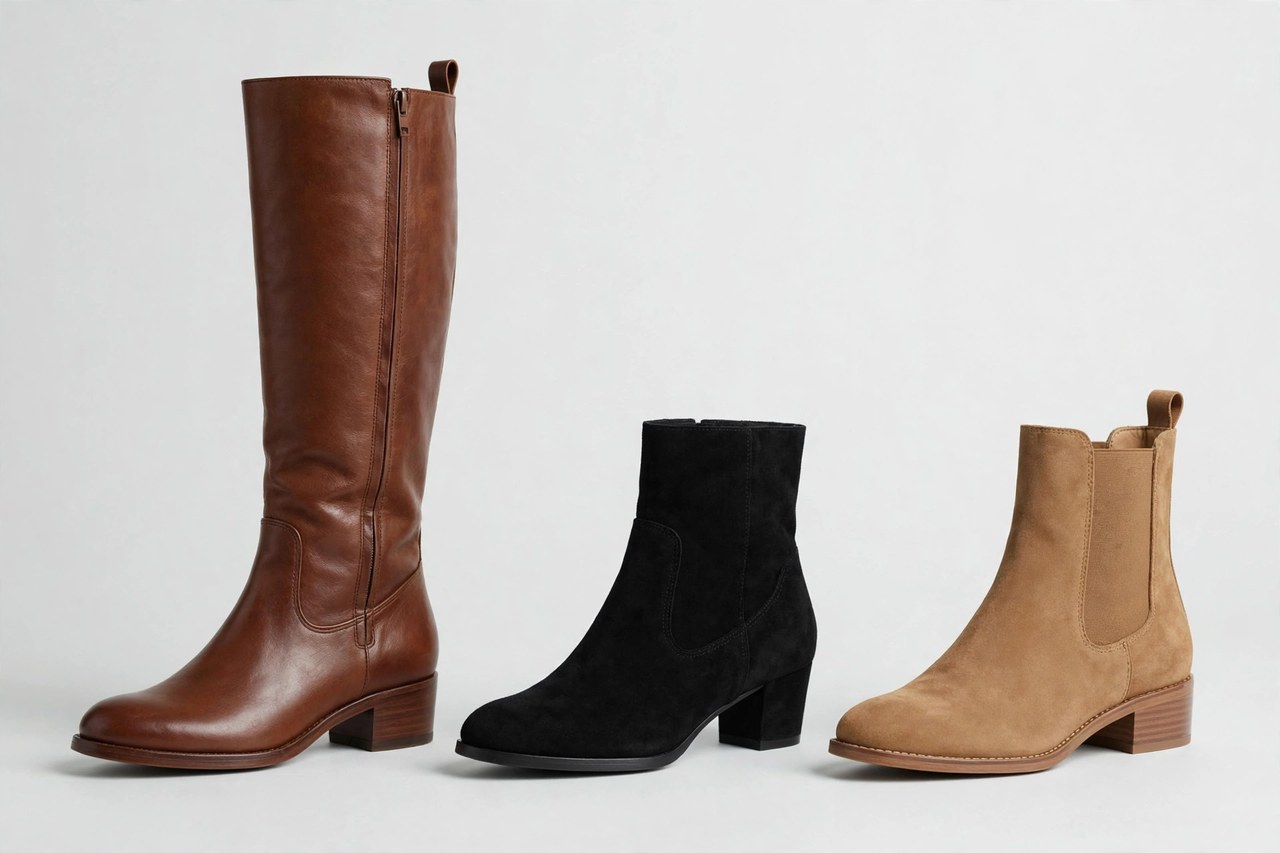
Boots are the most architectural shoes a woman owns. Where a flat or a sandal sits under the foot, a boot climbs the leg, and that extra coverage changes everything: warmth, protection, proportion and presence. A boot can anchor a winter coat, sharpen a dress, or carry an outfit of jeans and a sweater from plain to finished, which is why boot season is the high point of many wardrobes.
Because boots cost more and cover more than most shoes, they also punish a careless purchase more. This guide works through the heights and styles and what each does for an outfit, how the shaft and foot should fit, the seasonal logic of wearing boots well, the leathers and linings worth paying for, simple care routines, and the calf-fit questions that decide most boot purchases.
Boot Heights and Styles
Height is the first decision. Ankle boots and booties end at or just above the ankle and pair with everything from cropped trousers to midi dresses. Mid-calf boots sit at the widest part of the calf - a flattering spot for some legs, a tricky one for others. Knee-high boots end just below the knee and give the longest, sleekest line, while over-the-knee boots trade formality for drama and work best in soft suede that stays up without squeezing.
Within each height live the classic styles. Chelsea boots slip on via elastic side panels and read clean and modern; riding boots bring a flat heel and equestrian polish; combat and lug-sole boots add toughness and wet-weather grip; Western boots contribute a shaped shaft and pointed toe; and winter boots swap fashion-first design for insulation, waterproofing and serious tread. Heeled versions of nearly every style exist for dressier wear.
Fit: Foot, Shaft and Calf
Boot fit has two halves. In the foot, the rules match any closed shoe: room for toes, a heel that does not lift excessively, and enough volume for the socks you will actually wear. In the shaft, the goal is close but not tight - a knee-high boot should hug the calf with roughly a finger's ease, stand up without slouching, and never cut in at the top edge when you sit and bend the knee.
Calf circumference is the measurement that decides online orders, so take it at the widest point, over the trousers or tights you plan to wear, and compare it with the listed shaft measurements rather than guessing from your shoe size. Wide-calf and narrow-calf ranges now exist from many makers, and elastic back panels, laces and buckles all buy adjustability. Leather shafts relax slightly with wear; synthetic shafts barely do.
Seasonal Wearing
Boots earn their keep from the first cold snap to early spring, but each style has its moment. Lightweight ankle boots bridge autumn in bare-legged or thin-tight weather, insulated and waterproof pairs take over for snow and slush, and suede styles belong to dry, crisp days rather than storms. In spring, a pale ankle boot with dresses extends the season before sandals take over.
Think about cost per wear when budgeting: a well-made flat leather boot worn three times a week all winter is better value than a bargain pair that hurts by November. Dress your boots to the forecast, not the calendar - salt, puddles and freezing rain destroy more good leather than years of ordinary wear, so keep a genuinely waterproof pair in reserve for the worst days.
Materials, Quality and Care
Full-grain leather is the quality benchmark for fashion boots: durable, breathable and repairable. Suede gives a rich matte finish but needs protector spray and a suede brush, and should sit out heavy rain. Winter boots pair waterproof membranes with sealed seams and insulated linings, while fashion boots may use smooth synthetic uppers that look sharp for a season or two but rarely age as gracefully as leather.
Care is straightforward. Wipe salt and mud off promptly, condition smooth leather a few times a season, and store tall boots with boot trees or rolled magazines so the shafts do not crease and collapse. Heel tips and half-soles are cheap cobbler work that protects the boot itself. With that minimum of attention, a good leather boot is one of the longest-lived purchases in a wardrobe.
Women's Footwear Categories
Photos

Women's Boot Shoe Guides & Resources
- Women's Boot Stores
- Women's Shoes Guide
- Shoe Search
- Women's Shoe Stores
- Women's Shoe Wholesalers
- Where to Buy Shoes
- Footwear Definitions
- Women's Boots
- All Weather Boots
- Casual Boots
- Cold Weather Boots
- Cowgirl Boots
- Designer Boots
- Dress Boots
- Engineer Boots
- Equestrian Boots
- Flats Boot
- Go-Go Boots
- High Heel Boots
- Hiking Boots
- Insulated Boots
- Knee-high Boots
- Lace-up Boots
- Mid-Calf Boots
- Motorcycle Boots
- Mukluks
- Over The Knee Boots
- Platform Boots
- Plus Size Boots
- Pull On Boots
- Rain Boots
- Rubber Rain Boots
- Shearling Boots
- Snowboarding Boots
- Stretch Boots
- Suede Boots
- Thigh High Boots
- Vegan Boots
- Waterproof Boots
- Wide-Calf Boots
- Medium Round Toe Western Boots
- Pointed Toe Western Boots
- Work Boots
- Non-safety Work Boots
- Safety Work Boots
- Yellow Rain Boots
- Zip-Up Boots
- Black Boots
- Blue Boots
- Brown Boots
- Green Boots
- Orange Boots
- Pink Boots
- Purple Boots
- Red Boots
- Tan Boots
- White Boots
- Yellow Boots
- Frye boot brand
- women's UGG brand
- women's shoes
- women's footwear
Looking for Women's Clothing Stores?
This guide helps you choose women's boots in the right height and style, fitted properly through the foot and the calf. To browse where to buy, visit our women's clothing store directory, where you can find retailers that carry them.