Women's Casual Boots Guide
The boots you actually live in — ankle boots, chelseas, and booties built for daily wear, not special occasions.
Shop Women's Casual Boots Now
Shop Women's Casual Boots on Amazon Shop Women's Casual Boots on eBayThe Amazon and eBay links on this page are affiliate links. If you make a purchase through them, Apparel Search may earn a commission.
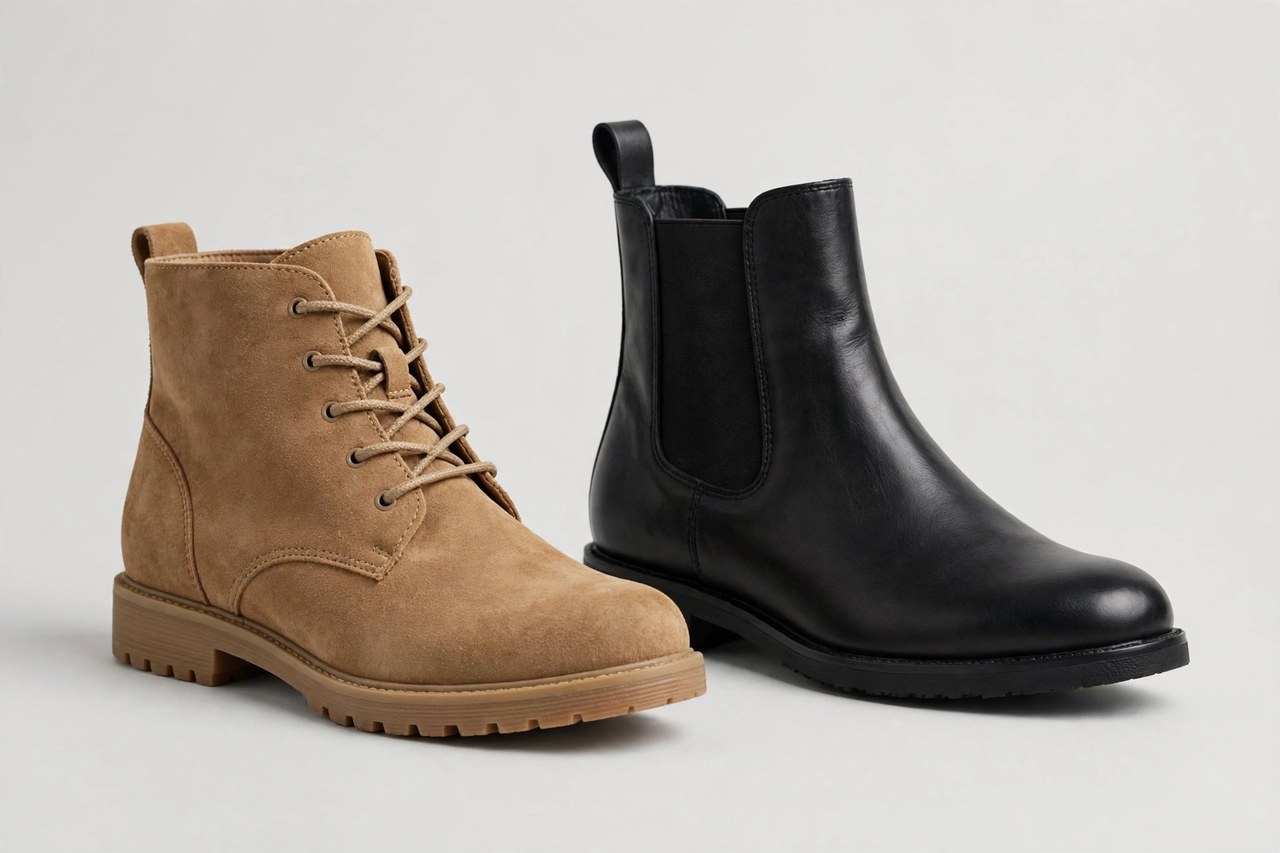
Casual boots are the everyday workhorses of a boot collection. Unlike insulated winter boots built for storms or western boots built around a tradition, casual boots are designed for ordinary life: commuting, errands, school runs, casual offices, and weekends that move from pavement to park to dinner. The category centers on three heights. Ankle boots end at or just above the ankle bone, booties sit slightly lower and often show a little more foot at the opening, and short mid-calf styles appear in lug-sole and moto variations. What unites them is versatility. A good casual boot works with jeans, trousers, dresses, and skirts, in three seasons, without looking like technical gear or a costume. If you only own one pair of boots, this is the category it should come from.
Everyday Styles: Ankle, Chelsea, and Bootie
The classic ankle boot has a zip or pull-on entry, a low to medium heel, and a clean toe that can be round, almond, or softly pointed. It is the most office-friendly option and the easiest to dress up. Chelsea boots are defined by elastic side panels and a pull tab, with no laces or zips; their smooth front makes them look sleek under cropped trousers and gives them a slightly polished, British-inspired character. Booties cut lower on the ankle and often feature details like cut-out sides, wrap straps, or perforations, which lightens them for spring and autumn. Lug-sole ankle boots add a chunky tread and a more rugged mood, while moto styles use buckles and a slouchier shaft. Lace-up casual boots borrow from hiking and combat shapes but use softer leather and lower profiles so they read as fashion, not equipment.
Materials and Construction
Smooth leather is the most durable and versatile choice: it resists scuffs, wipes clean, and develops character with wear. Suede looks softer and richer in color but marks more easily and needs a protector spray before the first outing. Nubuck sits between the two, with a velvety nap and better resilience than suede. Faux leather and microfiber versions lower the price and shrug off rain, though they breathe less and crack sooner at flex points. Inside, look for a cushioned insole, a lining that does not catch on socks, and a heel counter firm enough to hold your foot steady. Soles matter for daily wear: a thin leather sole looks elegant but slips and wears fast on pavement, while a rubber or lug outsole adds grip and longevity. Stitched soles can often be resoled; glued soles usually cannot.
Choosing and Fit for All-Day Wear
Fit a casual boot by how your foot behaves inside it, not just by the number. Your toes should lie flat with a small space at the front, the heel should lift only slightly as you walk, and the widest part of your foot should meet the widest part of the boot without squeezing. Try boots late in the day, when feet are at their largest, wearing the socks you actually plan to use. Check the ankle opening: a shaft that digs into the front of your ankle will annoy you at every step, while one that gaps widely can look untidy with bare legs or tights. Heel height changes everything about comfort. A low stacked heel of roughly one to two inches suits most people for all-day wear; higher fashion heels belong to shorter outings. If you walk a lot, choose a broader heel base and a padded footbed over a slim, dramatic shape.
Styling Casual Boots Day to Day
Ankle boots and jeans are the obvious pairing, and the detail that matters is the hem: cropped or cuffed jeans that end just above the boot shaft show a clean line, while long hems that bunch over the shaft look accidental. With dresses and skirts, ankle boots toughen up florals and soften tailored pieces; a boot in the same color family as your tights lengthens the leg. Chelsea boots slide neatly under straight-leg trousers for a casual office and work just as well with leggings and an oversized sweater on weekends. Booties with cut-outs shine in transitional weather with midi dresses and bare legs. Color strategy is simple: black goes with nearly everything, tan and cognac warm up denim and cream knits, and a single statement pair in burgundy, olive, or animal print can carry plain outfits all season without extra effort.
Care and Making Them Last
Casual boots reward small habits. Spray suede and nubuck with a water and stain protector before first wear and reapply a few times a season. Wipe smooth leather with a damp cloth after muddy days, condition it when it looks dry, and touch up scuffed heels and toes with matching cream polish. Let wet boots dry at room temperature stuffed with newspaper or on boot trees — never on a radiator, which cracks leather. Rotating pairs, even just alternating two, lets insoles dry fully and easily doubles their life. Store boots upright with simple shapers or rolled magazines so shafts do not crease and fold. At season's end, clean them before storing, check heel tips for wear, and have a cobbler replace worn tips early; that small repair prevents the uneven heel wear that eventually ruins an otherwise good boot.
Related Women's Guides
Photos


Looking for Women's Clothing Stores?
This guide helps you choose women's casual boots by style, material and fit. To browse where to buy, visit our women's clothing store directory, where you can find retailers that carry them.