Women's Shoes Guide
A shoe is a covering for the foot with a sturdy sole that generally stops at or below the ankle — and women's shoes range from protective basics to pure fashion statements.
Shop Women's Shoes Now
Shop Women's Shoes on Amazon Shop Women's Shoes on eBayThe Amazon and eBay links on this page are affiliate links. If you make a purchase through them, Apparel Search may earn a commission.
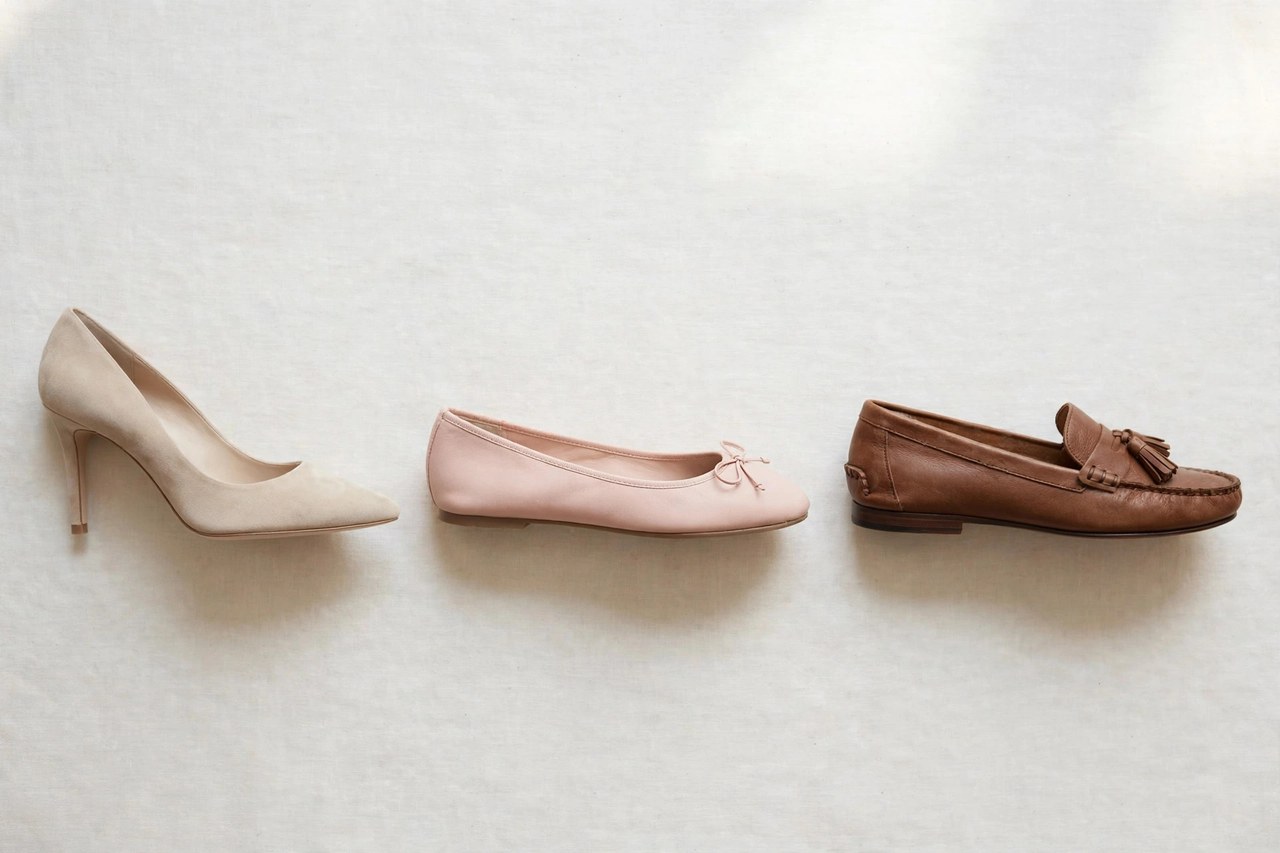
A shoe, in the plain definition the original guide used, is a covering for the foot, typically made of leather with a sturdy sole, and generally not reaching above the ankle — anything taller becomes a boot. Shoes exist to protect and comfort the foot during daily activity, but women's shoes have always carried a second job: fashion. The original page admitted it honestly — some women's shoes are genuinely uncomfortable and offer little protection, and they sell anyway, because a shoe finishes an outfit like nothing else does.
This guide is the overview page for the whole category. It walks through the main shoe families, the heel vocabulary you need to shop them, the materials old and new, and how to fit and care for shoes so the pair you love is also the pair you can wear. Specialist pages go deep on single styles; here the goal is a map of the territory, so you can place any style before you buy it.
The Main Shoe Families
Pumps, called court shoes in Britain, are the classic slip-on dress shoe, usually with a heel. Ballet flats — also called ballerinas or skimmers — have a very low heel and a short vamp that exposes much of the instep, and they remain the warm-weather comfort favorite. Mules are backless, with no fitting around the heel, while slingbacks are secured by a strap behind the heel rather than over the top of the foot. Loafers and boat shoes cover the casual slip-on ground; boat shoes, also called deck shoes, pair a loafer shape with a soft white sole made not to mar a boat deck, a design first invented in 1935 by Paul A. Sperry.
The remaining families fill specific niches. Clogs are made partly or entirely of wood, a form used worldwide that stayed nearly unchanged for centuries in many cultures. Saddle shoes are leather shoes with a contrasting saddle-shaped band over the instep, classically white with a black saddle. Platform shoes build height into very thick soles and heels rather than a heel post alone. Sandals are open shoes of a sole plus straps, leaving much of the foot exposed to air, which is exactly why they dominate warm-weather wear. Athletic, trend and dress categories each subdivide further on their own pages.
Heels: Kitten, Stiletto, Wedge and Block
High-heeled footwear raises the heel typically 2 inches (5 cm) or more above the toes, and is worn most often for formal occasions and social outings. Within that family, vocabulary matters. Kitten heels are short and slender, typically 1½ to 2 inches. Stiletto heels are tall with a very narrow heel post — maximum height, minimum ground contact. Wedge heels replace the post with a wedge-shaped sole running from heel to midfoot, spreading weight and giving height with far more stability on grass, decks and cobbles.
Block heels split the difference, with a wide, chunky post that walks more kindly than a stiletto. When you shop heels, judge three things together: height, post width and pitch — the steepness of the slope your foot sits on, which a platform front can reduce even on a tall shoe. A 3-inch heel with a 1-inch platform pitches the foot like a 2-inch heel. That arithmetic, more than the headline height, predicts whether a dress shoe survives an evening or only the photographs at the start of it.
Materials, Then and Now
Traditionally, shoes were made from leather, wood or canvas. Leather remains the benchmark for dress and casual shoes because it molds to the foot, breathes and can be resoled and polished for years. Increasingly, though, shoes are made from rubber, plastics and other petrochemical-derived materials — molded sneakers, synthetic uppers and foam midsoles that are lighter, cheaper and often more cushioned, at the cost of repairability. Suede and nubuck offer leather's softness with a napped finish that needs weather protection, and textiles from canvas to knit uppers cover the casual and athletic ends.
Match material to use honestly. A leather pump can be resoled for a decade; a molded foam trainer is spent when the cushioning dies, however clean the upper looks. Patent finishes give gloss but scuff visibly, satin belongs to evenings and dry floors, and metallic leathers flake if they are soaked repeatedly. Soles tell the same story: leather soles are elegant and slippery, rubber soles grip and last, and lugged soles belong to boots and outdoor shoes. Reading a shoe's materials is reading its intended life.
Fit and Care That Make Shoes Last
Fit shoes at the end of the day, when feet are at their largest, and fit the larger foot. There should be a thumb's width beyond the longest toe in closed shoes, no slipping at the heel in pumps, and no pinching across the widest part of the foot, because leather stretches barely at all. Sizes vary between brands, so treat your number as a starting point and walk a carpeted loop before committing.
Care is routine, not rescue. Rotate pairs so each rests a day between wearings, use shoe trees or stuffing to hold shape, and clean and condition leather before it looks thirsty. Resole leather-soled shoes before the sole wears through, protect suede with spray before the first outing, and keep shoes away from heat, which warps soles and cracks uppers. A modest rotation of well-kept shoes outlasts a closet of neglected ones.
Related Women's Guides
Photos From Our Original Guide

More to Explore on Apparel Search
- Women's Footwear Guide
- Designer Shoes
- Women's Shoes
- Women's Shoe Stores
- Women's Shoe Wholesalers
- Footwear Definitions
- Shop for Shoes
- Women's Athletic Shoes
- Women's Boots
- Women's Casual Shoes
- Women's Dress Shoes
- Women's Sandals
- Women's Trend Shoes
- black shoes
- blue shoes
- brown shoes
- orange shoes
- pink shoes
- purple shoes
- red shoes
- tan shoes
- white shoes
- yellow shoe
- types of shoes
- shoe stores
- Women's footwear
More to Explore on Apparel Search
Looking for Women's Clothing Stores?
This guide helps you choose women's shoes. To browse where to buy, visit our women's clothing store directory, where you can find retailers that carry them.