Women's Athletic Shoes Guide
Athletic shoes are equipment, not accessories. This guide matches the shoe to the sport, explains cushioning and support in plain terms, and shows how to fit a shoe your feet can train in.
Shop Women's Athletic Shoes Now
Shop Women's Athletic Shoes on Amazon Shop Women's Athletic Shoes on eBayThe Amazon and eBay links on this page are affiliate links. If you make a purchase through them, Apparel Search may earn a commission.
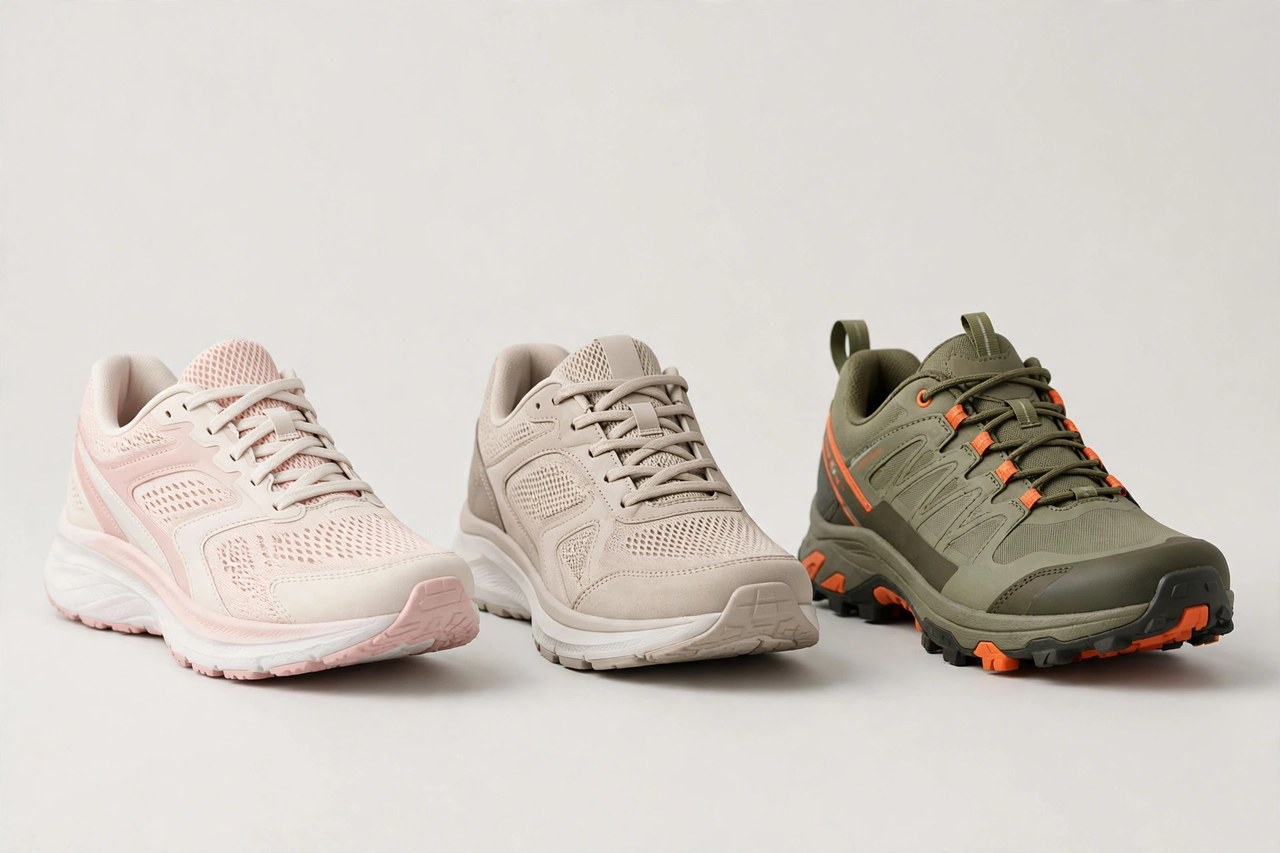
An athletic shoe is a piece of sports equipment built around one job: protecting the foot through a specific kind of movement. Running drives the foot straight ahead thousands of times in a row, tennis slams it sideways, and trail walking throws rocks and mud at it. Shoes designed for each task differ in cushioning, stiffness, tread and support, and wearing the wrong type is one of the easiest ways to turn exercise into injury.
Women's athletic shoes are built on women's lasts, which typically means a narrower heel and a wider forefoot than men's models - a real difference in fit, not just colour. This guide walks through the main sport categories, how to fit a training shoe properly, the materials and technologies that matter, day-to-day care, and the mileage rules that tell you when a faithful pair is ready to retire.
Performance Shoes by Sport
Running shoes are the largest family, divided into neutral cushioned models for most runners, stability models that guide feet that roll inward, and lightweight racers saved for speed work and race day. Training and cross-training shoes are flatter, firmer and more stable side to side, built for gym work, lifting, classes and agility drills where a soft running sole would feel wobbly and unsafe under load.
Court shoes for tennis, pickleball and volleyball use durable rubber, reinforced toes and lateral support for constant side-to-side movement. Trail shoes add aggressive lugs, protective toe caps and often water-resistant uppers for grip on loose ground. Specialist families - cycling shoes with stiff soles, hiking shoes with ankle support, minimalist shoes with thin flexible soles - each trade cushioning for a specific advantage, so choose by your main activity, not by looks.
Fit for Training
Fit an athletic shoe at the end of the day, wearing your training socks, and leave a thumbnail of space in front of your longest toe: feet swell during exercise and slide forward on downhills. The heel should lock in without slipping, the midfoot should feel held rather than squeezed, and the toes must be free to spread - a roomy toe box prevents black toenails and blisters on long efforts.
Know your own mechanics before you shop. Feet that roll inward noticeably may do better in a stability shoe, while neutral feet usually thrive in neutral cushioning; a worn pair's tread pattern tells the story of your stride. If you train for two sports seriously, own two pairs rather than one compromise - a running shoe's forward rocker fights against you in the gym, and a flat trainer's thin cushioning punishes you on a long run.
Materials and Cushioning Technology
Modern uppers are mostly engineered mesh and knit: featherlight, breathable and seamless over the toes, with printed or welded overlays where support is needed. The midsole does the heavy lifting - EVA foam is the workhorse, while newer nitrogen-infused and PEBA foams return more energy per step at a higher price. Underneath, carbon rubber in high-wear zones keeps the outsole from wearing smooth too quickly.
Marketing names multiply every season, but the qualities you can actually judge are simple: how much cushioning is underfoot, how flexible or stiff the shoe feels, how much the heel sits above the toes (the drop), and how the shoe fits your foot. A plated racing shoe genuinely helps trained runners at speed, yet for everyday training a well-fitting, moderately cushioned shoe from any reputable maker beats a super-shoe worn in the wrong size.
Care and Replacement
Athletic shoes ask for little: untie them instead of crushing the heel counter, let them air-dry away from radiators, and keep them out of the washing machine, whose heat and agitation break down midsole foam and adhesives. Rotating two pairs extends both lives, because foam needs roughly a day to rebound fully between runs. Stuffing damp shoes with newspaper overnight pulls out moisture and odour surprisingly well.
The category-specific rule is replacement by mileage, not appearance. Most running shoes deliver their best cushioning for roughly 300 to 500 miles, after which the foam packs down even though the uppers look fine. New aches in shins, knees or arches are often the first symptom of a dead shoe. Retired runners still serve happily as walking or gardening shoes - just do not ask them to train anymore.
Women's Footwear Categories
Women's Athletic Shoe Guides & Resources
- Women's Shoes
- Shoe Search
- Women's Shoe Stores
- Women's Shoe Wholesalers
- Footwear Definitions
- Where to Buy Shoes
- Adventure Shoes
- Baseball Shoes
- Basketball Shoes
- High Top Basketball Shoes
- Low Top Basketball Shoes
- Bowling Shoes
- Canvas Shoes
- Cheerleading Shoes
- Classic Shoes
- Cleated Shoes
- Baseball Cleats
- Softball Cleats
- Soccer Cleats
- Track Cleats
- Fitness Footwear
- Golf Shoes
- Hiking Shoes
- Lifestyle Shoes
- Cross Country Running Shoes
- Cushioning Running Shoes
- Jogging Sneakers
- Stability Running Shoes
- Supportive Running Shoes
- Trail Running Shoes
- Skate Shoes
- Ice Skates
- Roller Skates
- Skater Shoes
- Sneakers
- Soccer Shoes
- Sports Fan Shoes
- Sports Sandals
- Tennis Shoes
- Track Shoes
- Training Shoes
- Volleyball Shoes
- Walking Shoes
- Water Sports Shoes
Looking for Women's Clothing Stores?
This guide helps you choose women's athletic shoes matched to your sport, your stride and your training load. To browse where to buy, visit our women's clothing store directory, where you can find retailers that carry them.