Women's Cycling Shoes Guide
The stiff-soled link between your legs and the pedals — road, mountain, and indoor shoes explained.
Shop Women's Cycling Shoes Now
Shop Women's Cycling Shoes on Amazon Shop Women's Cycling Shoes on eBayThe Amazon and eBay links on this page are affiliate links. If you make a purchase through them, Apparel Search may earn a commission.
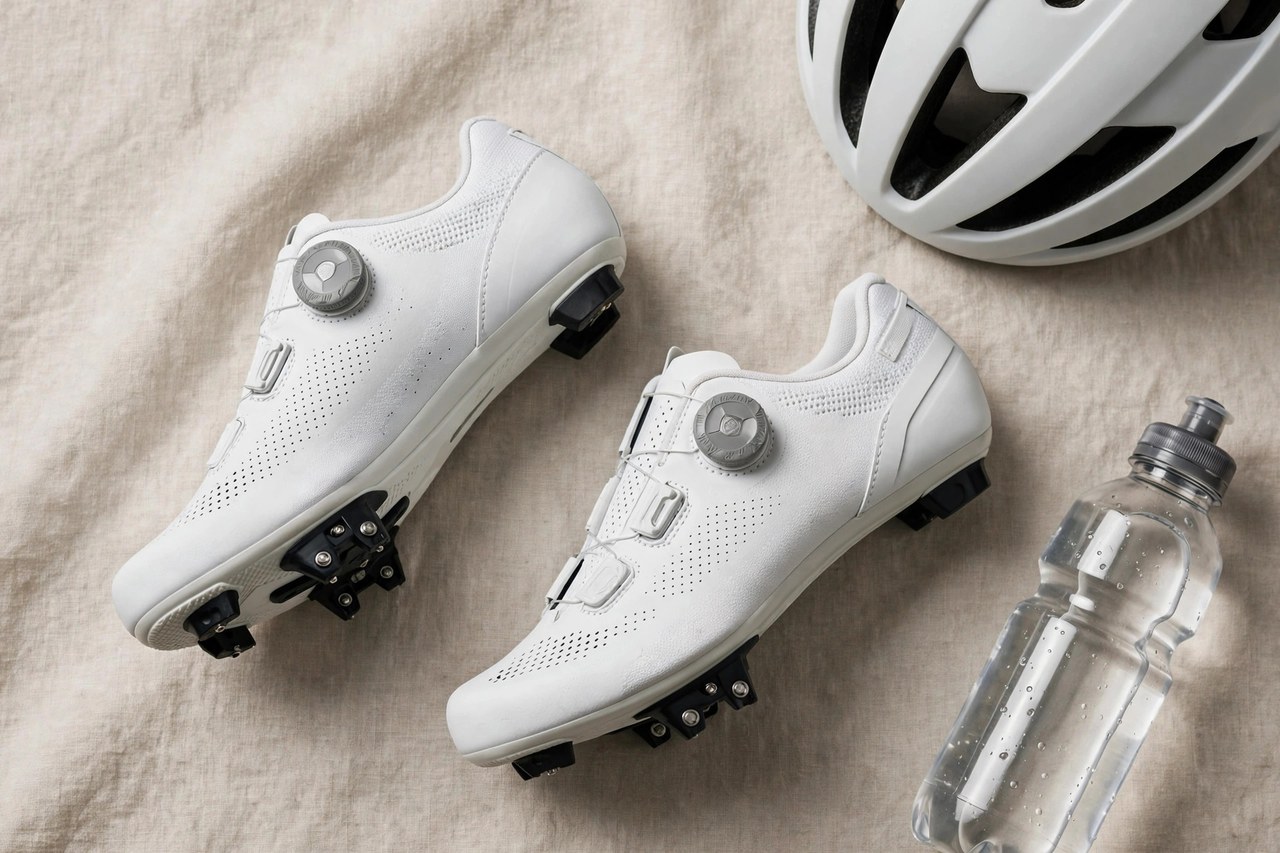
Cycling shoes look like trainers that have been put on a diet and frozen stiff, and that stiffness is the entire point. A normal shoe bends at the toes with every pedal stroke, leaking energy and concentrating pressure. A cycling shoe spreads the load across a rigid sole, holds your foot in exactly the same position for thousands of revolutions, and — once you clip in — keeps the ball of your foot over the pedal axle. Women's models use narrower lasts and lower-volume uppers, though many riders happily wear unisex shoes. This guide explains road versus mountain bike shoes, the two cleat systems that divide the cycling world, how stiffness ratings actually feel, and why indoor cycling shoes have become a category of their own.
Road Shoes Versus Mountain Bike Shoes
Road shoes are the specialists: featherweight uppers, the stiffest soles in cycling, a smooth outsole with a protruding cleat, and almost no tread — walking in them feels like waddling on ice. They suit road riding, time trials, and fast group rides where efficiency is everything. Mountain bike shoes flex a little at the toe, carry lugged tread for scrambling up unrideable slopes, and recess the cleat so you can walk almost normally. That walkability is why gravel riders, tourers, and commuters choose mountain bike shoes even on paved roads: a small efficiency loss buys enormous practicality. Hybrid shoes blur the line, looking like casual trainers with a stiffened sole and hidden cleat mount. Decide by how much walking your rides include, not by the bike you own.
Cleat Systems: Three-Bolt and Two-Bolt
Your shoes must match your pedals, and pedals come in two drilling patterns. The three-bolt system, used by road pedals such as Look and Shimano SPD-SL, spreads a large triangular cleat across the sole. It gives a broad, stable platform and precise power transfer, at the cost of that awkward protruding cleat. The two-bolt system, dominated by Shimano SPD, mounts a small metal cleat with two screws; it is the standard for mountain biking, spinning, touring, and commuting, and the cleat hides inside the tread so walking stays natural. The two systems are not interchangeable — a three-bolt shoe cannot take a two-bolt cleat without an adapter that usually spoils the fit. Cleat position matters as much as the system: most riders do best with the cleat centered under the ball of the foot or a few millimeters behind it, a position increasingly favored for comfort and knee health. Cleat float — a few degrees of rotation through the stroke — spares your knees, so start generous and fine-tune.
Stiffness, Soles and Power Transfer
Sole materials run from nylon composites to full carbon fiber, and brands rate stiffness on scales that sadly do not agree with each other. The real-world difference is this: a very stiff sole spreads pedal pressure across the whole foot, eliminating the hot spot that builds under the ball of the foot on long rides. A moderately stiff sole is more forgiving for new riders, kinder on rough roads, and cheaper, and most recreational cyclists never outgrow one. More important than chasing maximum stiffness is the shape of the sole and insole — a supportive arch and a heel cup that locks the foot down prevent the sliding and toe-scrubbing that cause blisters and numbness. Heat-moldable insoles let better shoes be tuned to your feet at home. If you get numb toes on long rides, the fix is usually cleat position, insole support, or loosening the front closure — not a different stiffness number.
Closures and Fit for Women's Feet
Closure systems have converged on dials. A single or double dial closure (most famously Boa) tensions wire laces in millimeter clicks, adjusts on the move with one hand, and releases instantly — now found from entry-level to professional shoes. Velcro straps remain simple, light, and reliable on budget and triathlon shoes, and traditional laces have returned on stylish gravel and retro road shoes, offering supremely even pressure at the cost of mid-ride adjustment. Fit checks: your toes should lie flat with a small margin at the front, because feet swell on long, hot rides; the heel should not lift when you pull up; and no closure should need to be cranked painfully tight to feel secure. Women's-specific models offer a narrower heel and lower instep volume, but foot shape varies more by person than by gender, so try unisex narrow lasts too. Wear your actual cycling socks when fitting, and try shoes late in the day when your feet are at their largest.
Indoor Cycling Shoes and Care
Studio cycling has made the cycling shoe a mainstream purchase. Most gym and boutique-studio bikes use two-bolt SPD pedals, though some chains fit three-bolt Look Delta pedals, so the first step is confirming which cleat your studio uses — many riders keep a dedicated pair of indoor shoes with the right cleats permanently mounted, saving their outdoor shoes from studio wear. Indoor shoes prioritize breathable mesh uppers and easy closures over weatherproofing, and a slightly less rigid sole is fine for a 45-minute class. Toe-cage trainers work, but clipped-in shoes give a smoother, safer stroke. Care extends any cycling shoe's life: loosen the closures after rides, pull the insoles out to dry, stuff wet shoes with newspaper rather than baking them on a radiator, and brush grit out of cleat mechanisms before it jams the pedal engagement. Replace cleats when engagement feels sloppy — they are wear items, and a worn cleat releasing mid-sprint is a crash waiting to happen.
Related Women's Guides
Looking for Women's Clothing Stores?
This guide helps you choose women's cycling shoes by style, fabric and fit. To browse where to buy, visit our women's clothing store directory, where you can find retailers that carry them.