Women's Cycling Jerseys Guide
More than a technical T-shirt — pockets, zips, and fits engineered around the riding position.
Shop Women's Cycling Jerseys Now
Shop Women's Cycling Jerseys on Amazon Shop Women's Cycling Jerseys on eBayThe Amazon and eBay links on this page are affiliate links. If you make a purchase through them, Apparel Search may earn a commission.
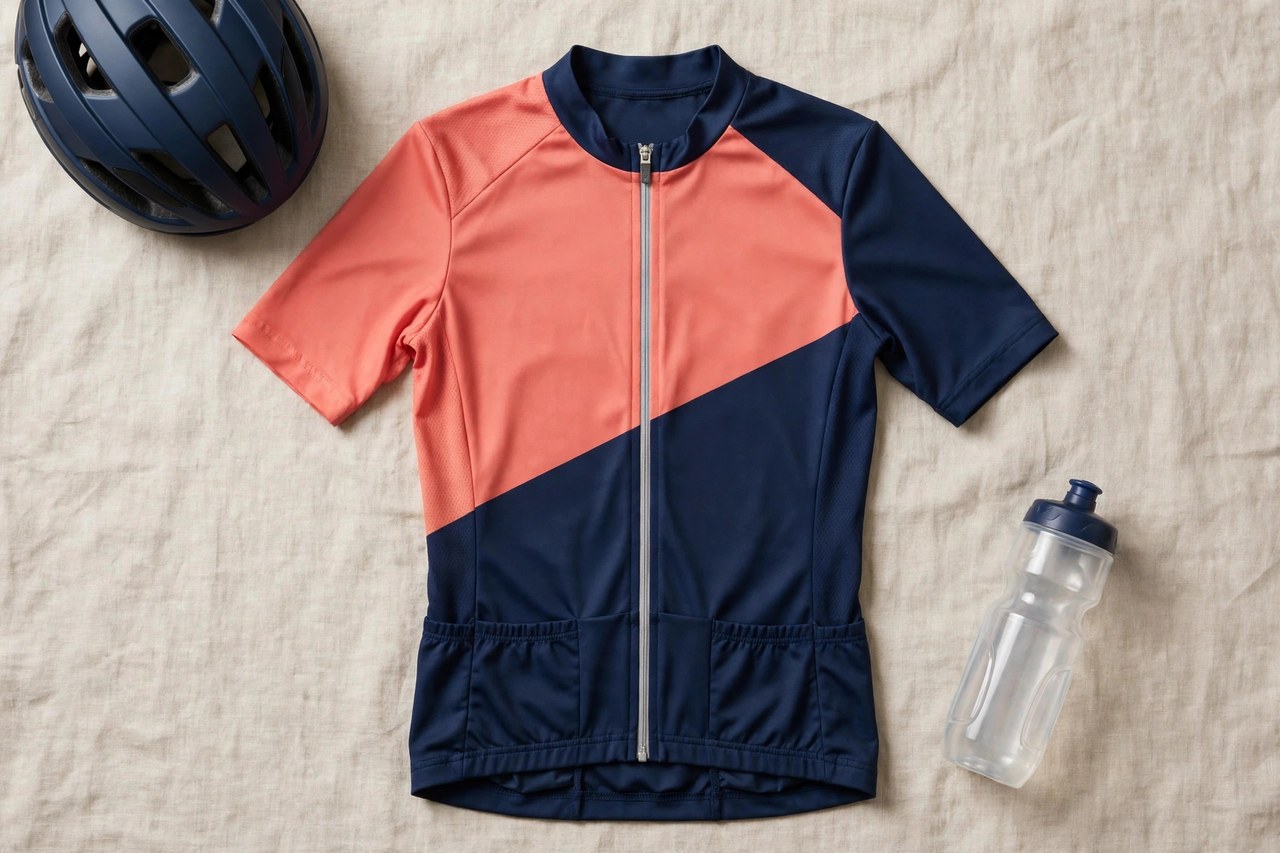
Ask a new rider why cyclists wear those distinctive tops and the honest answer is: pockets. A cycling jersey — often searched for as a cycling shirt — carries its cargo on the lower back, where three stretch pockets hold food, a phone, a pump, and a rolled-up jacket without anything bouncing against your legs or cluttering the bike. The front is cut shorter and the back longer so the jersey sits right when you lean over the handlebars. The fabric wicks sweat instead of soaking it up like cotton. A full-length zipper lets you dump heat on a climb without stopping. Women's jerseys add shaping through the waist and a collar that does not chafe. This guide explains the fits, fabrics, and details that separate a jersey you reach for daily from one that rides up, sags, and disappoints.
Pockets, Zips and Clever Details
The classic layout is three open pockets across the lower back, sometimes joined by a smaller zipped pocket for keys, cards, and cash — the item you cannot afford to bounce out on a rough descent. Good pockets are deep enough to swallow a large phone, with reinforced tops that resist stretching out. Some jerseys add a waterproof lining to one pocket for electronics on wet rides. The front zipper matters more than it looks: a full zip turns the jersey into a jacket you can open completely at a café stop and makes the garment far easier to take off when you are tired and sweaty, while a half or quarter zip saves a little weight and cost. Look for a zip that moves one-handed and a chin guard at the top. A silicone gripper band inside the rear hem keeps the jersey anchored over your shorts, and reflective trims and glove-friendly zipper pulls reveal a thoughtfully designed garment.
Race Fit, Club Fit and Relaxed Fit
Jersey fits fall on a spectrum, and the naming is fairly consistent across brands. Race fit is the second-skin end: compressive, aerodynamic, cut for a lean riding posture, with sleeves that end mid-bicep. It rewards riders who value speed and penalizes anyone who wants to stand upright comfortably at the coffee stop. Club fit — sometimes called regular or sportive fit — keeps the same technical construction but adds room through the torso and arms, a slightly longer body, and a less aggressive posture. It suits most recreational riders. Relaxed fit jerseys, common in gravel and mountain bike lines, look closer to a technical T-shirt, with a drape that works off the bike as well. Sizing between brands varies wildly, so trust measurements over labels, size for your chest and shoulders first, and remember that a jersey should be judged in the riding position: reach forward, and the front should feel natural while the back stays covered.
Fabrics: Mesh, Merino and Recycled Synthetics
Hot-weather jerseys are mostly polyester mesh: feather-light, aggressively breathable, and quick to dry, with open panels under the arms and across the back where a rider overheats first. The trade-off is modesty and durability — the sheerest race meshes can be see-through in bright sun and snag on rough handling. Standard training jerseys use denser microfiber polyester with elastane, balancing wicking, opacity, and a season or more of hard washing. Merino and merino-blend jerseys regulate temperature across a wider range, resist the odor that builds in synthetics, and suit touring, commuting, and changeable mountain weather; they dry more slowly and cost more. Recycled polyester now matches virgin equivalents in quality. Whatever the label, check that seams are flat, the fabric stretches in four directions rather than two, and any printed design is dyed into the fabric rather than coated on top, since coatings block the very breathability you are paying for.
Sleeves, Collars and Weather Versions
Sleeve design has quietly become a battleground. Traditional set-in sleeves with elastic cuffs are comfortable and durable. Raglan sleeves remove the shoulder seam that can rub under backpack straps. Modern laser-cut sleeves end in a clean raw edge with a light gripper, sitting flat for aerodynamics and a tan line sharp enough to be a badge of honor. Sleeveless jerseys exist for the hottest days and indoor training, while long-sleeve versions range from thin thermal layers for spring to brushed, insulated winter jerseys that pair with a shell in deep cold. Collars run from low, minimal race cuts to higher traditional collars that keep sun off the neck; many women's jerseys add a small collar with a zip garage to prevent chin rub. One short-sleeve summer jersey, one thermal long-sleeve, and arm warmers that convert short sleeves to long will cover nearly the whole year.
Layering With a Jersey
A jersey rarely works alone outside high summer. The system starts with a base layer: a sleeveless or short-sleeve mesh vest in warm weather to move sweat and add a surprising degree of comfort, or a merino or thermal base in the cold. Over the jersey goes wind protection — a featherweight gilet is the single most useful layer in cycling, blocking chest chill on descents while stuffing into its own pocket when the road turns up. A packable waterproof jacket handles real rain, and a softshell covers cold, dry days. Shed layers roll into the jersey's pockets, so your clothing adapts without a bag. Dress for the second ten minutes of the ride, not the first — you should feel slightly cool rolling out, because a working rider generates plenty of heat. Wash jerseys cool, skip fabric softener since it clogs wicking fibers, and hang dry.
Related Women's Guides
Photos


Looking for Women's Clothing Stores?
This guide helps you choose women's cycling jerseys by style, fabric and fit. To browse where to buy, visit our women's clothing store directory, where you can find retailers that carry them.