Women's Shirts Guide
Shirts are cloth garments for the upper body in an unusually wide range of silhouettes — this overview maps the types so the specialist pages make sense.
Shop Women's Shirts Now
Shop Women's Shirts on Amazon Shop Women's Shirts on eBayThe Amazon and eBay links on this page are affiliate links. If you make a purchase through them, Apparel Search may earn a commission.
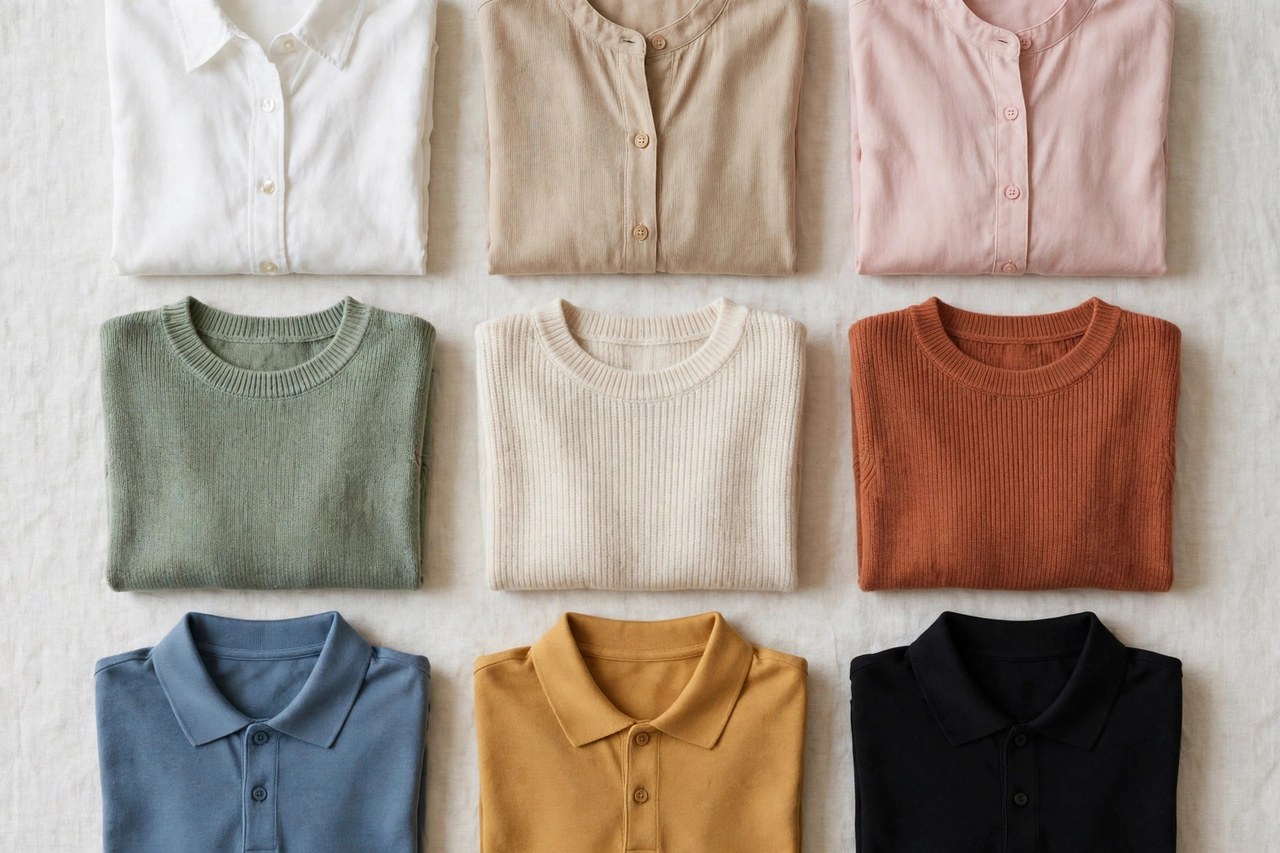
What are women's shirts? They are tops, worn for the top part of the torso or trunk of the body. A shirt is a cloth garment for the upper body, and shirts can be long sleeve, short sleeve, three-quarter sleeve, to name only a few options. They come with collars and without, with buttons and without, printed and in solid colors — a women's top comes in a very wide assortment of silhouettes, and huge assortments can be found at any clothing store. This page is the map of that assortment.
Why are shirts important? For the same reason they matter to everyone: they cover the top portion of the body from the elements, Types of shirts include casual shirts, dress shirts, t-shirts, polo shirts, rugby shirts, sweatshirts, halter tops, tube tops and tank tops, among more. This overview defines the families, the sleeve and collar vocabulary, and the shirt-versus-blouse distinction, then points onward to the specialist guides this site keeps for each major type.
The Dress Shirt Definition, and the Blouse Question
One definition is worth stating precisely, because it explains store naming. In British English, a 'shirt' is more specifically a garment with a collar, sleeves with cuffs, and a full vertical opening with buttons or snaps — what North Americans would call a dress shirt. By that strict definition, many garments sold as women's shirts elsewhere are tops or blouses instead. A blouse is traditionally the softer, draped, often collarless member of the family, and this site's blouse guide covers it separately; in everyday shopping, the two words overlap and construction, not the label, tells you what a garment is.
Read construction, then, in this order: opening (full button front, partial placket, or pull-over), collar (shirt collar, polo collar, crew, scoop or none), sleeve (set-in with cuff, raglan, cap, sleeveless) and fabric (woven shirting versus knit). Those four facts place any shirt in its family and predict its fit, formality and care more reliably than its product name. A woven, collared, button-front shirt will behave like shirting wherever it is sold; a knit pull-over will behave like a tee, whatever a retailer chooses to call it.
Sleeves, Categories and Specialist Guides
Sleeve length is the category's simplest organizing axis: long, three-quarter, short, cap and sleeveless shirts divide the range, with long and short sleeve guides maintained separately on this site. By type, the major specialist families include embroidered shirts, screen printed shirts, sports shirts, business shirts, cap sleeve shirts, knit shirts and sweatshirts, each with its own guide, plus activity shirts — athletic, basketball, baseball, bowling, cycling, golf and tennis shirts — cut and fabricated for their sports.
Fabric families cut across the types: silk shirts, cotton shirts, cashmere shirts, madras and plaid shirts, and floral shirts each carry their own care and character. Color is its own browsing axis on this site, with shirt guides by color from black and white through red, blue, green, pink, purple, orange, brown, tan and yellow. Naming your axis — sleeve, sport, fabric or color — narrows the category quickly.
Fit and Fabric Basics Across All Shirts
For woven shirts, fit is decided at shoulder, bust and collar: the shoulder seam at your shoulder, no strain across the button front while seated, and a collar that closes, where applicable, without pressure. For knits, fit is decided by fabric weight and recovery: a knit shirt should return to its length and neckline shape after a gentle stretch, and its seams should lie flat. In both families, check that prints, plaids and stripes align at plackets and side seams on better garments — a small detail that reliably separates careful making from fast making.
Fabric weight should match the job. Fine poplins, lawns and silk serve dress and warm-weather shirts; oxford cloth, flannel and denim serve structure and cool weather; jersey weights from light to heavy divide tees and knit tops by opacity and drape. When a listing omits fabric composition, treat the omission as information: reputable shirt listings name fiber percentages, because shirt buyers have always shopped by fabric. The types-of-shirts and types-of-t-shirts references linked from this page give the full terminology when a name puzzles you.
Care, and Using This Overview
General shirt care covers most of the category: wash like with like, unbutton button-fronts and turn printed and dark shirts inside out, treat collars and underarms promptly, and dry according to fiber — line or low heat for most wovens and knits, flat for heavier knits that would stretch on a hanger. Iron or steam woven shirts at the collar, placket and cuffs first; those are the parts by which a shirt is judged. Knit shirts usually need only smoothing and correct storage, folded or on wide hangers that do not stretch the neckline.
Use this page as the category's starting point. From here, specialist guides go deep on single families. For everyday shopping: name the opening, collar, sleeve and fabric you need, in that order, and the wide assortment resolves into the few shirts that actually fit your purpose — which is all a good overview page should ever promise.
Related Women's Guides
Photos


More to Explore on Apparel Search
- Women's Embroidered Shirts
- Cap Sleeve Shirts
- Women's Knit Shirts
- Women's Short Sleeve Shirts
- Women's Long Sleeve Shirts
- Shirt Factories
- Women's Shirt Wholesalers
- Women's Shirt Retailers
- shirt categories
- women's blouse
- athletic shirts
- basketball shirts
- baseball shirts
- bowling shirts
- cycling shirts
- floral shirts for women
- Women's madras shirts
- Women's golf shirts
- silk shirts
- cotton shirts
- types of t-shirts
- cashmere shirts
- black shirts
- blue shirts
- brown shirts
- green shirts
- orange shirts
- pink shirts
- purple shirts
- red shirts
- tan shirts
- white shirts
- yellow shirt
- tennis shirts
Looking for Women's Clothing Stores?
This guide helps you choose women's shirts. To browse where to buy, visit our women's clothing store directory, where you can find retailers that carry them.