Women's Plaid Shirts Guide
The plaid shirt is woven, not printed — colored yarns crossing into checks — and it carries two centuries of workwear, tartan tradition and borrowed-from-the-boys style in one button-down.
Shop Women's Plaid Shirts Now
Shop Women's Plaid Shirts on Amazon Shop Women's Plaid Shirts on eBayThe Amazon and eBay links on this page are affiliate links. If you make a purchase through them, Apparel Search may earn a commission.
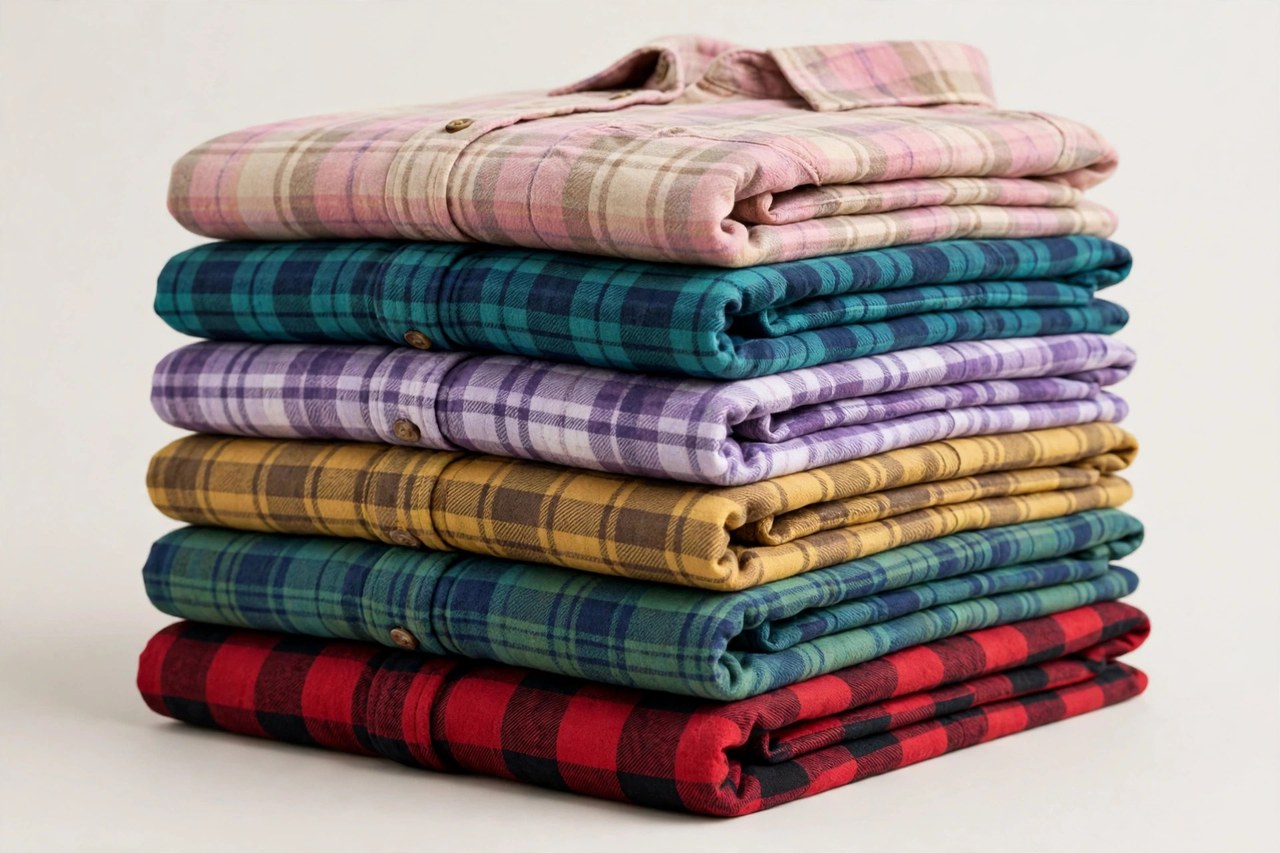
A plaid shirt is a button-front shirt patterned in checks formed where bands of colored warp and weft yarn cross. That woven construction is what makes plaid plaid: the pattern runs through the cloth, the intersections create the characteristic half-tones where two colors overlap, and the inside of the fabric shows the same design as the outside. For women, the plaid shirt ranges from the heavy flannel overshirt worn as a light jacket to the soft, fine-check blouse tucked into skirts — one pattern family spanning workwear and polish.
Few garments have collected more associations. The plaid shirt is lumberjack and farmer, Highland clan and Canadian tuxedo jokes aside, 1990s grunge uniform and modern autumn staple. This guide explains the pattern itself (including the plaid-versus-tartan question), the fabrics from flannel to lawn, how women's cuts differ from the borrowed men's originals, and how to choose a shirt whose checks line up, whose fabric lasts, and whose style works well beyond the pumpkin patch.
Plaid vs. Tartan, and How Checks Are Woven
The words are often swapped, but they have distinct meanings. Tartan is a specific, registered pattern — a precise sequence of colored stripes, identical in warp and weft, traditionally tied to a Scottish clan, regiment or region. Plaid is the general term for any woven check pattern of crossing colored bands, and originally named the heavy tartan blanket-garment Scots wore over the shoulder.
The weaving is yarn-dyed: yarns are dyed before weaving, then woven so the warp stripes and weft stripes cross, doubling the color where identical bands meet and mixing it where different bands meet. That overlap is why real plaid has depth a print cannot copy. Pattern names recur across shirts: buffalo check (large, even red-and-black blocks), tartan checks (multi-stripe, asymmetrical), gingham (small even checks), windowpane (fine lines on a plain ground) and madras (bright, irregular warm-weather checks).
Fabrics: Flannel and Beyond
Flannel is the fabric most wearers mean by a plaid shirt: a cotton (or wool, or blended) weave brushed to raise a soft nap, warm, matte and forgiving. Flannel plaid shirts are autumn and winter clothing, worn alone in mild cold and layered under coats in deep cold. Weight separates the true shirt from the shacket end of the family: heavy flannels with snap buttons and shirt-jacket styling work as outerwear, while standard flannel shirts layer under sweaters without bulk.
Plaid is by no means only flannel. Cotton poplin and lawn plaids make crisp, lighter shirts for spring and office wear. Madras, woven from fine yarns in patchwork-bright checks, is the summer original, traditionally slightly irregular in dye and weave. Rayon and viscose plaids drape softly and suit blouse-style plaid shirts tucked into skirts and trousers. The fabric decides the shirt's season and formality more than the pattern does: the same tartan reads rustic in brushed flannel and refined in smooth poplin.
Women's Fits and the Borrowed Associations
The plaid shirt entered women's wardrobes largely as a borrowed garment — the partner's flannel worn open over a tee — and the oversized, straight-cut version remains a deliberate style, sleeves rolled, hem to mid-thigh. Dedicated women's cuts add shaping the borrowed shirt lacks: a nipped waist or curved hem, narrower shoulders so the shoulder seam sits where it should, and bust darts or princess shaping in fitted styles. Boyfriend cuts keep the generous body but correct the shoulder and sleeve length.
The cultural echoes are part of the garment's appeal and worth wearing knowingly. The red plaid flannel is North American workwear — lumberjacks, farmers and the mythic Paul Bunyan. In the early 1990s, Seattle grunge bands made the thrift-store flannel, worn open over band tees, into a generational uniform, and fashion has revived that styling in cycles ever since. Tartan plaids carry the Highland association and a punk one too, from 1970s London.
Styling, Care and Buying Tips
Style the plaid shirt as the pattern of the outfit and keep its partners plain. Buttoned and tucked into dark jeans or a denim skirt, it is tidy casual; worn open over a plain tee or thermal, it is the classic layered look; knotted at the waist over a dress or with shorts, it turns summery. A fine-check poplin plaid under a blazer, checks echoed nowhere else, passes in most casual offices. Let one color from the plaid reappear in a boot, bag or lip color and the outfit coheres without effort.
Care depends on the fabric. Cotton flannel washes warm, softens beautifully over time, and may shrink slightly at first — buy with a fraction of room if you tumble dry. Wash plaids with similar colors, button the shirt and turn it inside out to protect buttons and nap, and reshape while damp. When buying, check the quality tells: yarn-dyed pattern visible on the reverse, checks matched at the pockets on better makes, sturdy buttons or snaps, and flannel with a dense, even nap.
Related Women's Guides
Photos

Looking for Women's Clothing Stores?
This guide helps you choose women's plaid shirts. To browse where to buy, visit our women's clothing store directory, where you can find retailers that carry them.