Women's Madras Shirts Guide
The button-up in bleeding plaid: a shirt of strong, fine-textured cotton checks, woven — never printed — in the colors of an Indian summer.
Shop Women's Madras Shirts Now
Shop Women's Madras Shirts on Amazon Shop Women's Madras Shirts on eBayThe Amazon and eBay links on this page are affiliate links. If you make a purchase through them, Apparel Search may earn a commission.
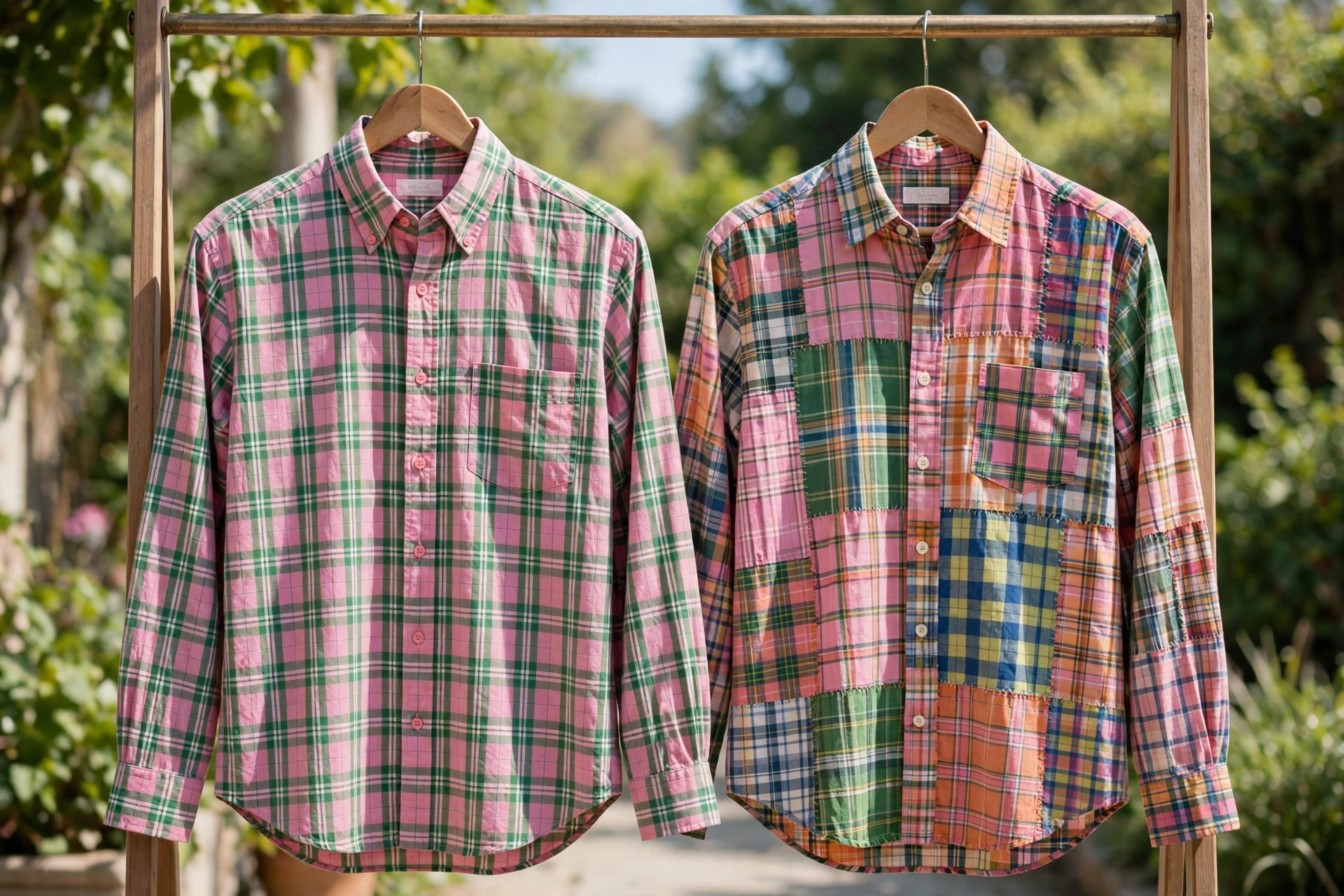
A madras shirt is a shirt made of madras: the lightweight cotton fabric whose check pattern of modified stripes is woven from pre-dyed yarns, so the plaid is in the cloth itself and shows identically on both sides. It is the summer shirt of the seaside and the campus — breathable, colorful, and just rumpled enough to announce that its wearer is not at work, or is at the kind of work that allows joy.
Shirts are the garment madras was born for. The original Indian cloth shipped to Britain and America became shirts before it became anything else, and the cotton madras shirt — button-down, popover or camp collar — remains the fabric's home ground. This guide covers the cloth once, properly, and then the shirts it makes.
The Fabric, Once and Properly
Madras is a strong, fine-textured cotton with a plain weave and checks formed where bands of colored warp and weft cross — a check pattern of modified stripes, irregular by design: true handloom madras has small slubs and slight unevenness that are marks of the loom, not flaws. The cloth is light enough for the hottest weather yet tightly woven enough to hold a collar and a placket.
Authentic Indian madras is handwoven near Chennai (Madras) with vegetable-dyed yarns, and the original article was guaranteed to bleed — its dyes softened into each other wash by wash, giving each shirt a personal, faded patina. Most modern madras is yarn-dyed and colorfast, holding its bright checks; both are sold as madras, so check the label if the bleeding authenticity is what you are after. Our cotton madras shirt links below lead to the fabric's cotton family tree.
Shirt Styles in Madras
The button-down is the icon: a long-sleeve or short-sleeve shirt with a buttoned collar, worn tucked with chinos or out over shorts, the centerpiece of the American summer uniform. The popover — a half-placket pullover shirt — is the connoisseur's version. Camp and resort shirts open the collar and shorten the sleeve for full holiday mode, and madras also appears in shirt-dresses, tunics and sleeveless tops wherever a light patterned cotton shirt is wanted.
Pattern scale is the styling variable: small, tight checks read almost as texture and pair with other patterns; big, loud checks are the garment, worn with solids. Matching the plaid at the pocket and placket is the maker's quality signal — in a woven plaid, matched seams cost time and cloth, and a good madras shirt shows it.
Wearing and Washing
Wear madras shirts the way the fabric asks: untucked or half-tucked, sleeves rolled, with white, navy, khaki or denim below. The plaid contains multitudes — pick any one of its colors for the rest of the outfit and the coordination is done. In the office-adjacent summer, a muted colorfast madras under a navy blazer is the classic move; the blazer calms the plaid, the plaid keeps the blazer awake.
Wash cold, separately the first times (bleeding cloth especially), and dry in shade; madras softens beautifully and its colors, natural or modern, fade in strong sun. Iron on cotton if you like the crisp version — the shirt will relax back to its natural rumple within the hour, which is not a defect but the point.
One More Consideration
One detail for shirt buyers: check the collar and cuff construction against the cloth. Madras is light, so a shirt needs properly interfaced collar points and a placket that will not twist — the signs that a maker respected the fabric instead of merely using it. A madras shirt done right holds its shape at the points of structure and relaxes everywhere else, which is exactly the balance the garment is loved for: tailored enough for the club, rumpled enough for the dock.
Related Women's Guides
Photos

More to Explore on Apparel Search
Looking for Women's Clothing Stores?
If you are ready to shop rather than browse guides, visit our women’s clothing shopping directory for stores carrying women's madras shirts and much more, or use the Amazon and eBay buttons at the top of this page.