Women's Cotton Madras Shirts Guide
Born on Indian handlooms and raised on summer verandas — madras is the lightweight plaid cotton with a story in every uneven, sun-bright check.
Shop Women's Cotton Madras Shirts Now
Shop Women's Cotton Madras Shirts on Amazon Shop Women's Cotton Madras Shirts on eBayThe Amazon and eBay links on this page are affiliate links. If you make a purchase through them, Apparel Search may earn a commission.
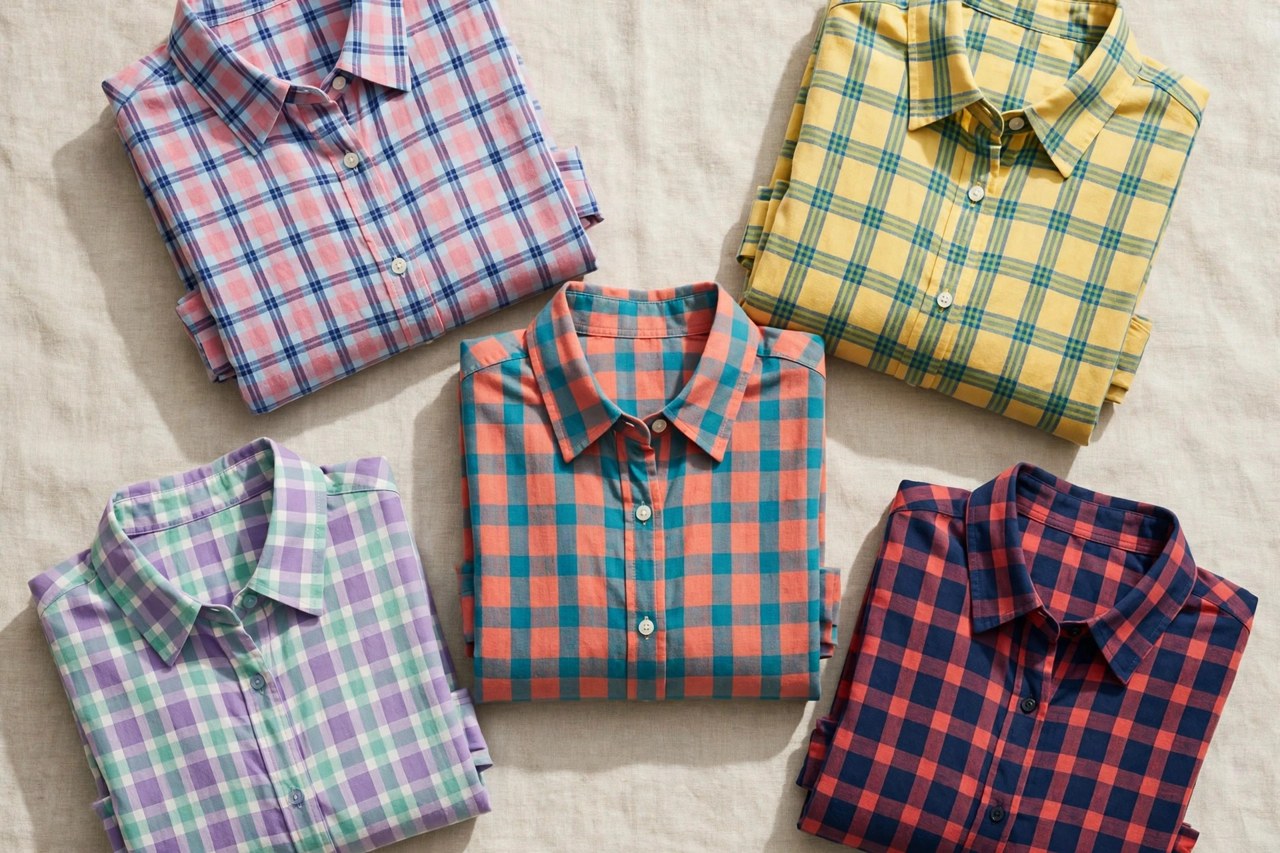
Madras is a lightweight, plain-weave cotton cloth patterned with yarn-dyed plaids, named for the city of Madras — now Chennai — in southern India, where handloom weavers produced it for centuries. A madras shirt is therefore a specific thing, not any plaid shirt: the cloth is feather-light and breathable, the checks are woven in rather than printed on, and the colors are famously exuberant, mixing shades that no cautious designer would put together and somehow making them sing. For women's summer wardrobes, madras brings pattern and color in a fabric cool enough for humid afternoons, in button-front shirts, camp shirts, and relaxed popovers. It also brings a genuine textile heritage, from village handlooms to the famous bleeding madras episode of the 1960s. This guide separates true madras from plaid-printed imitations and shows how to wear and wash the real thing.
Handloom Heritage and the Bleeding Madras Story
Traditional madras was woven on handlooms from yarns dyed with vegetable dyes, which produced the cloth's charming irregularities: slight variations in the check, tiny slubs in the yarn, and colors that softened with every wash. Exported through colonial trade, madras became a staple of warm-climate dressing and then, in the mid-twentieth century, an American summer favorite. The bleeding madras chapter is textile legend: when shipments of madras made with unstable natural dyes reached American makers in the 1960s, the colors ran in the wash, garments faded unpredictably, and complaints followed — until marketers reframed the flaw as authenticity, selling guaranteed-to-bleed madras as the genuine article whose fading proved it real. Buyers embraced the story, and a softened, sun-faded madras became the desirable look.
Real Madras Versus Printed Plaid
Telling true madras from a printed imitation takes ten seconds. Turn the shirt inside out: woven madras shows the same plaid on both faces of the cloth, because the pattern comes from colored warp and weft yarns crossing, while a print shows a faded or blank reverse. Feel the weight next: madras is a genuinely light summer cloth, airy and slightly textured, not a midweight flannel or a stiff poplin with a check printed over it. Look at the pattern's edges — woven checks have the soft, slightly irregular boundaries of yarn-dyed threads, and authentic handloom-style madras may still show minor slubs and variations that are character, not defects. Patchwork madras is a separate tradition: panels of different madras plaids are sewn together into one shirt, an exuberant style with roots in both Indian cloth use and American summer fashion. A patchwork shirt is the boldest way to wear madras and pairs best with the plainest bottoms you own.
Styles and How Women's Madras Shirts Are Cut
The classic women's madras shirt is a button-front with a point or camp collar, short or roll-up sleeves, and a relaxed body meant to be worn untucked over shorts or tucked loosely into a skirt. Camp-collar madras shirts lean into the vacation character of the cloth and layer well over a tank or swimsuit at the beach. Popover styles, with a partway placket, suit the fabric's softness and read a little more polished. Sleeveless madras shirts and madras shirtdresses extend the cloth through the hottest weeks. Fit should honor the fabric: madras is not a structured cloth, so a shirt cut too close pulls at the checks and distorts the plaid, which the eye notices immediately. A little ease lets the cloth move and breathe, which is its entire purpose. Check that plaids match at the pocket and across the button front on better shirts — pattern matching on a woven check is a reliable quality marker.
Styling Madras Without Letting It Shout
Madras already contains several colors, so the styling rule is to pick one of them and let everything else be quiet. Pull the navy from a madras plaid for trousers, the white for a skirt, or the softest pastel for shorts, and keep shoes and bags neutral. Worn this way, a madras shirt reads fresh and intentional rather than busy. It is natural warm-weather clothing: with white jeans, khaki shorts, a denim skirt, or linen trousers, and as a light layer open over a plain tee. Because the cloth is casual by heritage, madras shirts belong to weekends, vacations, garden parties, and creative workplaces rather than formal offices. Jewelry should stay simple — the plaid is the ornament.
Care: Protecting Yarn-Dyed Color
Modern madras is colorfast by the standards of its ancestors, but yarn-dyed summer cotton still deserves gentle treatment to keep its brightness. Wash in cool water, inside out, with like colors, and wash a new madras shirt separately the first time or two in case any loose dye remains — a habit inherited from the bleeding era that still prevents accidents with white laundry. Avoid chlorine bleach entirely; it attacks the dyes unevenly and can leave the plaid blotchy. Line dry in shade where possible, since strong sun fades madras unevenly across folds, though a little overall softening is part of the cloth's charm and not a flaw. Iron on a medium setting while slightly damp to restore the plain weave's neatness, or embrace the lightly rumpled texture that suits the fabric's character. Store folded or hung away from prolonged direct light, and your madras will fade gracefully and evenly, the way it has for generations of summers.
More to Explore on Apparel Search
Photos

Looking for Women's Clothing Stores?
This guide helps you choose women's cotton madras shirts by plaid, patchwork and style. To browse where to buy, visit our women's clothing store directory, where you can find retailers that carry them.