Women's Cotton Clothing Guide — Page 1: Tees, T-Shirts & Tops
Start with the hardest-working layer — cotton jersey tees, tanks, polos, camisoles, and light sweaters, sorted by weight, neckline, and fit.
Shop Women's Cotton Tees & Tops Now
Shop Women's Cotton Tees & Tops on Amazon Shop Women's Cotton Tees & Tops on eBayThe Amazon and eBay links on this page are affiliate links. If you make a purchase through them, Apparel Search may earn a commission.
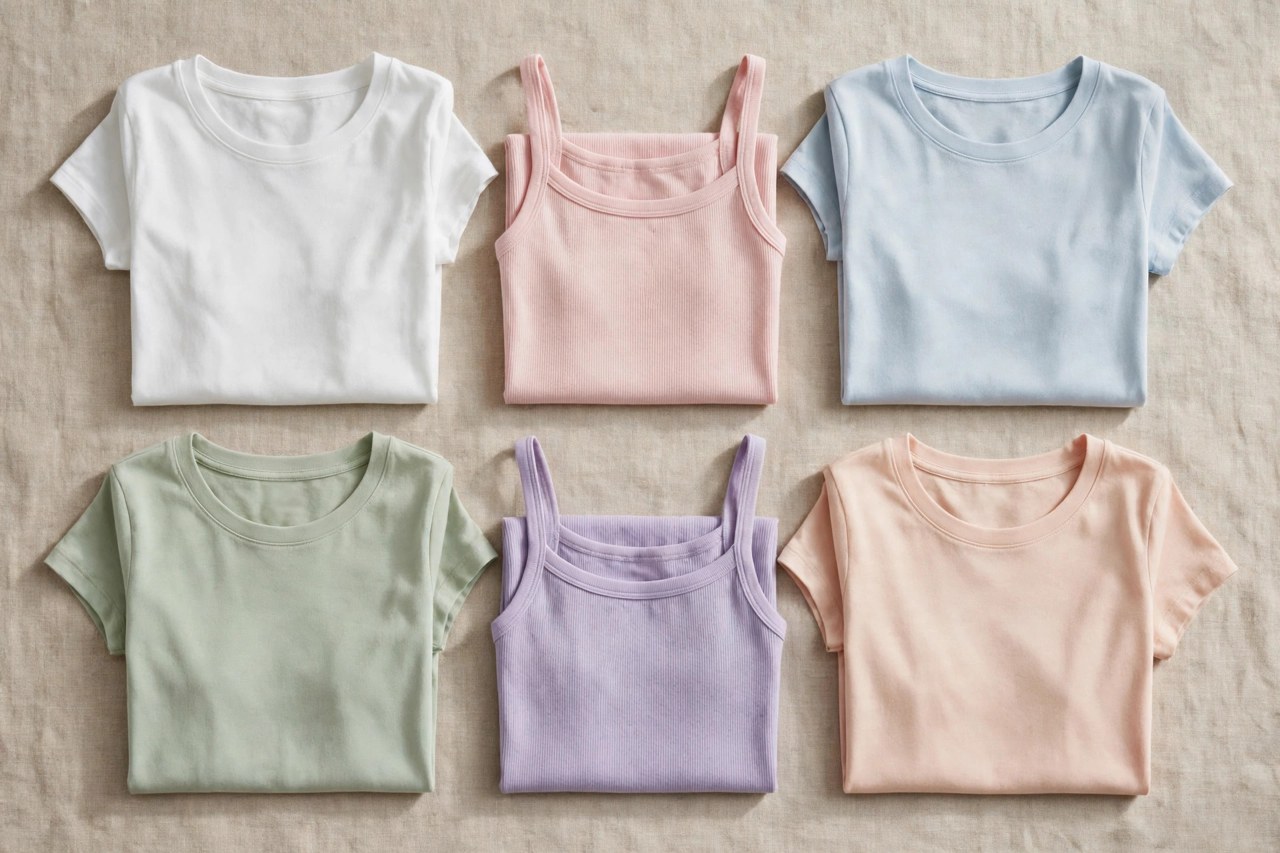
If a cotton wardrobe has a foundation, this page is it. T-shirts, tees, tank tops, and light knit tops are the pieces worn most often, layered most flexibly, and replaced most reluctantly when a favorite finally wears out. Nearly all of them are knitted rather than woven, and the knit is usually single jersey: a light, stretchy fabric with a smooth face and a slightly textured back, made on circular machines that produce the familiar tubular tee. Jersey's natural give is why a cotton tee needs no fastenings and fits so many bodies comfortably, but jersey also varies enormously.
Jersey Weights: Light, Midweight, and Heavyweight
Tee weight is quoted in grams per square metre, and it changes everything about how a shirt wears. Lightweight jersey around 120 to 145 GSM drapes softly, layers invisibly under blazers and cardigans, and suits hot weather, but it can cling and show what is underneath, especially in white. Midweight jersey, roughly 150 to 180 GSM, is the classic tee: opaque, structured enough to keep a crew neck standing, and durable through years of washing. Heavyweight tees at 180 to 220 GSM and above feel almost like light sweatshirt fabric without the fleece backing; they hold a boxy shape, hide lines, and appeal to anyone tired of tissue-thin shirts. Yarn quality matters as much as weight. Ringspun and combed cottons spin longer, smoother fibers into yarns that pill less and feel softer, while slub jersey deliberately varies the yarn thickness for a textured, vintage look. A small percentage of elastane, usually one to five percent, helps fine jersey recover its shape at the neck and hem.
Necklines and Cuts: Crew, V-Neck, and Everything Between
The crew neck is the original tee neckline, finished with a ribbed band that should lie flat and spring back when stretched; a band that stays wavy after a wash signals weak ribbing or too little elastane. V-necks open the line of the throat and layer neatly under shirts and jackets, with depth ranging from a modest high V to a deep plunge. Long-sleeve tees extend the same jersey into a true base layer for cold weather and a stand-alone top in spring and fall, while hooded tees add a light jersey hood to either sleeve length for casual cover. Tank tops strip the top to its essentials: wide straps, narrow spaghetti straps, and ribbed-knit versions whose vertical ribs add stretch and texture. Rib tanks deserve their own guide because the rib gauge changes the fit — fine ribs skim, wide ribs hug. Maternity tees adapt the same fabrics with ruching, extra length, and side shirring that grows with the wearer.
Beyond the Tee: Polos, Turtlenecks, Camis, and Cotton Sweaters
Not every cotton top is a tee. Polo shirts are knitted in piqué, a textured double knit with a waffle-like surface that breathes well and holds a collar and placket crisply — the reason polos read smarter than tees at the same weight. Tennis shirts share that heritage and raise an honest comparison with modern synthetic court wear. Cotton turtlenecks use fine-gauge jersey or light sweater knits for a smooth layer that wool-sensitive wearers can actually enjoy, in full turtleneck and mock-neck heights. Camis and camisoles — covered in two separate guides, one for the modern layering cami and one for the classic camisole garment — use jersey, lawn, or rib knits as underpinning, sleep layer, or summer top. At the top of the page sit the light knit layers: cotton cardigans and crew sweaters. Cotton sweater knits are cooler and heavier than wool, with a dry hand and no itch, ideal for spring evenings and air-conditioned offices, though they relax with wear and prefer folding to hanging.
Layering and Care for Knit Tops
Cotton tops earn their keep through layering. A fine crew or V-neck under a woven shirt adds warmth without bulk; a rib tank under an open cardigan defines the waistline of a soft outfit; a turtleneck under a sleeveless dress extends a summer wardrobe into October. Because jersey is a knit, its care rules differ from woven cotton. Wash tees inside out in cool water to protect prints and dark dyes, and avoid high dryer heat, which shrinks length, twists side seams, and bakes elastane until necklines stop recovering. Folding rather than hanging prevents shoulder points and gradual stretching. Pilling — the small fiber balls that appear at friction points — is worst on short-staple, loosely knit jersey; tighter knits, combed yarns, and washing in a mesh bag all reduce it, and a fabric shaver restores a smooth surface in minutes.
Page 1: Tees, T-Shirts & Tops
- Women's Cotton Cami
- Women's Cotton Camisole
- Women's Cotton Cardigan Sweater
- Women's Cotton Crew Sweater
- Women's Cotton Jersey T-Shirts
- Women's Cotton Polo Shirts
- Women's Cotton Sweaters
- Women's Cotton T-Shirts
- Women's Cotton Tank Tops
- Women's Cotton Tees
- Women's Cotton Tennis Shirts
- Women's Cotton Tops
- Women's Cotton Turtleneck
- Women's Crew Neck Cotton T-Shirt
- Women's Crew Neck Cotton Tee
- Women's Egyptian Cotton T-Shirts
- Women's Heavyweight Cotton T-Shirts
- Women's Hooded Cotton T-Shirts
- Women's Long Sleeve Cotton T-Shirts
- Women's Maternity Cotton T-Shirts
- Women's Ribbed Cotton Tank Tops
- Women's V-Neck Cotton T-Shirt
- Women's V-Neck Cotton Tee
There's more! Page 2 moves from knits to woven cotton — crisp poplin shirts and blouses, madras and flannel shirts, cotton dresses and skirts, plus petite, plus-size and maternity fashion guides.
Continue to Page 2: Shirts, Blouses, Dresses & Skirts »More to Explore on Apparel Search
- Benefits of Cotton
- Cotton
- Cotton Definition
- Cotton News
- What is mercerized cotton?
- What is organic cotton?
- Women's Cotton Argyle Socks
- Women's Cotton Athletic Apparel
- Women's Cotton Athletic Pants
- Women's Cotton Bikini Briefs
- Women's Cotton Blouses
- Women's Cotton Boxer Shorts
- Women's Cotton Boy Shorts
- Women's Cotton Bras
- Women's Cotton Clothes
- Women's Cotton Clothing
- Women's Cotton Clothing Pg. 3
- Women's Cotton Clothing Pg. 4
- Women's Cotton Clothing Pg. 5
- Women's Cotton Clothing Pg. 6
- Women's Cotton Corduroy Pants
- Women's Cotton Crew Socks
Looking for Women's Clothing Stores?
This guide helps you choose women's cotton tees, t-shirts and tops by weight, neckline and style. To browse where to buy, visit our women's clothing store directory, where you can find retailers that carry them.