Women's Cotton Tank Tops Guide
Sleeveless cotton essentials — strap widths, smooth versus ribbed jersey, and layering from summer solo to year-round base.
Shop Women's Cotton Tank Tops Now
Shop Women's Cotton Tank Tops on Amazon Shop Women's Cotton Tank Tops on eBayThe Amazon and eBay links on this page are affiliate links. If you make a purchase through them, Apparel Search may earn a commission.
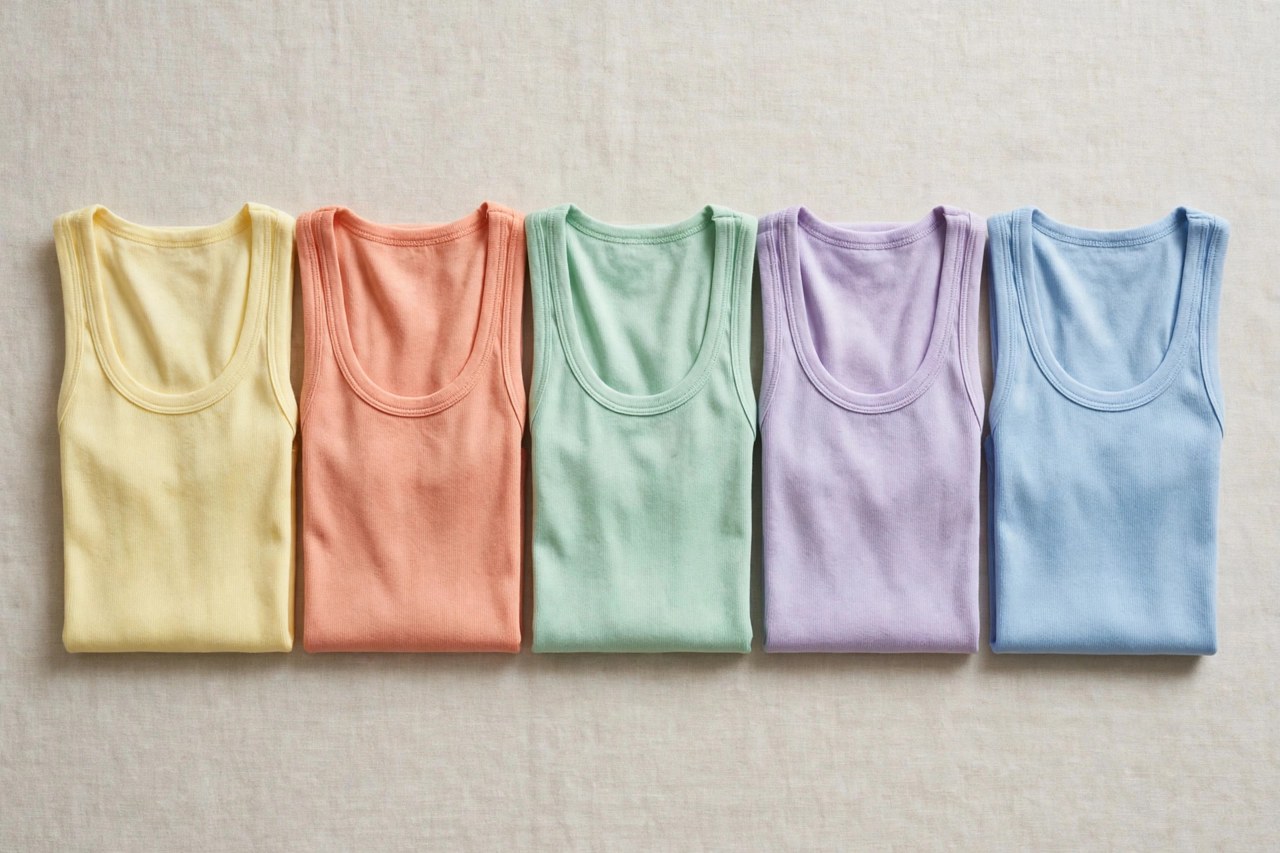
A cotton tank top is the simplest warm-weather garment there is: a sleeveless top, usually in cotton jersey, that works alone in summer and as a smooth base layer the rest of the year. Its simplicity puts the details in charge. Strap width decides how finished it looks, the knit decides how it fits and breathes, and the armhole and neckline cuts decide whether it layers discreetly or makes its own statement. Cotton suits the tank particularly well because the garment sits directly on skin in hot weather, where cotton's absorbency and soft, non-cling feel beat most synthetics for everyday comfort. This page covers tanks generally — smooth and ribbed, narrow-strapped and wide — while the ribbed tank, a distinct layering staple with its own knit logic, gets a dedicated page of its own.
Strap Widths and Neckline Shapes
Narrow spaghetti straps give the lightest, most camisole-like tank, excellent as an underlayer and delicate worn alone, but the straps carry the whole garment and can stretch or dig in on heavier jerseys. Standard straps, roughly a finger or two wide, are the all-purpose choice: they cover most bra straps, support the top evenly, and read as a proper top rather than an underpinning. Wide and racerback straps suit active and casual wear, anchor the garment firmly, and show more shoulder and back by design. Necklines divide into scoop, square, V, and high-neck cuts. A scoop is the classic and the easiest to layer; a square neck looks sharper and more deliberate as a solo top; a high neck balances a shorter hem and suits cooler evenings. Armholes matter as much as necklines — a well-cut tank sits close enough to cover underlayers without gaping when you bend or reach.
Smooth Jersey Versus Ribbed Knit
Most cotton tanks are knitted one of two ways. Smooth single jersey is flat, light, and clean-looking; it skims the body, layers invisibly under shirts and knits, and shows a crisper outline as a solo top. Its weakness is cling in thin weights, so for a smooth tank worn alone, look for a midweight jersey rather than the thinnest option. Ribbed knit, with its fine vertical cords, stretches sideways and hugs the body, which gives a closer, more anchored fit and a casual, textured look. Rib is covered in depth on the ribbed tank tops page; here it is enough to know that ribbed tanks run firmer and often size smaller in feel than smooth ones in the same labelled size. Cotton-elastane blends appear in both knits: a few percent of elastane helps a tank recover its shape at the armholes and hem after a day of wear, while 100 percent cotton feels driest and softens most with washing.
Shelf Bras, Lengths, and Practical Options
Many cotton tanks include a built-in shelf bra — an elasticated inner layer across the chest that offers light support and extra coverage. It suits smaller busts and relaxed settings, and it adds a layer of cotton against the skin that can feel warm in peak summer, so treat it as a preference rather than an upgrade. Double-layer fronts without a shelf give opacity without support. Length divides into standard, ending at the hip; long, covering the hip fully for leggings and layering; and cropped, ending at the waist for high-rise pairings. Side vents and curved hems help longer tanks sit over hips without pulling. When a tank will live mostly under other clothes, prioritise a smooth knit, a length that stays tucked, and straps placed to match your usual underlayers; when it will be worn solo, prioritise opacity, armhole finish, and a neckline you do not need to adjust.
Layering and Summer Styling
Worn alone, a cotton tank with wide or standard straps pairs cleanly with shorts, skirts, and linen trousers, and a tucked tank gives a neat waist under an open overshirt. As a layer, the tank is the quiet problem-solver of the wardrobe: it adds modesty under a low or sheer top, warmth without sleeves under a jumper, and a smooth cotton barrier that protects outer garments from sweat and deodorant marks. Colour strategy follows function. Layering tanks earn their keep in white, black, and skin-tone shades matched to your outer clothes, while solo tanks can carry the colour — a saturated tank with neutral bottoms is the easiest summer outfit there is. In transitional weather, a tank under a flannel shirt or denim jacket extends its season by months, which is why most wardrobes do better with a few good midweight tanks than a drawer of flimsy ones.
Care: Keeping Cotton Tanks Bright and Fitted
Cotton tanks work hard and wash often, so care decides their lifespan. Wash in cool water inside out, especially colours, and expect 3 to 5 percent length shrinkage from unfinished cotton on the first wash — buy length with that in mind. Armholes and straps are the stress points: if a strap stretches, the whole neckline sags, so avoid hanging tanks by their straps for storage and fold them instead. Whites stay white longer washed separately with an occasional oxygen-based soak rather than harsh bleach, which weakens cotton fibres and yellows elastane. Line drying preserves both fit and colour, and a light press on the straps and hem makes even an old tank look deliberate. Retire tanks when the armholes ripple permanently or the jersey thins at the centre front; a fresh cotton tank costs little and lifts every outfit it joins.
More to Explore on Apparel Search
Photos

Looking for Women's Clothing Stores?
This guide helps you choose women's cotton tank tops by strap, knit and length. To browse where to buy, visit our women's clothing store directory, where you can find retailers that carry them.