Women's Cotton Tops Guide
The umbrella guide to cotton tops — tees, tanks, camis, polos and knits, and how to choose by fabric and occasion.
Shop Women's Cotton Tops Now
Shop Women's Cotton Tops on Amazon Shop Women's Cotton Tops on eBayThe Amazon and eBay links on this page are affiliate links. If you make a purchase through them, Apparel Search may earn a commission.
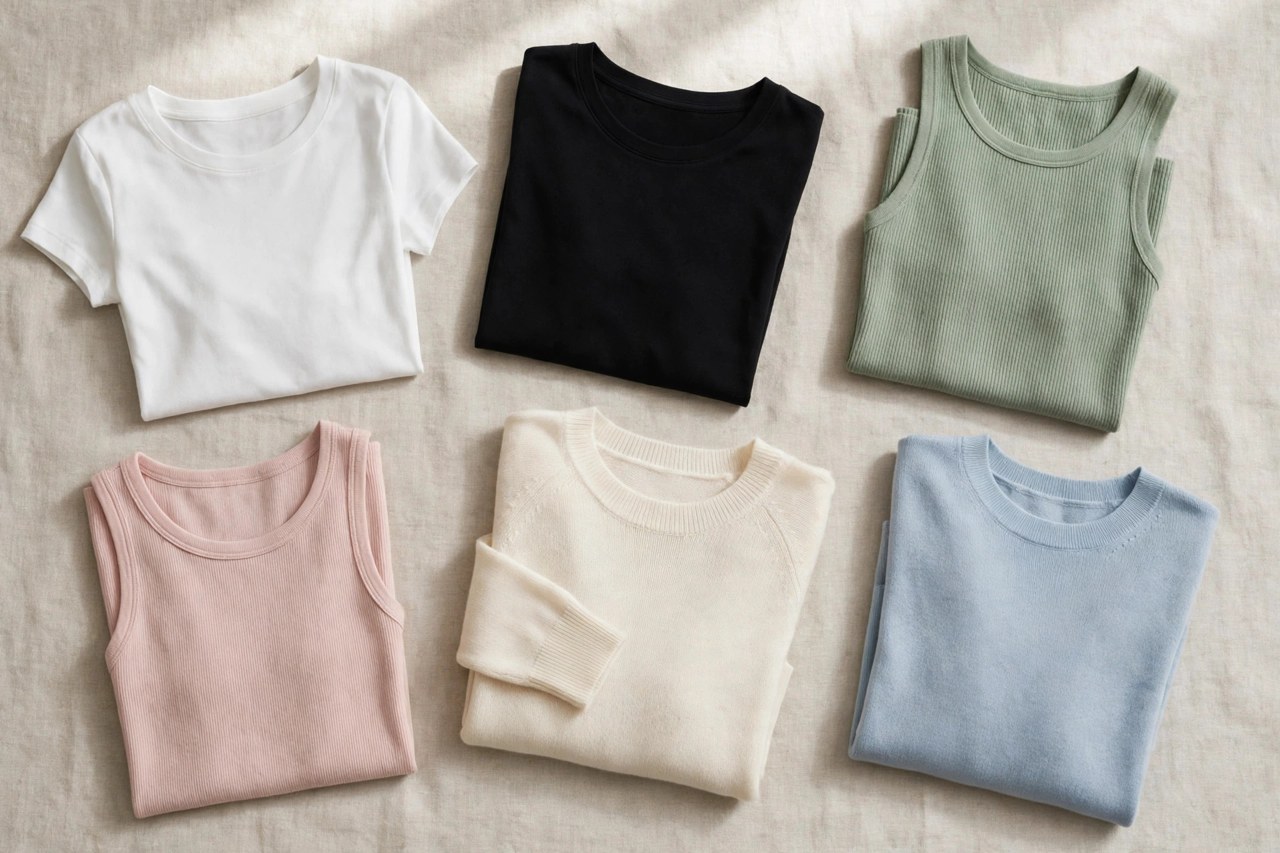
Cotton tops is the umbrella term for everything cotton that covers the torso without being a formal shirt or blouse: t-shirts and tees, tank tops and ribbed tanks, camis, polos, turtlenecks, and light cotton sweaters. This page is the map for that whole territory. Its job is not to replace the dedicated guide for each garment, but to help you choose between them — by knit and weave, by weight, and by the occasion in front of you. Cotton dominates this category for good reasons: it breathes against the skin, washes without ceremony, softens with age, and spans a huge range from a featherweight summer tank to a structured pique polo. Start here to narrow the field, then follow the related guides below for the deep detail on whichever top you land on.
The Categories at a Glance
T-shirts are the basics: classic cotton jersey, defined necklines such as crew and V, and fits built for rotation wear. Tees are their styled siblings, with drapier jerseys and fashion cuts. Tank tops remove the sleeves entirely, trading coverage for coolness and layering versatility, while ribbed tanks add a stretch-knit, stay-put fit. Camis are the lightest layer of all, narrow-strapped tops that underpin sheer or low garments and step out alone in summer. Polos bring a collar and a pique knit, lifting a casual top into smart-casual territory. Turtlenecks reverse the tank's logic, adding a high fine-gauge neck for cool-weather layering. Cotton sweaters and cardigans close the range, knitted rather than jersey-cut, for days when a top must also be the warmth. Most wardrobes need several of these, in different weights, rather than many of one.
Knits Versus Wovens in Cotton Tops
Nearly all cotton tops are knits, and the knit decides the character. Single jersey is the default: light, stretchy across the width, and prone to curling hems in cheap versions. Interlock jersey is knitted double, smoother on both faces, more opaque, and better at holding a polished shape, which is why better tees and polos-adjacent tops use it. Rib knits stretch and grip, ideal for tanks and fitted layers. Pique, the polo's knit, has a tiny waffle-like texture that lifts fabric off the skin and looks structured even in heat. Fine-gauge machine knits make turtlenecks and cotton sweaters, trading jersey's casualness for a smoother, dressier surface. Woven cotton appears at the edges of the category in camis cut from lawn or voile and in hybrid tops with woven fronts and knit backs. When a top feels wrong, the cause is usually a mismatch between knit and purpose, not the cotton itself.
Choosing by Occasion
For everyday casual wear, the midweight t-shirt and the ribbed tank cover most needs, in colours that survive your laundry habits. For smart-casual and relaxed office settings, step up in structure: a pique polo, an interlock tee under a blazer, or a fine cotton turtleneck in cool months reads intentional without a formal shirt. For heat and holidays, tanks and camis in breathable jersey or lawn keep air moving, and lighter colours genuinely run cooler. For layering, think in a system: a smooth tank or cami closest to the skin, a tee or turtleneck in the middle, and a cardigan or jacket outside, each cotton weight slightly heavier than the last. For evening, cotton tops dress up through cut and finish rather than fabric prestige — a clean square-neck tank, a black V-neck tee with tailored trousers, or a fine knit with considered jewellery. Occasion dressing with cotton is mostly about choosing the most structured version of a comfortable thing.
Weight, Opacity, and the White Top Test
Across every category, weight is the hidden quality marker. Lightweight cotton tops, roughly 120 to 150 GSM in jersey terms, drape and breathe best but show underlayers, pill sooner, and lose shape fastest. Midweight tops around 160 to 190 GSM balance opacity and drape for daily wear. Heavier cotton, above 200 GSM, suits structured tees, polos, and cooler seasons. Whatever the category, apply the white top test before buying light colours: hold the fabric over your hand in daylight and check how much shows through, then stretch it slightly, because tops are worn stretched. Seams should be flat and even, hems should hang level, and neckline bindings should recover when pulled gently. A cotton top that passes those checks in the shop will still be passing them after a season of washes, and one that fails them will not improve at home.
Building a Cotton Tops Rotation
A practical rotation needs fewer tops than most drawers hold. Two or three basic t-shirts in core colours, one styled tee, two tanks (one smooth, one ribbed), a cami for layering, a polo for smart-casual days, and a turtleneck plus a light cotton knit for cool weather will outfit most weeks in most climates, with seasonal swaps for heat or cold. Buy the best weight you can in the pieces worn closest to the skin and washed most often, since those fail first. Wash cotton tops cool and inside out, dry them away from harsh heat, and fold knits rather than hanging them. Replace by condition, not by calendar: faded colour is a style choice, but rippled necklines, thinned elbows of fabric, and permanent twist along side seams are a top retiring. Built this way, the cotton tops drawer becomes the most dependable part of the wardrobe.
More to Explore on Apparel Search
- types of tops
- Women's Cotton Blouses
- Women's Cotton Cardigan Sweaters
- Women's Cotton Clothing
- Women's Cotton Crew Neck T-shirts
- Women's Cotton Crew Neck Tees
- Women's Cotton Crew Sweater
- Women's Cotton Dress Shirts
- Women's Cotton Flannel Lounge Shirts
- Women's Cotton Flannel Shirts
- Women's Cotton Flannel Sleep Shirts
- Women's Cotton Guayabera Shirt
- Women's Cotton Heavyweight Sweatshirts
- Women's Cotton Heavyweight T-shirts
- Women's Cotton Hooded Shirts
- Women's Cotton Hooded Sweatshirts
- Women's Cotton Hooded T-shirts
- Women's Cotton Jersey T-shirts
- Women's Cotton Jerseys
- Women's Cotton Long Sleeve T-shirt
- Women's Cotton Lounge Shirts
- Women's Cotton Maternity Shirts
- Women's Cotton Maternity T-shirts
- Women's Cotton Poplin Shirts
- Women's Cotton Shirts
- Women's Cotton Sleep Shirts
- Women's Cotton Sweat Shirts
- Women's Cotton Sweaters
- Women's Cotton Tennis Shirts
- Women's Cotton V-neck T-shirts
- Women's Egyptian Cotton Shirts
- Women's Egyptian Cotton T-shirts
- Women's Egyptian Cotton Tees
- Women's Organic Cotton Sweaters
- Women's Organic Cotton T-shirts
- Women's Organic Cotton Tees
- Women's Shirts
- Women's Tops
Photos

Looking for Women's Clothing Stores?
This guide helps you choose women's cotton tops by category, knit and occasion. To browse where to buy, visit our women's clothing store directory, where you can find retailers that carry them.