Women's Cotton Sweaters Guide
Cool-handed, itch-free, and washable — cotton knitwear covers more of the year than wool ever could, once you know its gauges and shapes.
Shop Women's Cotton Sweaters Now
Shop Women's Cotton Sweaters on Amazon Shop Women's Cotton Sweaters on eBayThe Amazon and eBay links on this page are affiliate links. If you make a purchase through them, Apparel Search may earn a commission.
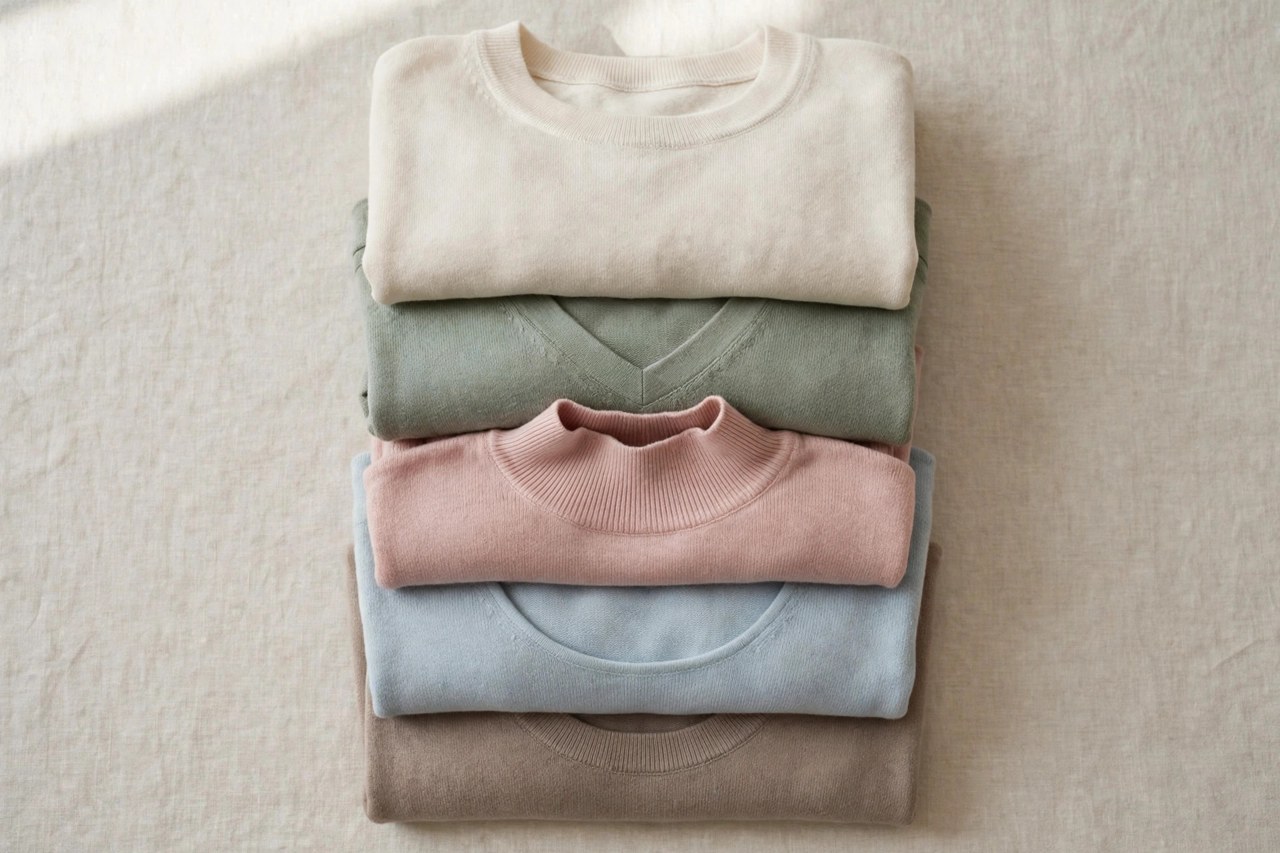
Cotton sweaters occupy their own branch of knitwear, and this umbrella guide exists because they should not be shopped like wool sweaters in a different color. Cotton fiber is smooth, cool, and absorbent, with almost no elasticity of its own, so a cotton sweater hangs, drapes, and wears differently from the first fitting. The rewards are considerable: no itch against bare skin, no pilling halo of fuzzy fibers, colors that stay clear, and knitwear you can wear in spring, on summer evenings, and through autumn rather than only in deep winter. The demands are equally real: cotton knits are heavy for their warmth, they stretch where wool would spring back, and they shrink if washed hot. Understand those three facts and every other choice on this page — gauge, shape, fit, and care — becomes straightforward.
Why Cotton: Cool Hand, No Itch, Honest Limits
Women reach for cotton sweaters first for comfort. The fiber's flat, smooth surface feels cool on contact, which is why a cotton knit can sit directly on skin that wool would irritate within minutes. Dyed cotton keeps colors true and washes clean of the odors wool holds onto. Now the limits, plainly: cotton provides modest insulation, so a cotton sweater is a three-season garment, not a January coat substitute; its weight means chunky cotton knits can feel heavy and drag at the shoulders; and with little natural stretch, fit depends on ribbing, knit structure, and sometimes a small percentage of nylon, modal, or elastane blended in for recovery. None of that disqualifies cotton — it simply tells you where cotton sweaters shine, which is most of the calendar.
Gauges and Stitches, Decoded
Gauge counts the stitches across an inch and predicts a sweater's character. Fine gauges of 14 to 18 produce smooth, dressy knits that layer under blazers and resemble heavy jersey; they are the backbone of cotton twinsets and office sweaters. Mid gauges from 7 to 12 show real stitch definition, suit most pullovers and cardigans, and balance drape with structure. Coarse gauges of 3 to 5 make relaxed, textured weekend knits, beautiful in cotton but heavy, so check that shoulder seams are reinforced. Stitch choice matters as much as gauge. Stockinette is the smooth default; ribbing stretches and clings usefully at cuffs, hems, and in fully ribbed fitted styles; cables show with unusual clarity in matte cotton; seed stitch and waffle textures add surface interest and disguise wear. Pilling is less visible on cotton than wool, but loose, fuzzy cotton yarns still pill — a tight, smooth, combed or long-staple yarn is the durable buy.
The Shapes: Cardigan, Crew, V-Neck, Turtleneck, and Wrap
Start with the opening. Cardigans button or zip open, making them the layering specialists and the easiest sweaters to remove gracefully. Pullovers split by neckline: the crew neck is the casual classic and the best frame for a collared shirt; the V-neck lengthens the torso, accommodates shirts and ties of fabric at the neck, and suits layering over blouses; the turtleneck and its shorter mock-neck cousin add warmth and a polished line under coats; cowl and boat necks soften the picture for dressier knits. Wrap and surplice sweaters borrow from dancewear, tying or crossing at the waist for definition. Sleeves run from sleeveless sweater shells — essentially knitted tops — through three-quarter and full lengths.
Fit and Layering With Cotton Knits
Fit cotton sweaters a touch closer than wool. Because the knit relaxes during wear, a cotton pullover that starts slightly loose finishes the day baggy at the elbows, seat, and cuffs. Shoulders should sit at the natural shoulder unless the style is deliberately dropped, sleeves should reach the wrist bone, and the body should skim rather than cling — cotton shows every lump of what is underneath, so layer over smooth, thin pieces. For layering strategy, fine-gauge cotton goes under jackets and over camisoles and shells; mid-gauge cotton goes over collared shirts and thin turtlenecks; cardigans go over everything, including dresses. Mind proportions: long cotton knits elongate, so pair tunic lengths with slim trousers, and cropped or waist-length knits with fuller skirts and high waists. If you plan to machine wash rather than hand wash, allow for a little length shrinkage and choose accordingly.
Care Versus Wool: Washing, Drying, and Storing
Here cotton repays its owner. Most cotton sweaters tolerate machine washing in cool water on a gentle cycle, ideally in a mesh bag, while wool equivalents demand hand washing or dry cleaning. The rules that remain are simple and non-negotiable: keep water cool to control shrinkage, never wring or hang a wet cotton knit, and dry flat after reshaping, because wet cotton is heavy and stretches under its own weight. Store folded, not hung, and rest sweaters between wearings so ribbed bands recover. Cotton needs no moth protection and tolerates cedar-free drawers happily, though it should be stored clean, since stains set invisibly and appear later. Remove pills with a shaver, mend snags by pulling the loop through to the inside rather than cutting, and re-sew loose buttons before washing. Follow that short list and a cotton sweater routinely outlasts trendier knitwear bought the same season.
More to Explore on Apparel Search
Photos

Looking for Women's Clothing Stores?
This guide helps you choose women's cotton sweaters by neckline, gauge and style. To browse where to buy, visit our women's clothing store directory, where you can find retailers that carry them.