Women's Organic Cotton Sweaters Guide
Knitwear at its most natural — undyed and naturally colored organic yarns, soft hand feel, honest limits, and care that keeps cotton knits alive.
Shop Women's Organic Cotton Sweaters Now
Shop Women's Organic Cotton Sweaters on Amazon Shop Women's Organic Cotton Sweaters on eBayThe Amazon and eBay links on this page are affiliate links. If you make a purchase through them, Apparel Search may earn a commission.
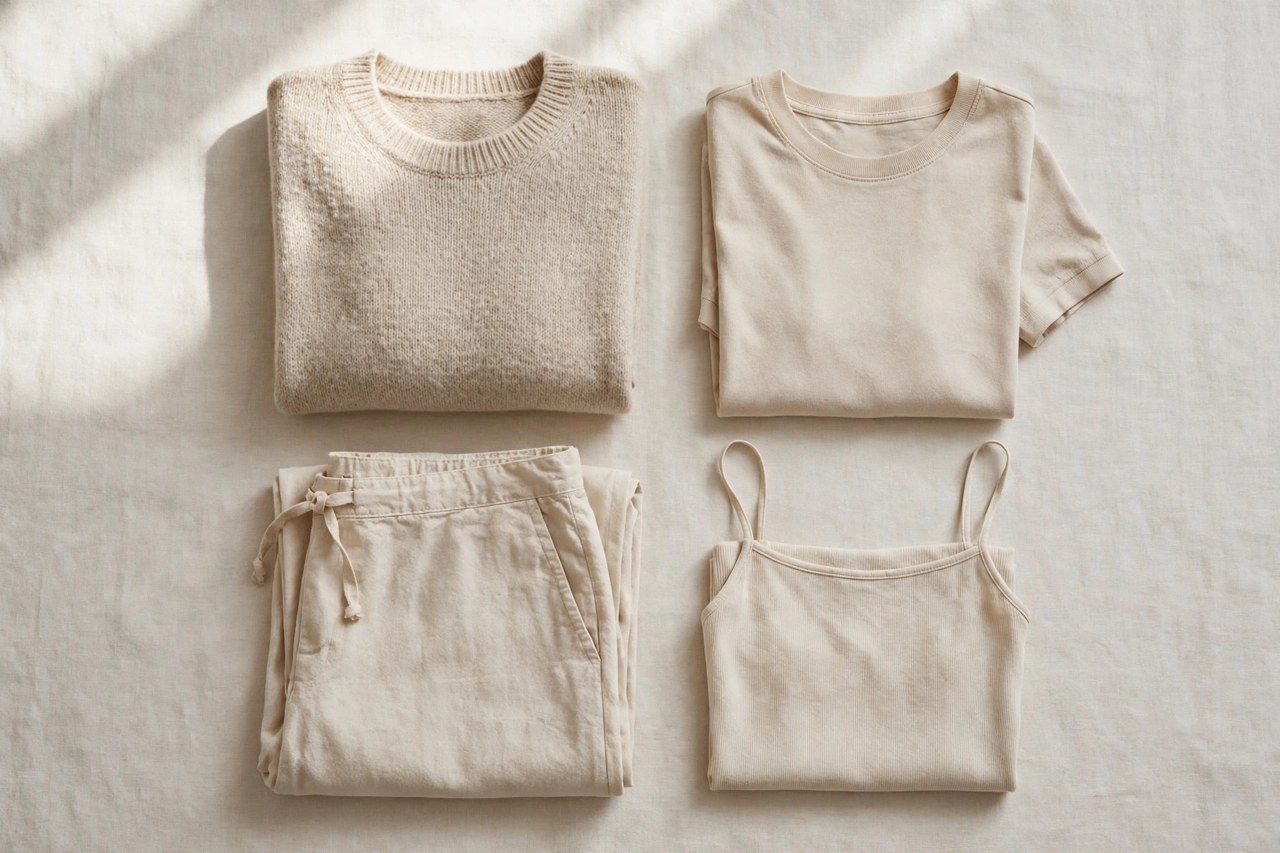
Organic cotton sweaters are knitwear with the shortest story between plant and garment of any clothing in this section, and their signature look comes from what is left out. The finest examples are knitted from undyed organic yarn — ecru, cream, soft tan, and the pale sage and brown shades of naturally colored cotton — so the sweater's color is the fiber's own, needing no dyehouse at all. Others use GOTS-approved low-impact dyes for a fuller palette. Either way, certified organic knitwear offers the cool, smooth, itch-free hand that makes cotton sweaters the warm-weather and sensitive-skin alternative to wool. This guide covers how organic yarn becomes a sweater, what natural color really means, where cotton knitwear shines and where it honestly falls short, and the care habits that decide whether a cotton sweater lasts two seasons or ten.
Undyed and Naturally Colored Yarns
Undyed organic yarn starts with cotton that is cleaned, combed, and spun without bleaching or coloring, arriving in the warm off-whites and creams of the raw boll. Naturally colored cotton goes further: heirloom varieties of the plant itself grow fiber in soft greens, tans, and browns, colors bred back from ancient strains in recent decades. Knitted into sweaters, these yarns give depth that dyed cloth imitates imperfectly, because the color runs through every fiber and mellows evenly with washing. Skipping dye also removes an entire chemical stage, making undyed garments the gentlest option for reactive skin. The trade-offs are palette and permanence: natural shades shift slightly with sun and washing, and no undyed yarn will ever give you navy.
Gauges, Stitches, and Sweater Shapes
Cotton yarn knits differently from wool: it has no crimp and little natural elasticity, so stitch and gauge do the structural work. Fine-gauge organic cotton sweaters, knitted on high-density machines, make smooth crewnecks, cardigans, and layering knits with a clean, almost woven finish that suits work and dressier wear. Chunkier gauges in textured stitches — cables, seed stitch, fisherman-style ribs — give cotton sweaters body and visual warmth, though cotton cables will never spring like wool ones. Ribbed cuffs, hems, and necklines are functional necessities in cotton, supplying the recovery the yarn lacks; a small elastane content in the rib is a sensible, certification-compatible compromise. Shapes follow the fiber's honest character: relaxed, fluid silhouettes that drape, rather than sculpted fits that rely on elastic snap. A cotton sweater that looks softly structured on the hanger and relaxed on the body is behaving exactly as its yarn intends.
Certification and Why Knitwear Costs More
A GOTS-certified sweater carries the standard's full chain of custody — organic yarn, approved dyeing or none, audited knitting and linking, checked working conditions — and quality knitwear adds costs of its own. Fully fashioned knitting, where panels are shaped on the machine and linked seam by seam rather than cut from yardage, uses skilled labor and produces the smoothest, least bulky seams. Organic yarn itself, especially long-staple and naturally colored varieties grown in small quantities, costs more per kilo than conventional yarn, and naturally colored cotton is a niche crop with a short supply chain. Put together, a certified organic sweater at two or three times the price of a basic conventional one is pricing arithmetic, not profiteering. What the premium should always buy is finishing you can inspect: linked rather than overlocked shoulder seams, tidy buttonholes on cardigans, spare yarn or a button included, and no loose ends waving inside the garment.
Softness and the Honest Limits of Cotton Knitwear
Women reach for cotton sweaters for two comforts wool cannot offer: a cool, smooth surface with no prickle, and easy tolerance by skin that finds lanolin and coarse fibers irritating. Organic versions deepen both advantages when they skip resin finishes and heavy softeners, leaving the yarn's own hand to speak. Expect the first wash to relax a new organic sweater into noticeably greater softness. The limits deserve equal clarity. Cotton knitwear is heavier than equivalent wool, insulates less when cold and almost not at all when wet, and it stretches under its own weight if stored badly. It is a three-season sweater fiber — spring, summer evenings, autumn — and a layering fiber in winter under coats rather than a standalone defense against deep cold. Judged inside that honest territory, a good organic cotton sweater is not a wool substitute at all; it is the better garment for the majority of knitwear days.
Sweater Care: Washing, Drying, and Storage
Cotton sweaters fail in the laundry and the drawer, rarely in the wearing. Wash infrequently, in cool water on a gentle cycle or by hand, inside a mesh bag if machine washing, with the garment turned inside out. Reshape it while damp and dry it flat — never hang a wet cotton sweater, because its own waterlogged weight will pull the body longer and the shoulders out of line, permanently. Store sweaters folded on a shelf or in a drawer, never on hangers, with room to breathe; cedar or lavender can help deter moths, though cotton is far less attractive to them than wool. Pill removal with a fabric comb keeps fine gauges looking smooth, and a loose yarn end should be drawn to the inside and secured rather than snipped. Followed consistently, this routine keeps organic knitwear soft and shapely for many years.
More to Explore on Apparel Search
- Clothes
- Cotton
- Cotton Definition
- Cotton News
- Organic Clothing
- Organic Cotton
- Women's Clothes
- Women's Cotton Clothing
- Women's Organic Cotton Activewear
- Women's Organic Cotton Athleticwear
- Women's Organic Cotton Clothing
- Women's Organic Cotton Loungewear
- Women's Organic Cotton Pajamas
- Women's Organic Cotton Shorts
- Women's Organic Cotton Sleepwear
- Women's Organic Cotton Socks
- Women's Organic Cotton T-shirts
- Women's Organic Cotton Tees
- Women's Organic Cotton Underwear
- Women's Organic Fashion
Photos

Looking for Women's Clothing Stores?
This guide helps you choose women's organic cotton sweaters by yarn, gauge and natural color. To browse where to buy, visit our women's clothing store directory, where you can find retailers that carry them.