Women's Organic Cotton Clothing Guide
The garment-level view — how GOTS certifies a finished piece of clothing, which dyes and finishes it allows, and what labels really promise.
Shop Women's Organic Cotton Clothing Now
Shop Women's Organic Cotton Clothing on Amazon Shop Women's Organic Cotton Clothing on eBayThe Amazon and eBay links on this page are affiliate links. If you make a purchase through them, Apparel Search may earn a commission.
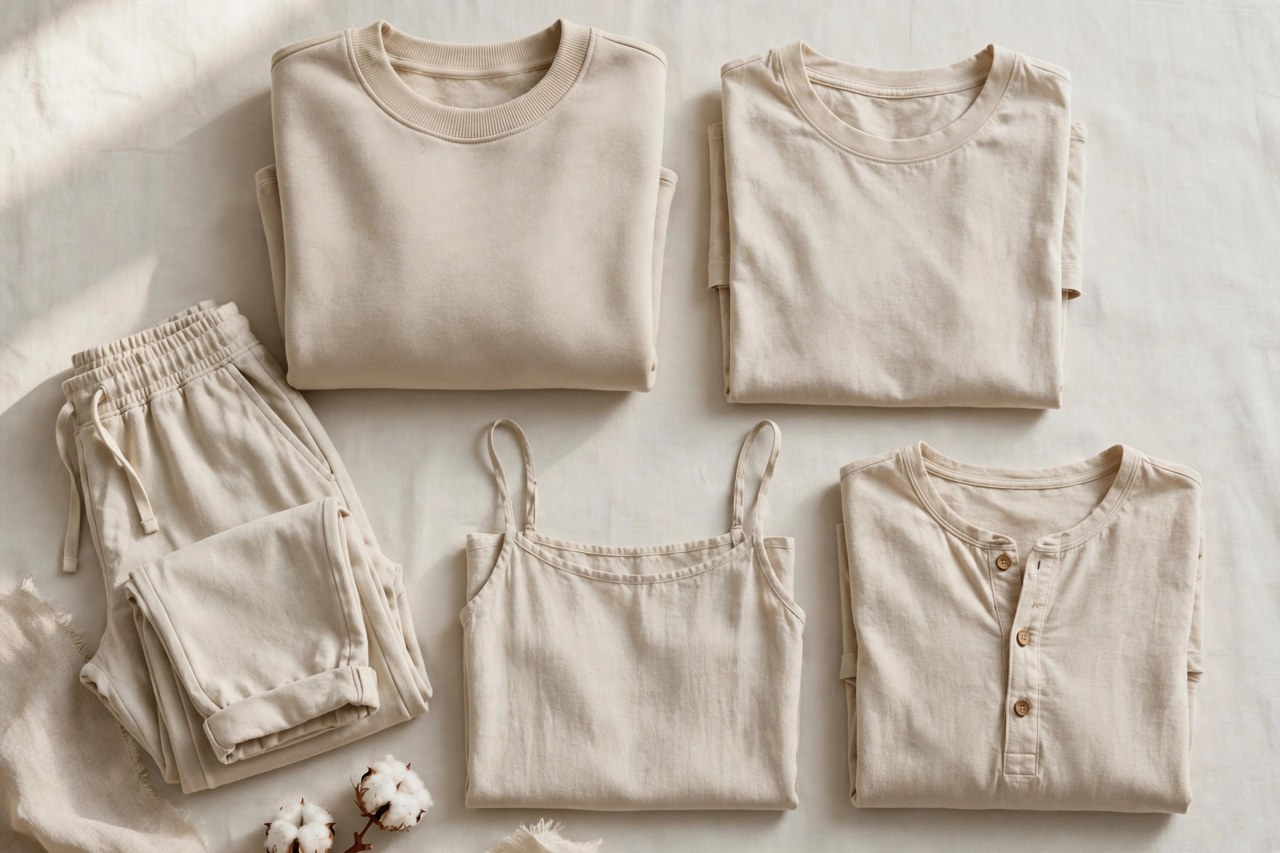
Organic cotton clothing, as this guide uses the term, is about the finished garment and its paperwork. Its companion page, Organic Cotton Clothes, takes the wardrobe view — which pieces to swap and in what order. This page stays with certification at garment level: what it means for a completed dress, shirt, or pair of pants to be GOTS certified, which dyes and chemical finishes the standard permits and forbids, how labeling grades divide full certification from partial claims, and how to verify any of it in a shop or on a product page. That split between the two guides is deliberate, because the most common buying mistake in this category is treating a fiber claim as if it were a garment guarantee. A garment is fiber plus dye plus finish plus sewing, and only garment-level certification speaks to all four.
How GOTS Certifies a Finished Garment
GOTS, the Global Organic Textile Standard, audits every stage after the farm as well as the fiber itself. Certified facilities keep organic and conventional materials physically separate, record every input, use only approved chemicals, treat their wastewater, and meet social criteria covering wages, working hours, and safety. The finished garment earns one of two label grades. The higher grade, labeled organic, requires at least 95 percent certified organic fiber. The second grade, made with organic, requires at least 70 percent and is common in blended clothing where elastane or recycled fibers do functional work. Both grades carry the processing rules; the difference is fiber share, not factory standards. A license number printed beside the logo ties the garment to a certified operator whose status can be checked in the GOTS public database — a small detail that separates a real certification from a decorative leaf printed on a hangtag.
Dyes: What the Rules Allow and Forbid
Dyeing is where garment certification earns its keep, because conventional dyeing and finishing are the most chemical-heavy stages of clothing production. GOTS permits only dyes and auxiliaries assessed for toxicity and biodegradability, and it prohibits, among others, formaldehyde-based finishes, toxic heavy-metal dyes, many azo dyes that can release carcinogenic amines, chlorinated bleaching, and PVC plastisol prints. Oxygen-based bleaching replaces chlorine bleach. Low-impact fiber-reactive dyes are the workhorses for certified cotton color, bonding to the fiber so less dye washes out. The visible results are a palette that historically leaned soft and earthy, though modern approved dye ranges cover bright colors well, and prints done with water-based approved pigments rather than plastisol. If a supposedly certified garment feels stiff with a heavy resin finish or carries a strong chemical smell when new, that sensory evidence is worth trusting enough to check the license number.
Finishes, Trims, and the Small Print
Certification reaches into details most shoppers never consider. Sewing threads in a fully certified garment are typically cotton or approved alternatives, buttons and trims must meet residue limits, and accessories such as zippers and elastic are assessed rather than exempt. Elastane is the familiar compromise: a small percentage is permitted because knitted clothing genuinely needs recovery, but it caps how organic the garment can claim to be, which is why leggings and fitted underwear often sit at the made-with grade. Care labels, interlinings, and even the printing inks on a graphic tee fall under the standard when the whole garment is certified. Reading the small print with this in mind turns label-checking into a quick, useful habit: find the logo, find the grade, find the license number, and read the fiber percentages. Four data points, ten seconds, and you know more about the garment than most marketing copy will tell you.
Verifying Claims and Spotting Greenwashing
Greenwashing in organic clothing follows predictable patterns. The word organic appears in a product name while the certification logo is absent. A percentage is quoted without saying of what — 50 percent organic cotton can mean a blend that is half conventional fiber, which may be fine, but should be sold as such. Self-created eco badges imitate certification marks in green and leaf shapes. And fiber-only standards are described in language that implies factory and dye oversight they do not provide. The defenses are equally predictable: require a recognized standard by name, check the license or certificate when the purchase matters, and prefer retailers who publish fiber breakdowns and factory information without being asked. None of this requires suspicion of every brand; many makers certify honestly and say exactly what their garments are. The goal is simply to pay the certified price only for certified clothing.
Why Certified Clothing Costs More, and When It Is Worth It
Garment-level certification costs money at every audited stage, on top of the farm-level premium in the fiber, and compliant dyehouses, approved chemicals, segregated production lines, and annual inspections all appear in the final price. The premium buys verifiable things: restricted chemical exposure for the workers who dyed and sewed the garment, treated wastewater, and a finished piece with fewer regulated-substance residues against your skin. For clothing worn long hours against the body — everyday tops, underwear, sleepwear, baby-adjacent layers — that package is easy to justify. For a garment worn briefly and rarely, the same premium buys less, and a well-made conventional piece can be the rational choice. Either way, the decision should be made with clear eyes about what certification is: not a softness guarantee, not a durability promise, but a documented account of how the whole garment, fiber to finish, was made.
More to Explore on Apparel Search
- Organic Clothing
- Women's Cotton Clothing
- Women's Organic Cotton Activewear
- Women's Organic Cotton Athleticwear
- Women's Organic Cotton Loungewear
- Women's Organic Cotton Pants
- Women's Organic Cotton Shorts
- Women's Organic Cotton Sleepwear
- Women's Organic Cotton Socks
- Women's Organic Cotton Sportswear
- Women's Organic Cotton T-shirts
- Women's Organic Cotton Tees
- Women's Organic Cotton Underwear
- Women's Organic Fashion
Looking for Women's Clothing Stores?
This guide helps you choose women's organic cotton clothing by certification, dye and finish. To browse where to buy, visit our women's clothing store directory, where you can find retailers that carry them.