Women's Organic Cotton Womenswear Guide
The market view — how the organic womenswear category is organized, what each price tier buys, and where certified cotton matters most for women.
Shop Women's Organic Cotton Womenswear Now
Shop Women's Organic Cotton Womenswear on Amazon Shop Women's Organic Cotton Womenswear on eBayThe Amazon and eBay links on this page are affiliate links. If you make a purchase through them, Apparel Search may earn a commission.
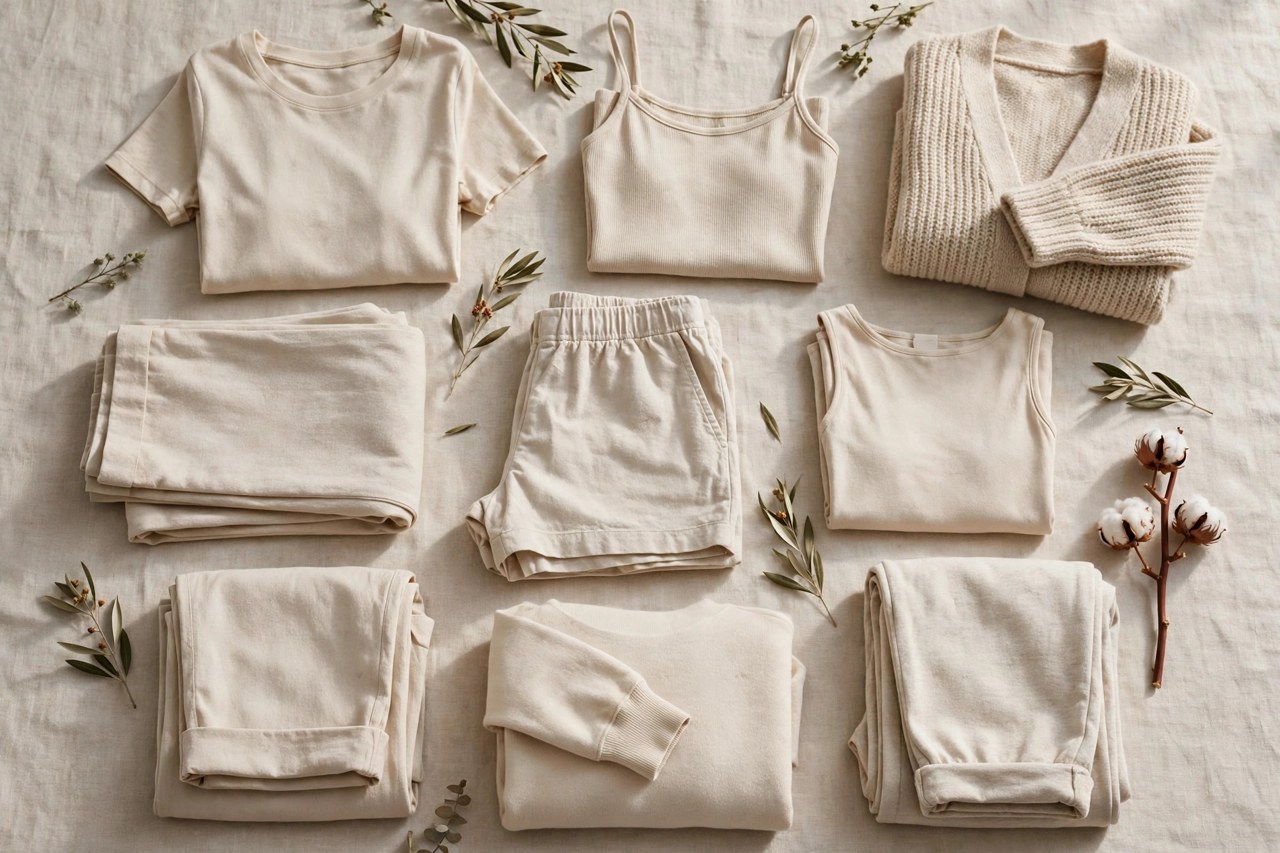
Organic cotton womenswear is the market category as a whole: the dresses, tailoring, knitwear, denim, and basics that women's brands design in certified organic cotton, organized by occasion and sold across a widening spread of price tiers. Where the other guides in this cluster take a fiber, wardrobe, or certification view, this one takes the shopper's-eye view of the category itself. Which parts of womenswear has organic cotton genuinely conquered, where is it still a niche, what do the different price levels actually buy, and why do so many women enter the category through one specific doorway — sensitivity to the chemicals and finishes in conventional clothing? Reading the market clearly makes individual purchases easier, because you can see which promises are standard for a tier and which are marketing weather.
The Category, Occasion by Occasion
Everyday womenswear is organic cotton's stronghold. Tees, jersey dresses, shirts, casual pants, and knitwear in certified cotton are available from dozens of brands in full size ranges, because these are high-turnover garments where a motivated shopper replaces pieces regularly. Occasion and work dressing form the growing middle: poplin and sateen dresses, twill tailoring, and refined knit sets appear each season from contemporary labels, though ranges are smaller and sell through faster. Formal eveningwear remains the thinnest territory, since silk and technical fabrics dominate there and cotton of any kind is a minority choice. At home, womenswear's organic offer is deep again — sleepwear, loungewear, and underwear are among the most completely organic categories in women's clothing, reflecting how strongly skin contact drives the purchase. The map is simple: the closer a category sits to daily wear and skin, the stronger its organic range.
Price Tiers and What Each One Buys
Three tiers organize the market. Entry-level organic womenswear comes from large retailers' certified lines: basics and simple dresses at modest premiums over their conventional equivalents, made possible by volume, with certification genuine but designs kept deliberately simple. The middle tier holds the specialist organic brands, where a dress or tailored piece costs noticeably more and buys better cloth — longer-staple cotton, denser knits — plus smaller audited factories, fuller size ranges, and design detail. The premium tier is designer eco-fashion, where certified fabric meets directional cuts and prices match conventional designer levels; here you are buying design first, with certification as a baseline expectation. None of the tiers is automatically best value. Entry tier wins for basics worn hard, the middle tier is usually the sweet spot for dresses and tailoring, and premium prices make sense only when the design itself is the thing you would buy in any fabric.
Sensitive Skin: The Doorway Into the Category
Ask organic womenswear brands who their most loyal customers are and one answer recurs: women whose skin reacts to conventional clothing. The mechanism is plausible and partly documented. GOTS processing rules restrict formaldehyde resin finishes, many harsh dye chemicals, and heavy softener treatments, so certified garments typically carry fewer of the residues most often implicated in textile contact irritation. Organic cotton is also frequently picked and processed more gently, and its fibers are less likely to be stripped by harsh scouring. None of this makes certified cotton a medical treatment, and reactions have many causes, including detergents and elastane. But as a buying strategy it is sound: if new clothes reliably itch, prickle, or redden your skin, moving the longest-contact layers — underwear, tees, sleepwear, camisoles — to certified organic versions is the single most targeted change available, and many women find it is the only one they needed.
Fit, Sizing, and the Small-Brand Reality
Womenswear sizing is inconsistent everywhere, and organic labels add their own variation because many are small brands grading their own patterns. Expect one brand's medium to wear like another's large, expect natural-fiber garments to relax slightly with wear and firm up after washing, and expect size ranges to be narrower than mass-market lines, though inclusive sizing has improved steadily as the category has grown. The practical defenses are measurements rather than letters: brands in this category usually publish garment measurements, and comparing them with a well-fitting piece you own beats guessing from a size chart. Check return policies before ordering occasion pieces, since small brands' policies vary more than large retailers'. Finally, remember that organic cotton is still cotton: it shrinks a little if washed hot, creases like cotton, and softens like cotton. A brand that says otherwise about its own garments is telling you something useful about its honesty.
Buying Well in a Growing Market
The organic womenswear market grows every year, which brings better choice and, inevitably, more vague claims riding the trend. The buying habits that protect you are the ones used across this whole section: look for a named certification with a license number, read the fiber percentage, and match the garment to the tier's honest strengths. Buy dresses and tailoring from the middle tier when the budget allows, basics wherever certification is verified, and premium pieces only for design you truly love. Favour the categories where organic is deep and competitive — everyday dresses, shirting, knitwear, sleep and lounge — because competition there keeps prices honest. And keep the lifespan rule in front of every purchase: a certified garment worn for years is the environmental success story the category advertises, while a certified garment worn twice is just an expensive one.
More to Explore on Apparel Search
- Clothes
- Cotton
- Cotton Definition
- Cotton News
- Organic Clothing
- Organic Cotton
- Women's Cotton Clothing
- Women's Fashion
- Women's Organic Cotton Athleticwear
- Women's Organic Cotton Loungewear
- Women's Organic Cotton Pajamas
- Women's Organic Cotton Pants
- Women's Organic Cotton Shorts
- Women's Organic Cotton Sleepwear
- Women's Organic Cotton Socks
- Women's Organic Cotton T-shirts
- Women's Organic Cotton Tees
- Women's Organic Cotton Underwear
- Women's Organic Fashion
- womenswear
- womenswear buyer
- womenswear guides
- Womenswear Stores
- Womenswear Wholesalers
Photos

Looking for Women's Clothing Stores?
This guide helps you choose women's organic cotton womenswear by occasion and price tier. To browse where to buy, visit our women's clothing store directory, where you can find retailers that carry them.