Women's Womenswear Guide
Womenswear is the whole category of clothing, footwear and fashion accessories designed for women — every garment on the body from headwear to footwear — and the word the fashion industry uses for that market, its news, photography and commentary.
Shop Women's Womenswear Now
Shop Women's Womenswear on Amazon Shop Women's Womenswear on eBayThe Amazon and eBay links on this page are affiliate links. If you make a purchase through them, Apparel Search may earn a commission.
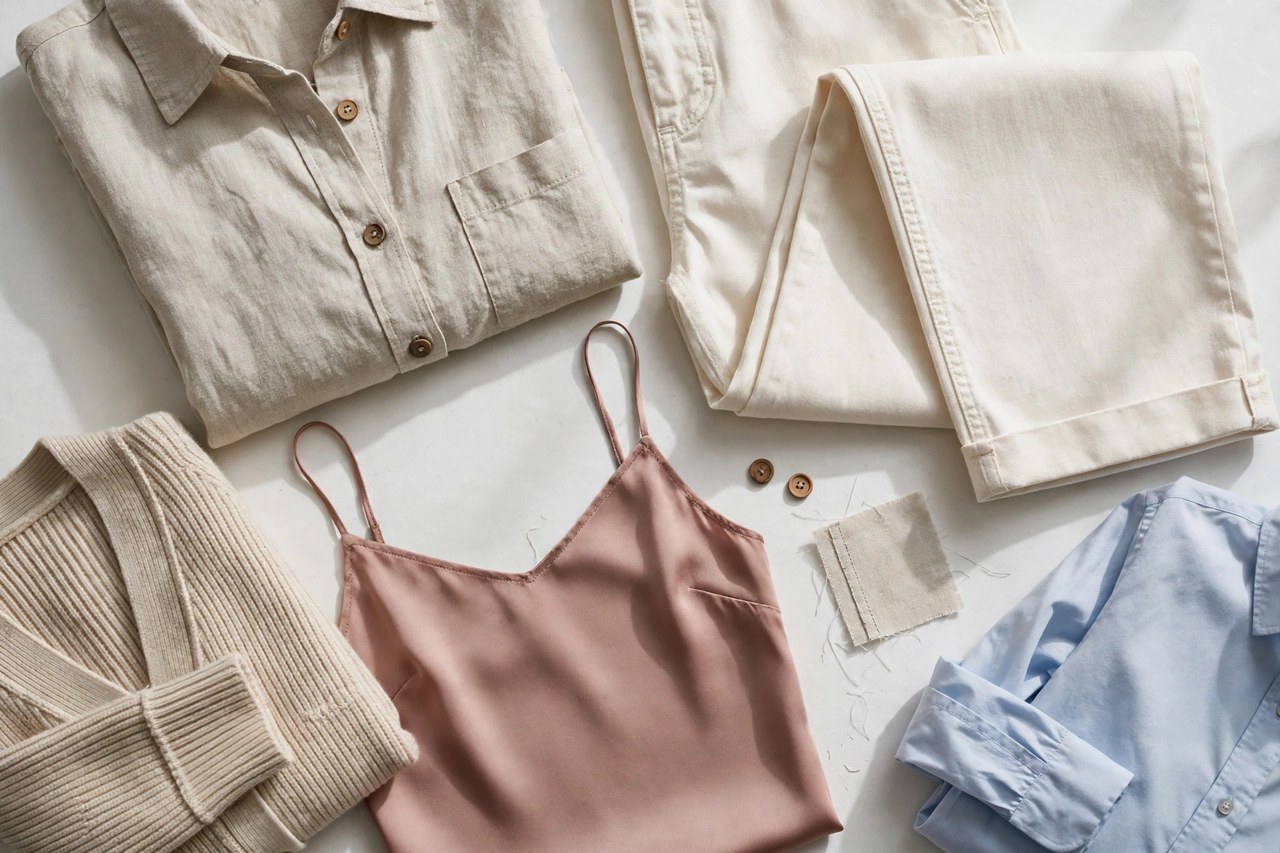
Womenswear is the whole category of clothing, footwear and fashion accessories designed for women — every garment on the body from headwear to footwear — and the word the fashion industry uses for that market, its news, photography and commentary. This page is the category map for the entire Women's Clothes Guide: what the term womenswear covers and excludes (menswear, childrenswear), how the industry talks about it in news, shows and blogs, and where each family of garments lives in this guide.
This guide covers womenswear in the order a careful buyer needs it: what the product is made from, how it is constructed, how it should fit, how to choose it for real use, and how to care for it so it lasts. Like the other women's clothing guides on Apparel Search, this one focuses on measurable details, named materials and checks you can perform in a shop or on a parcel's arrival, rather than general fashion language.
What the Category Contains
Womenswear as a category spans every garment family in this guide: dresses and separates, tailoring and knitwear, outerwear, underwear and sleepwear, footwear and accessories. Its materials are therefore all materials — and the category's real content is how those families are organised, named and talked about by the industry that designs, photographs and sells them.
The trade's vocabulary divides the category by price and purpose: couture and designer ready-to-wear, contemporary and bridge lines, high-street and value ranges; occasionwear, workwear, leisure and active divisions within each. Womenswear is a market word as much as a garment word: the same dress is 'women's clothing' in a shop, 'womenswear' in the trade press, and appears in industry news, runway photography and fashion blogs under that single label. Knowing the vocabulary is what turns browsing into research — the same garment is described differently at each level, and the descriptions are comparable once the levels are understood.
Fit Across the Category
Fit in womenswear is not standardised: sizing differs between countries, brands and price levels, vanity sizing drifts it over time, and the same labelled size can span several centimetres of bust or hip. The category's working rule is universal — shop by measurement and by each brand's own chart, and treat the size label as a filing system rather than a fact.
Each garment family in this guide carries its own fit system — tailoring by shoulder and alteration, knitwear by finished measurement, footwear by length, width and volume — and the letter-by-letter guides exist precisely because no single fit rule covers the category. Start from the garment, not the label.
Using News, Photos and Blogs Well
Choose how to follow womenswear by purpose: trade news for what the industry is doing, photography and show coverage for what the clothes actually look like in motion, and blogs and styling media for translation into real wardrobes and budgets. In practice, rank these checks in the order your own use demands — frequency of wear first, then weather, washing facilities and budget — because that order differs by wardrobe, and it is the real reason two careful buyers can correctly choose differently from the same rail.
Judge sources as you would judge garments: named authorship, real photography, measurements and facts over adjectives, and a corrections culture. Fashion media at every level mixes reporting with promotion; the skill the category teaches is reading both at once without mistaking one for the other.
A Category-Wide Care Principle
Care across womenswear follows fibre, not fashion: wool by wool rules, silk gently, cotton robustly, synthetics cool. The category-level principle is to read the label of the specific garment — every general rule in this guide yields to the maker's instructions for that piece.
And across the category, wardrobes last by rotation, repair and clean storage rather than by volume of washing. The most sustainable garment in womenswear is the one already owned and kept in service — a principle the industry's own resale and repair growth now follows.
Common Questions
What exactly does womenswear include?
All clothing made for women — dresses, separates, outerwear, underwear and sleepwear — plus, in trade usage, women's footwear and fashion accessories. It excludes menswear and childrenswear. If a woman wears it as dress, it sits somewhere inside the womenswear category and somewhere in this guide.
Is womenswear the same as women's clothing?
In meaning, yes; in register, no. Retailers and shoppers say women's clothing; the fashion industry, its press and its trade shows say womenswear. Searching both terms matters when researching the category, because news, blogs and photography collections tend to use the trade word.
Where do I find news and photos about womenswear?
Fashion news coverage follows the seasonal collections, trade shows and designer appointments; photography concentrates on runway shows and lookbooks, and blogs translate both into styling for real wardrobes. This site's news and designer sections, linked from this page, collect the industry side of the category.
Related Women's Guides
What the Word Means
Womenswear is clothing for women — and that technically includes clothes, footwear and fashion accessories. Women's clothing is sewn together to cover part of the body: the torso by shirts, arms by sleeves, legs by pants, skirts or dresses, hands by gloves, feet by footwear, and the head by headwear, shawls and scarves.
In cold climates, women wear heavy, thick coats, and when it rains they can wear trenchcoats — a reminder that the category is defined by who wears it, not by any one garment. Womenswear has a very wide assortment of styles: it is, simply, what women wear.
More to Explore on Apparel Search
Women’s Clothes Guide by Letter: Women's Clothes Directory T · Women's Fashion Directory U · Women's Clothes Directory V · Women's Clothing Directory X · Women's Clothes Directory Y · Women's Clothes Directory Z
Looking for Women's Clothing Stores?
This guide helps you choose women's womenswear. To browse where to buy, visit our women's clothing store directory, where you can find retailers that carry them.