Women's Clothing Guide
Your map to women's clothing — garment terms, size basics, and how this guide is organized so you find exactly what you need.
Shop Women's Clothing Now
Shop Women's Clothing on Amazon Shop Women's Clothing on eBayThe Amazon and eBay links on this page are affiliate links. If you make a purchase through them, Apparel Search may earn a commission.
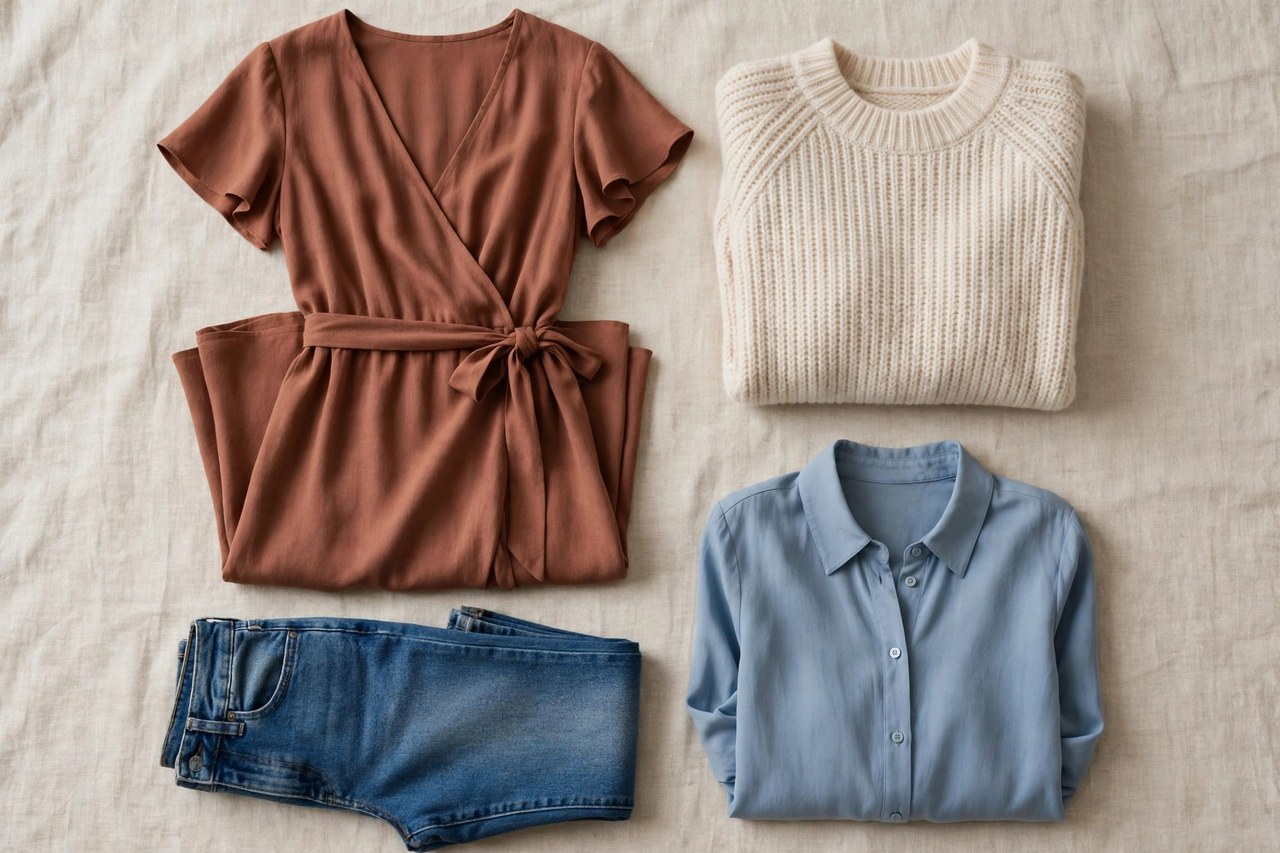
Welcome to the umbrella guide for women's clothing — the place to start when you know you need something but are not yet sure what it is called, which category it lives in, or how its sizing works. Women's apparel is an enormous landscape: dresses alone span dozens of silhouettes, and the same garment can appear under different names at different retailers. This page acts as a map. It explains the vocabulary the rest of the Clothes Guide uses, shows how the guide is organized by garment category, covers the sizing basics that prevent most buying mistakes, and offers a short course in reading fabric and care labels. Whether you arrived hunting for a specific item in the C section — a cardigan, a camisole, a coat — or you are browsing for inspiration, a few minutes here will make every other guide faster and more useful.
How This Guide Is Organized
The Clothes Guide groups women's pages alphabetically by garment and topic, so each letter hub gathers its own family: C brings together camisoles, capris, cardigans, coats, cocktail dresses, and dozens more, each with a dedicated guide covering styles, fabrics, fit, and care for that single item. That structure is deliberate. A focused page on one garment can go deep — into hemlines, fiber choices, and fitting faults — in a way a general shopping page never can. Use the letter hubs to browse a category, use the related-guide links at the foot of each page to move sideways between similar items, and use search terms from the terminology section below when a retailer's naming differs from ours. If you are outfitting for an occasion rather than a garment, start from the occasion item — cocktail dress, church dress, corporate apparel — and follow its links outward to shoes, layers, and accessories that complete the outfit.
Garment Terminology Worth Knowing
Clear terms prevent expensive misunderstandings. A silhouette is the overall outline — A-line, sheath, fit-and-flare. Rise describes where trousers sit, from low on the hip to high at the natural waist; inseam is the inner leg measurement that decides length. A shell is a simple sleeveless or short-sleeve top designed to layer under jackets; a camisole is its finer, strap version, worn as underpinning, sleepwear, or an evening top. Knit versus woven is the fundamental fabric divide: knits stretch and drape, wovens hold structure. Details have names too — a placket is the buttoned opening on a shirt, a gusset is the reinforcing panel that adds movement, princess seams run vertically to shape a bodice without darts. When a product description uses an unfamiliar term, it is almost always describing fit or construction, so look it up before assuming it is marketing filler; the individual guides in this section define their own specialist vocabulary the same way.
Women's Sizing Basics
Women's sizing is famously inconsistent between brands, so treat the number as a starting guess and your measurements as the truth. Three measurements unlock most purchases: bust at the fullest point, natural waist where your torso creases when you bend sideways, and hips at the fullest point, all taken over light clothing with the tape snug but not tight. Compare those numbers to the specific retailer's size chart for that garment, because a size in one brand can equal a different size in another. Know the range systems too: misses sizing is the standard adult range, petite ranges shorten length proportions as well as hems, plus ranges grade for fuller figures rather than merely enlarging, and tall ranges add length in torso and leg. Between sizes, let the garment type decide — size for the bust in fitted tops and dresses, for the hips in fitted skirts and trousers — and remember that knit and stretch garments forgive where wovens do not.
Fabrics and Care Labels in Plain Language
Every garment label carries two useful stories: what it is made of and how to keep it that way. Natural fibers — cotton, linen, wool, silk — breathe and feel luxurious but may crease, shrink, or need gentler washing. Synthetics — polyester, nylon, elastane — add durability, stretch, wrinkle resistance, and easy care, and modern versions feel far better than their reputation suggests. Most everyday clothing blends the two to balance comfort with practicality. Care symbols translate simply: the tub shows washing, the triangle governs bleach, the square covers drying, and the iron's dots indicate heat level. Following them is not fussiness; heat and agitation are what age clothes fastest. When shopping, match fabric to purpose — breathable fibers for summer and layering pieces, structured wovens for work, stretch knits for travel and activity — and you will eliminate most disappointing purchases before they happen.
Shopping Smarter, Online and In Store
Start any search with the occasion, the season, and one garment gap in mind, rather than an open-ended browse that ends in impulse buys. Online, filter by category first, then by your confirmed measurements, fabric preference, and return policy — easy returns matter more than a small price saving when fit is uncertain. Read the full product details, not just the headline: fiber percentages, garment measurements when offered, lining, closure type, and model height all predict how a piece will behave on you. In store, use the time to learn your fit in key categories and note which brands cut for your proportions; that knowledge transfers to every future online order. Finally, think in outfits: a new piece that completes two or three existing combinations is a better buy than a beautiful orphan. The focused guides throughout this section exist to help with exactly those decisions, garment by garment.
Related Women's Guides
Photos

More to Explore on Apparel Search
Looking for Women's Clothing Stores?
This guide helps you choose women's clothing by style, fabric and fit. To browse where to buy, visit our women's clothing store directory, where you can find retailers that carry them.