Women's Wool Apparel Guide
Women's wool apparel is the complete range of women's clothing made from wool — knitwear, tailored coats, suits, skirts, trousers and dresses — in wools from fine merino to rustic tweeds, woven and knitted.
Shop Women's Wool Apparel Now
Shop Women's Wool Apparel on Amazon Shop Women's Wool Apparel on eBayThe Amazon and eBay links on this page are affiliate links. If you make a purchase through them, Apparel Search may earn a commission.
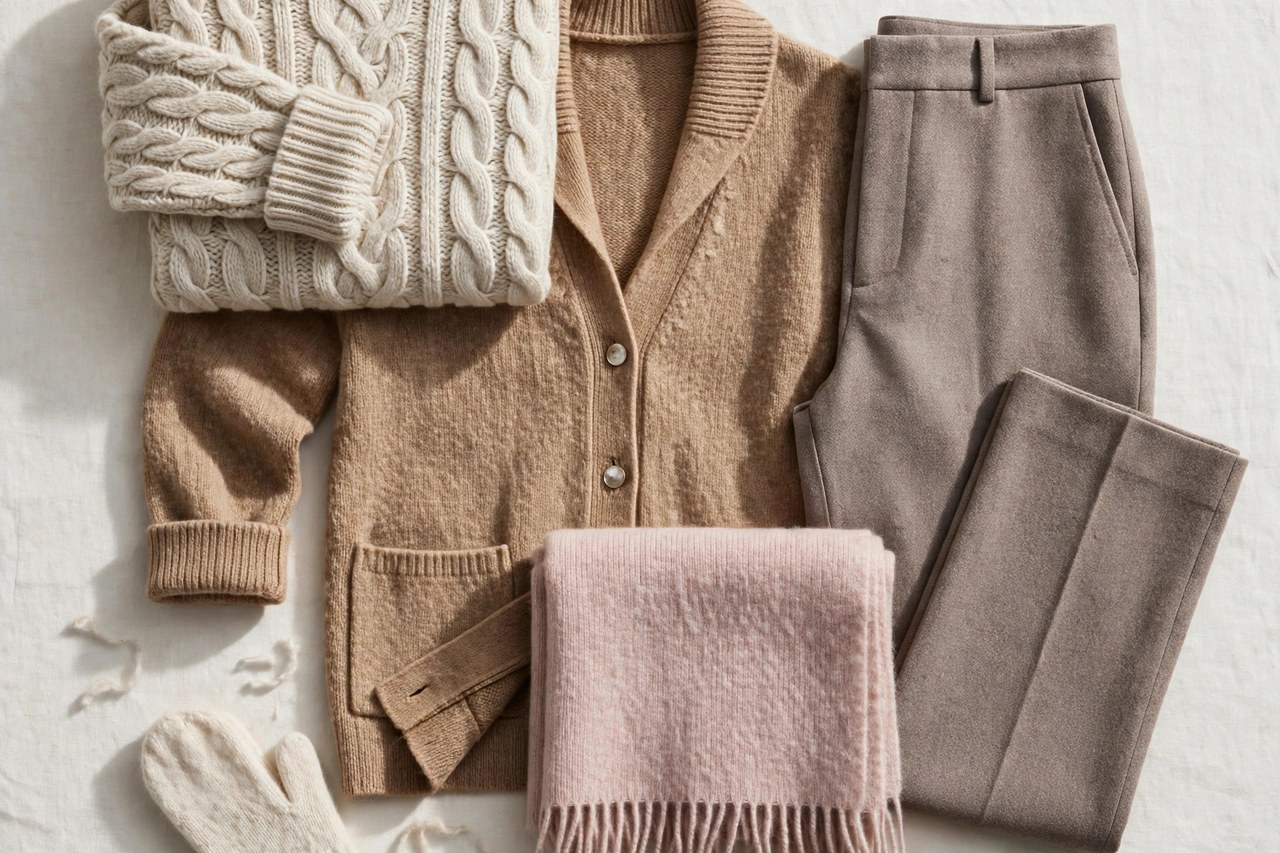
Women's wool apparel is the complete range of women's clothing made from wool — knitwear, tailored coats, suits, skirts, trousers and dresses — in wools from fine merino to rustic tweeds, woven and knitted. This page maps the wool wardrobe as a category: the fibre grades and fabric constructions that appear across every wool garment in this section, how wool behaves against other fibres, and which detailed wool guides cover each garment family.
This guide covers wool apparel in the order a careful buyer needs it: what the product is made from, how it is constructed, how it should fit, how to choose it for real use, and how to care for it so it lasts. Apparel Search has published guides to women's clothing for decades, and this rebuilt page keeps the subject focused — measurable details, named materials and checks you can perform in a shop or on a parcel's arrival, rather than general fashion language.
Fibre Grades and Fabric Systems
Wool reaches clothing through grades a buyer can learn: fibre fineness in microns (fine merino under 19, medium wools in the twenties, coarse over 30), yarn systems (worsted, combed parallel and smooth; woollen, carded and lofty), and fabric results from suiting and gabardine to tweed, flannel and every knit. The garment pages in this section each carry the grade story of their own cloth.
Blending is part of the modern category: wool with silk for lustre, with linen for dry texture, with cashmere for softness, with synthetics for strength and price. A blend is a design decision, not a confession — what matters is the proportion and the purpose. Wool is two industries in one fibre: worsted wool is combed, smooth and fine for suiting and gabardine, while woollen-spun yarn is carded, lofty and textured for tweeds and knits — the word wool alone tells you almost nothing until you know which system made it. Pure long-staple wool remains the benchmark the blends are measured against.
One Fibre, Many Fits
Wool apparel fits by its garment family: tailoring by tailoring rules, knitwear by knit rules, outerwear with layering room. The fibre contributes the same behaviours everywhere — slight give, good recovery, temperature regulation — which is why a wardrobe built in wool feels coherent across categories.
Across the category, the recurring fit faults are the same: knits bought small because they 'give' (they give once, then only bag), and tailored wool bought without trying the layers it must cover. Measure, layer-test, and let tailoring be altered rather than endured.
Reading the Wool Category
Choose wool apparel by understanding first and shopping second: fibre grade, fabric system, garment construction, and only then the individual style. In practice, rank these checks in the order your own use demands — frequency of wear first, then weather, washing facilities and budget — because that order differs by wardrobe, and it is the real reason two careful buyers can correctly choose differently from the same rail.
Judge the category's prices by the fibre market itself: fine, long-staple wool is an agricultural product with real scarcity, and its garments honestly cost more than oil-based synthetics. The premium buys measurable properties — warmth per weight, moisture handling, longevity — not merely tradition.
The Shared Wool Rules
Every wool garment in this section answers to the same care physics: minimal washing in cool water with wool detergent, no heat-and-agitation (the felting combination), drying in shape, and rest between wears. The detailed guides vary the method by garment; the physics does not vary.
And every wool garment answers to the same storage law: clean before storing, breathable containment, moth deterrent, cool and dark. A wool wardrobe kept by these two rules — gentle washing, clean storage — routinely outlives the trends it was bought in.
Common Questions
What is the difference between worsted and woollen wool?
Worsted yarns are combed so the long fibres lie parallel, then spun tight: the result is smooth, strong, fine cloth like gabardine and suiting. Woollen yarns are carded, with fibres in every direction, spun looser for loft and texture — tweeds, flannels and most knitwear. The two systems explain most differences between wool garments.
Why is wool considered a performance fibre?
Wool insulates while absorbing up to a third of its weight in moisture without feeling wet, resists odour by its fibre structure, springs back from creasing, and is naturally flame resistant. Those properties are why one fibre covers suits, sweaters and outdoor apparel that synthetics still imitate.
How can I tell good wool cloth from poor?
Good wool cloth has even weave or knitting, spring when crushed in the hand, clean dye, and recovery — it should not stay creased after a squeeze. Check the fibre content and, on tailored pieces, whether the cloth is pure wool or a blend, and what it is blended with and why.
Related Women's Guides
More to Explore on Apparel Search
Women’s Clothes Guide by Letter: Women's Clothes Directory T · Women's Fashion Directory U · Women's Clothes Directory V · Women's Clothing Directory X · Women's Clothes Directory Y · Women's Clothes Directory Z
Looking for Women's Clothing Stores?
This guide helps you choose women's wool apparel. To browse where to buy, visit our women's clothing store directory, where you can find retailers that carry them.