Women's Wool Blazer Guide
A women's wool blazer is a tailored jacket in wool or a wool blend — worsted, flannel, tweed or crepe — single or double breasted, with lapels, a button closure and the structured shoulder of classic tailoring.
Shop Women's Wool Blazer Now
Shop Women's Wool Blazer on Amazon Shop Women's Wool Blazer on eBayThe Amazon and eBay links on this page are affiliate links. If you make a purchase through them, Apparel Search may earn a commission.
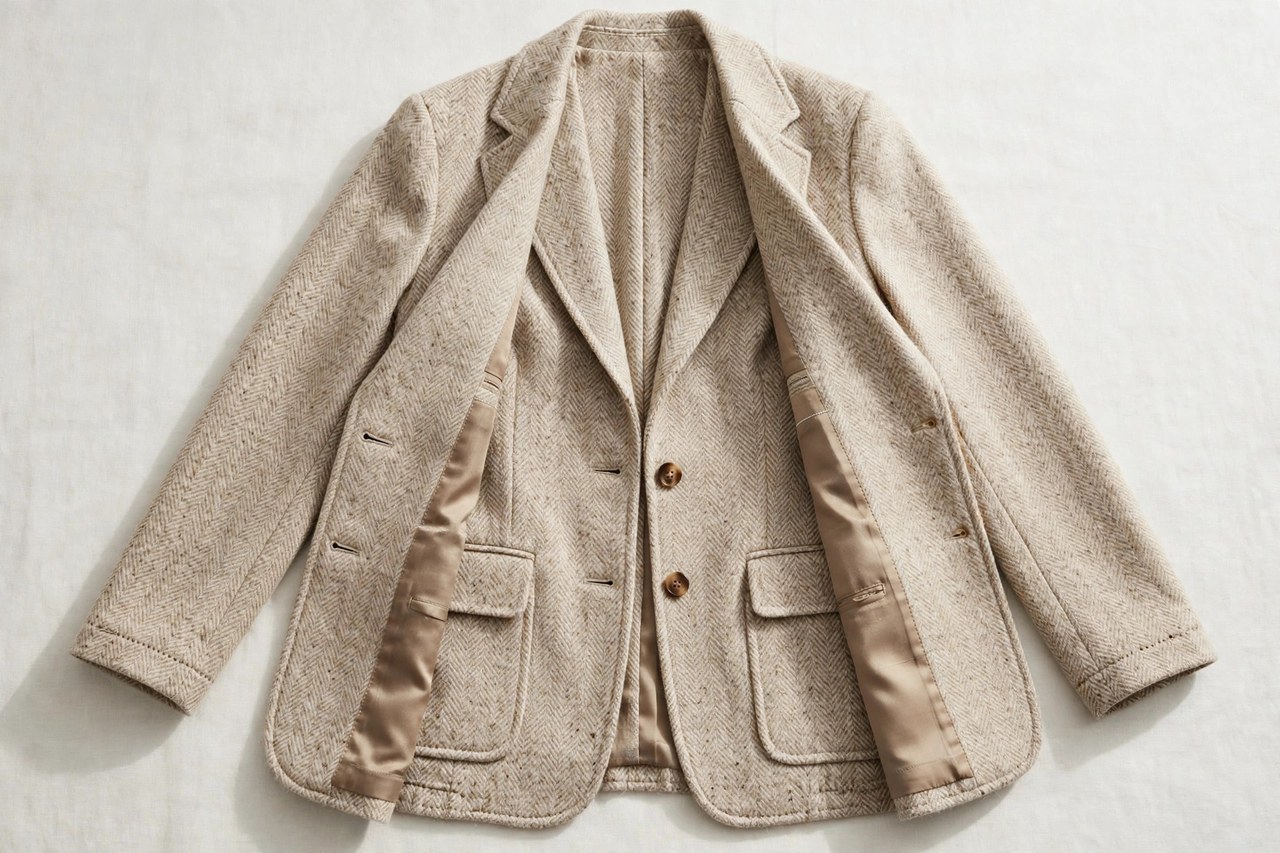
A women's wool blazer is a tailored jacket in wool or a wool blend — worsted, flannel, tweed or crepe — single or double breasted, with lapels, a button closure and the structured shoulder of classic tailoring. A blazer is tailoring, and wool is tailoring's reference cloth, so this guide covers canvassing and fusing, cloth weights by season, lapel and button choices, and the shoulder-first fitting rule that decides whether a blazer can be altered to you.
This guide covers wool blazer in the order a careful buyer needs it: what the product is made from, how it is constructed, how it should fit, how to choose it for real use, and how to care for it so it lasts. Apparel Search has published guides to women's clothing for decades, and this rebuilt page keeps the subject focused — measurable details, named materials and checks you can perform in a shop or on a parcel's arrival, rather than general fashion language.
The Wool and Its Construction
Wool garments divide by how the fibre was prepared: worsted cloth, combed smooth and fine for gabardine, suiting and crepe; woollen cloth, carded and lofty for flannel and tweed; and knitted wool, looped into sweaters and accessories at gauges from fine to chunky. Fibre fineness is measured in microns — merino at 18 to 22 microns feels soft against skin, while coarser wools belong in outer layers.
Construction decides how a wool garment ages: tailored pieces by their canvassing and lining, knits by their stitch density and whether panels are fully fashioned or cut and sewn. Fit the shoulder before anything: shoulders cannot be altered economically, while waist suppression, sleeve length and button stance all can — a blazer that fits the shoulder and bust is a tailor away from fitting everywhere. Good wool recovers from creasing and wear by its fibre's natural spring; poor spinning and loose knitting waste that inheritance.
Fit and the Wool Wardrobe
Fit wool by its system: woven wool tailoring is fitted like all tailoring, shoulder and bust first, with alterations expected; knitted wool fits by its finished measurements laid flat, since a knit gives as it is worn. Wool's slight natural give is a comfort margin, not a sizing strategy — a garment tight at purchase in wool is tight for life.
Allow for what goes beneath and above: tailored wool over knitwear, knitwear over shirts and base layers. Wool also relaxes minutely with wear and returns with rest and steam, so judge fit after a garment has been worn an hour, not in the first minute out of the packet.
Choosing Wool by Weight and Grade
Choose wool blazer in a fixed order: cloth or knit weight matched to season and use, fibre type and fineness matched to skin contact, construction quality, and only then colour and pattern. In practice, rank these checks in the order your own use demands — frequency of wear first, then weather, washing facilities and budget — because that order differs by wardrobe, and it is the real reason two careful buyers can correctly choose differently from the same rail.
Judge price by fibre and making, not by the word wool on the label: long-staple, fine-micron, pure wool in a well-finished garment is a different product from a short-staple wool blend at the same headline. Read the full fibre list and the weight; honest listings state both.
Washing, Resting and Moths
Wool asks for less washing than any other fibre: airing, brushing and spot-cleaning handle most wear, its structure resists odour, and a day's rest between wears restores its spring. When washing is needed, use cool water, wool detergent and minimal agitation — heat and movement together are what felt wool — and dry knits flat, reshaped.
Store wool clean, because moths target soiled fibres, in breathable bags or boxes with cedar or lavender, in a cool dark place. Never store a wool garment dirty 'to deal with later': the later discovery is usually holes. Check stored wool once mid-season; early moth damage is containable, established damage is not.
Common Questions
What wool weight suits a year-round blazer?
A mid-weight worsted around 240 to 280 grams per metre: substantial enough to hold tailoring, light enough for three seasons. Flannel reads softer and more casual, tweed is a cool-weather texture, and crepe drapes too softly for a crisp blazer line.
Canvassed or fused — why does it matter in a blazer?
A canvassed chest is stitched with a floating layer that moulds to the body and rolls the lapel gracefully; a fused (glued) front is cheaper, stiffer, and can bubble after cleaning. Half-canvassing is the common quality compromise. At blazer prices it is the single biggest construction difference.
How should a wool blazer be stored and pressed?
Hang it on a wide, shaped hanger that supports the shoulder, rest it between wears, and steam rather than iron the fronts. Pressing a blazer's lapels flat with a hot iron kills the roll they were built with — leave pressing to a tailor or cleaner who knows tailoring.
Related Women's Guides
More to Explore on Apparel Search
Women’s Clothes Guide by Letter: Women's Clothes Directory T · Women's Fashion Directory U · Women's Clothes Directory V · Women's Clothing Directory X · Women's Clothes Directory Y · Women's Clothes Directory Z
Looking for Women's Clothing Stores?
This guide helps you choose women's wool blazer. To browse where to buy, visit our women's clothing store directory, where you can find retailers that carry them.