Women's Blazers Guide
One great blazer sharpens everything it touches — from single-breasted classics to soft, unstructured tailoring for work and weekends.
Shop Women's Blazers Now
Shop Women's Blazers on Amazon Shop Women's Blazers on eBayThe Amazon and eBay links on this page are affiliate links. If you make a purchase through them, Apparel Search may earn a commission.
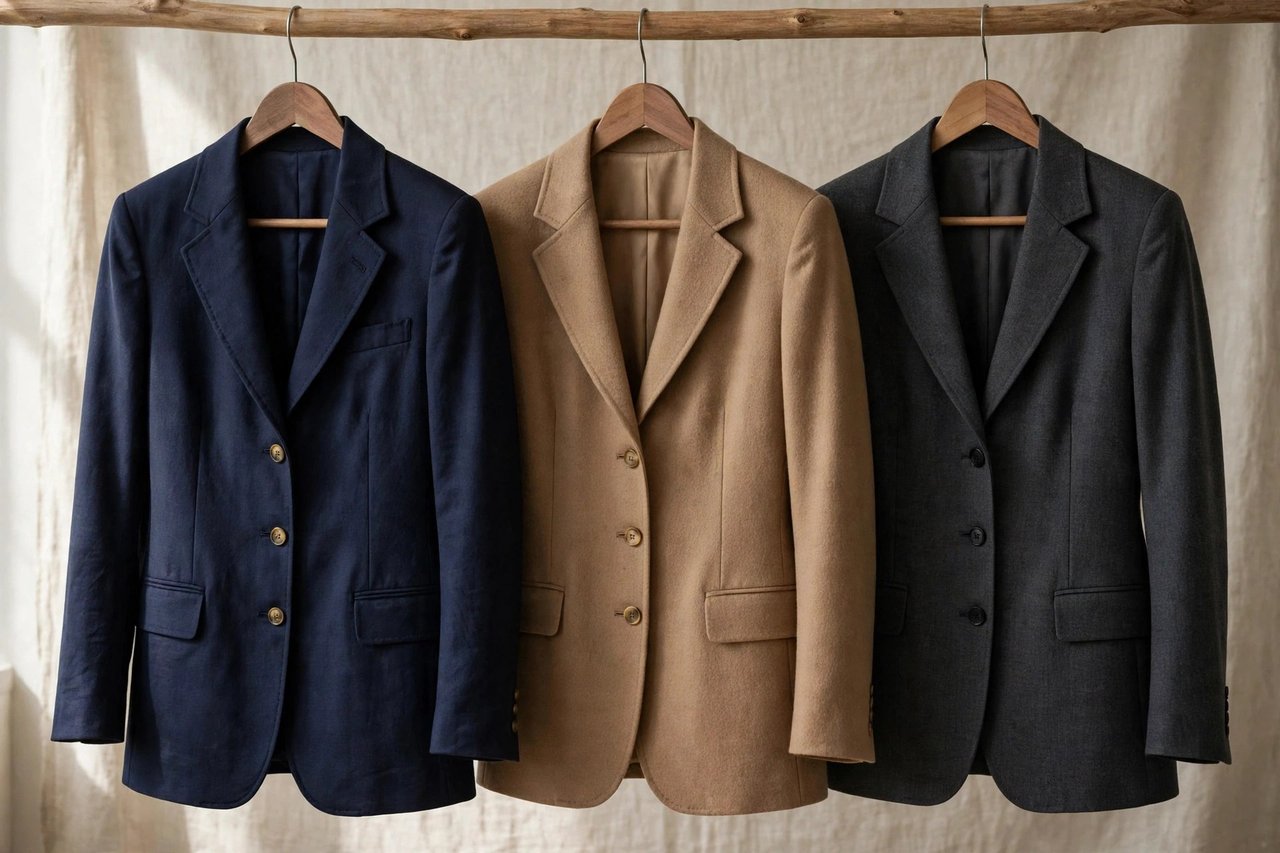
A blazer is a tailored jacket with a story: borrowed from naval uniforms and rowing clubs, refined by a century of suiting, and now the single most transformative layer a woman can own. It differs from a suit jacket mainly in intent — a blazer is designed to pair with mismatched trousers, skirts, dresses, and denim rather than only its matching bottom. Add one to a plain tee and jeans and the outfit gains instant structure; throw it over a slip dress and the look balances soft with sharp.
Because blazers cross so many settings, small choices in cut and cloth shift their personality completely. A navy wool blazer with brass buttons reads classic and preppy. A longline black blazer feels sleek and urban. A cream linen version belongs to summer evenings. This guide walks through the cuts, fabrics, and fit points so you can choose the blazer that does the most work in your actual life.
Cuts and Structured Versus Soft Tailoring
The single-breasted blazer, with one column of buttons, is the versatile default. One-button styles cinch the waist and flatter over dresses; two-button styles are the traditional business standard; three buttons lengthen the torso line. The button stance — where the closure sits — shapes the silhouette: a closure at the natural waist defines it, while a lower stance relaxes it.
Double-breasted blazers carry two overlapping columns and a stronger, more commanding presence; they look best worn closed or fully open, rarely half-buttoned. Boyfriend blazers borrow a slouchier, longer cut that contrasts nicely with slim bottoms. Cropped blazers end at or above the waist and spotlight high-rise trousers and dresses. Shawl collars soften the lapel line for evening, while peaked lapels sharpen it. Consider also the vent: a single back vent moves easily, double vents sit cleanest in tailored styles, and ventless designs give the smoothest line over dresses.
A structured blazer is built like classic suiting, with padded shoulders, canvassed or fused chest pieces, and a shaped waist. It holds its silhouette on the hanger and on you, making it the right choice for conservative offices, interviews, and any moment that calls for authority. The trade-off is a firmer feel and less tolerance for layering bulky knits beneath.
Soft or unstructured blazers remove most internal architecture. Knit blazers, sweatshirt blazers, and unlined woven styles drape like a cardigan while keeping the lapelled outline, which makes them commuter and travel favorites — they fold, resist wrinkling, and feel easy all day. Between the poles sit lightly structured styles with minimal padding that hold a line without stiffness. If you buy one blazer, a lightly structured single-breasted in a mid-weight cloth covers the widest range of your week.
Fabrics for Every Season
Wool and wool blends are the backbone of serious blazers: breathable, naturally wrinkle-resistant, and available from tropical weights for summer to flannel for winter. Crepe weaves drape with a matte, fluid finish that suits dressier styling. Linen and linen-cotton blazers own the warm months, rumpling charmingly and breathing in heat, though they crease too much for the most formal rooms.
Tweed and bouclé add texture that makes simple outfits interesting, while ponte and double-knit jersey deliver the soft-tailoring comfort described above. Velvet blazers belong to evening and holiday dressing. When evaluating fabric, crush a sleeve in your fist for five seconds — quality cloth springs back. Check linings too: a full lining helps a blazer glide over blouses and extends its life, while half-lined summer blazers run cooler.
Getting the Fit Right
Blazer fit is judged at the shoulder first: the seam should end where your shoulder does, because shoulders are the hardest element to alter. The collar should hug the back of the neck without a gap, lapels should lie flat, and a closed button should not pull into an X of wrinkles. Sleeves should end at the wrist bone, showing a sliver of shirt cuff if you wear one.
Length is proportion: classic blazers end around the hip bone or cup the seat, cropped styles at the waist, longline styles mid-thigh. If you are petite, a slightly shorter body and narrower lapel keep the jacket from wearing you. Curvier figures often prefer a single button at the waist and a fabric with a touch of stretch. Budget for minor tailoring — taking in a waist or shortening sleeves is routine and turns a good blazer into a personal one. Always fit-test by sitting, reaching forward, and crossing your arms.
Styling, Work to Weekend
At work, the formula is reliable: blazer over a blouse or fine knit, with tailored trousers or a pencil skirt, finished with pumps or loafers. Tonal dressing — a camel blazer over cream knit and trousers — looks quietly expensive. For smart casual, roll the sleeves to show the lining, push them to the forearm, and pair with dark denim and ankle boots.
Blazers also rescue dresses in air-conditioned rooms and add polish to shorts suits in summer. A belt worn over a closed blazer redefines its shape for evening. Keep the supporting pieces simple when the blazer is patterned — checks, plaids, and stripes want plain partners — and let a solid blazer frame bolder tops. The scarf trick still works: a silk square at the neck of a navy blazer remains one of the fastest routes to looking finished.
Care and Longevity
Blazers do not belong in frequent wash cycles. Air yours on a broad hanger after wear, brush off surface dust, and spot-clean promptly. Most structured styles need dry cleaning only a few times a season; over-cleaning strips wool and dulls color. Soft knit blazers often machine wash cold on gentle — check the label and reshape while damp.
Store on wide, contoured hangers that support the shoulder line, never on wire. Steam rather than press when possible, and if you iron, use a press cloth and low heat on lapels to avoid shine. Travel with the blazer turned inside out and folded along its seams, or wear it on the plane — it is the layer you will want at the other end anyway. Moth protection matters for wool: clean before long storage and use cedar or lavender sachets in the closet.
Related Women's Guides
Looking for Women's Clothing Stores?
This guide helps you choose women's blazers by cut, fabric and occasion. To browse where to buy, visit our women's clothing store directory, where you can find retailers that carry them.