Women's Wool Accessories Guide
Women's wool accessories are the small wool goods that finish an outfit: scarves, gloves, hats, mittens, shawls, socks and belts in knitted and woven wool, from fine merino to chunky hand knits.
Shop Women's Wool Accessories Now
Shop Women's Wool Accessories on Amazon Shop Women's Wool Accessories on eBayThe Amazon and eBay links on this page are affiliate links. If you make a purchase through them, Apparel Search may earn a commission.
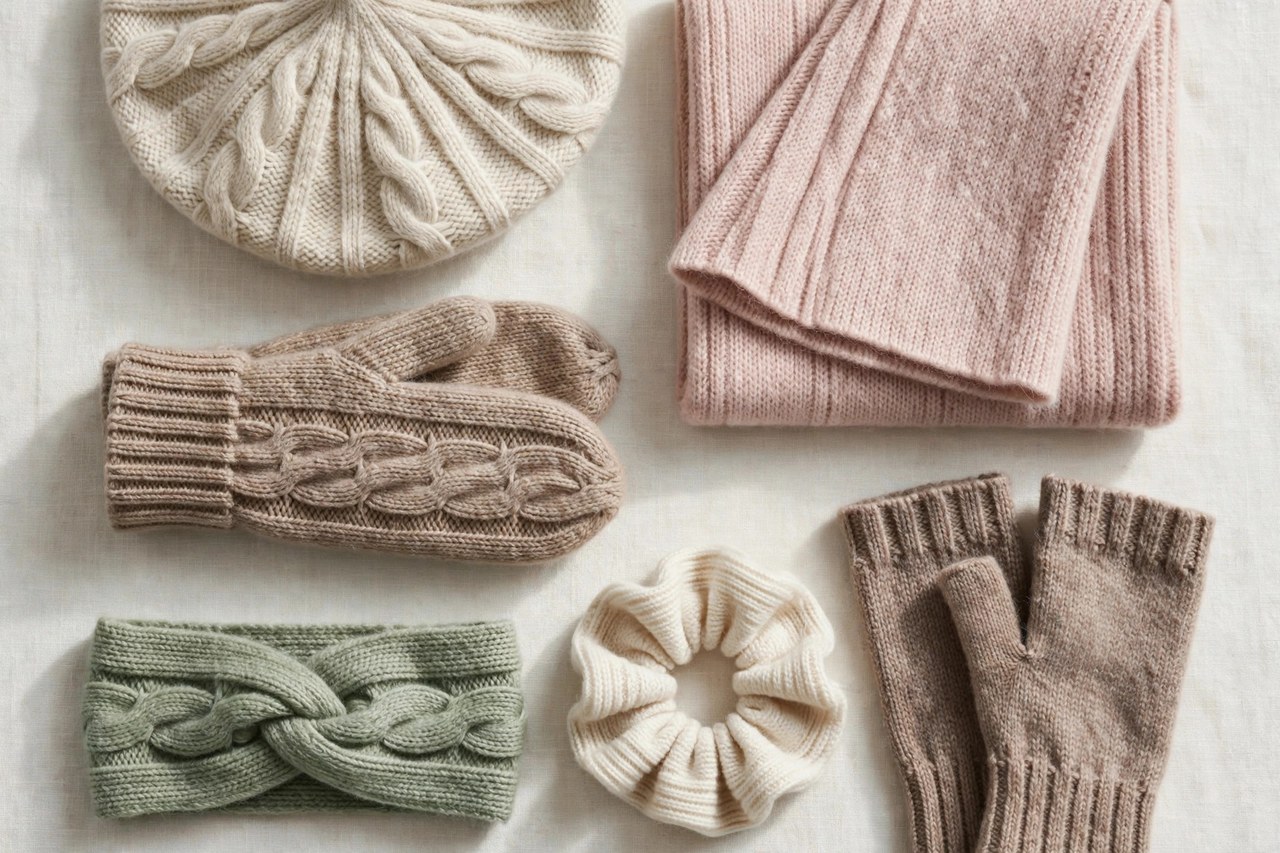
Women's wool accessories are the small wool goods that finish an outfit: scarves, gloves, hats, mittens, shawls, socks and belts in knitted and woven wool, from fine merino to chunky hand knits. Accessories are where wool's properties are bought in small doses — warmth without bulk, moisture handling, natural odour resistance — so this guide covers choosing wool types for skin-contact pieces, knit gauges, and care for small items that are easily lost to bad washing.
This guide covers wool accessories in the order a careful buyer needs it: what the product is made from, how it is constructed, how it should fit, how to choose it for real use, and how to care for it so it lasts. Apparel Search has published guides to women's clothing for decades, and this rebuilt page keeps the subject focused — measurable details, named materials and checks you can perform in a shop or on a parcel's arrival, rather than general fashion language.
Small Wool Goods, Real Specifications
Wool accessories compress the fibre's virtues into small formats: knitted and woven scarves, gloves, mittens, hats, socks and shawls in merino, lambswool, Shetland and blended wools. Their specifications are the same as garments' — micron fineness, knit gauge, weave density — at a scale where a careless wash does proportionally more damage.
Finishing is the visible grade marker in small goods: a scarf's fringe or hem, a glove's seams, a hat's blocking. Skin decides the wool: coarse wool that feels fine in a coat is misery in a scarf, so accessories worn at the neck and face should be merino or a fine lambswool, whatever the outerwear standard is. Small wool goods are handled and flexed constantly, so seams, joins and edges are engineered — or not — exactly where the eye lands.
Sizing the Small Things
Accessories fit by their own measurements, not by clothing size: head circumference for hats, hand circumference for gloves and mittens, length and width for the scarf styles you actually wear. One-size wool accessories fit by stretch, and stretch spent on size is warmth lost — a hat stretched to fit is a thinner hat.
Skin contact is a fit dimension in wool accessories: the neck, face and hands judge fibre fineness strictly, so match the micron grade to the contact point. Coarse wool that is honest in a coat is a mistake at a throat; when in doubt, choose the finer fibre for anything worn against skin.
Choosing Accessories That Get Worn
Choose wool accessories in a fixed order: fibre fineness for its skin contact, knit or weave density for its warmth job, dimensions for how you wear it, and only then colour. In practice, rank these checks in the order your own use demands — frequency of wear first, then weather, washing facilities and budget — because that order differs by wardrobe, and it is the real reason two careful buyers can correctly choose differently from the same rail.
Judge price by fibre and finishing: fine merino, dense knitting and clean finishing are the costs of accessories that survive seasons; a cheap coarse accessory that is never worn is the most expensive kind. Accessories are small — the difference between grades is a small sum for a large difference in use.
Gentle Care for Small Wool
Wash wool accessories gently and rarely: cool water, wool detergent, minimal handling, water pressed out in a towel, dried flat in shape. Small pieces felt fastest in careless washing because the agitation per gram is highest — the machine's normal cycle is a small good's worst day.
Store the set clean and together, in a breathable box with moth deterrent, so next winter begins with a working set rather than a search. Accessories stored dirty or scattered are the ones replaced annually; stored properly, the same set serves for years.
Common Questions
Which wool is softest for scarves and neck-worn accessories?
Fine merino (look for low micron counts, 18.5 and below for next-to-skin softness) and quality lambswool are the standards; cashmere blends add softness at price. Avoid rustic Shetland-type wools against the neck — their springy fibres are what prickles.
How do I wash small wool accessories?
Together, gently: cool water, wool detergent, no wringing; roll in a towel to press water out and dry flat. Small items felt fastest because agitation is proportionally greatest on them — a scarf in a normal wash is the classic felting accident.
Do wool accessories need moth protection in storage?
Yes, more than most wool, because they are stored once a year and forgotten. Clean them before the off-season, store in a sealed box or bag with cedar or lavender, and check mid-summer. Gloves and hats stored soiled are the first casualties in most wardrobes.
Related Women's Guides
More to Explore on Apparel Search
Women’s Clothes Guide by Letter: Women's Clothes Directory T · Women's Fashion Directory U · Women's Clothes Directory V · Women's Clothing Directory X · Women's Clothes Directory Y · Women's Clothes Directory Z
Looking for Women's Clothing Stores?
This guide helps you choose women's wool accessories. To browse where to buy, visit our women's clothing store directory, where you can find retailers that carry them.