Women's Organic Cotton Apparel Guide
The fiber-level umbrella — what organic certifies at the farm, what it leaves out, and how to read an apparel label without being misled.
Shop Women's Organic Cotton Apparel Now
Shop Women's Organic Cotton Apparel on Amazon Shop Women's Organic Cotton Apparel on eBayThe Amazon and eBay links on this page are affiliate links. If you make a purchase through them, Apparel Search may earn a commission.
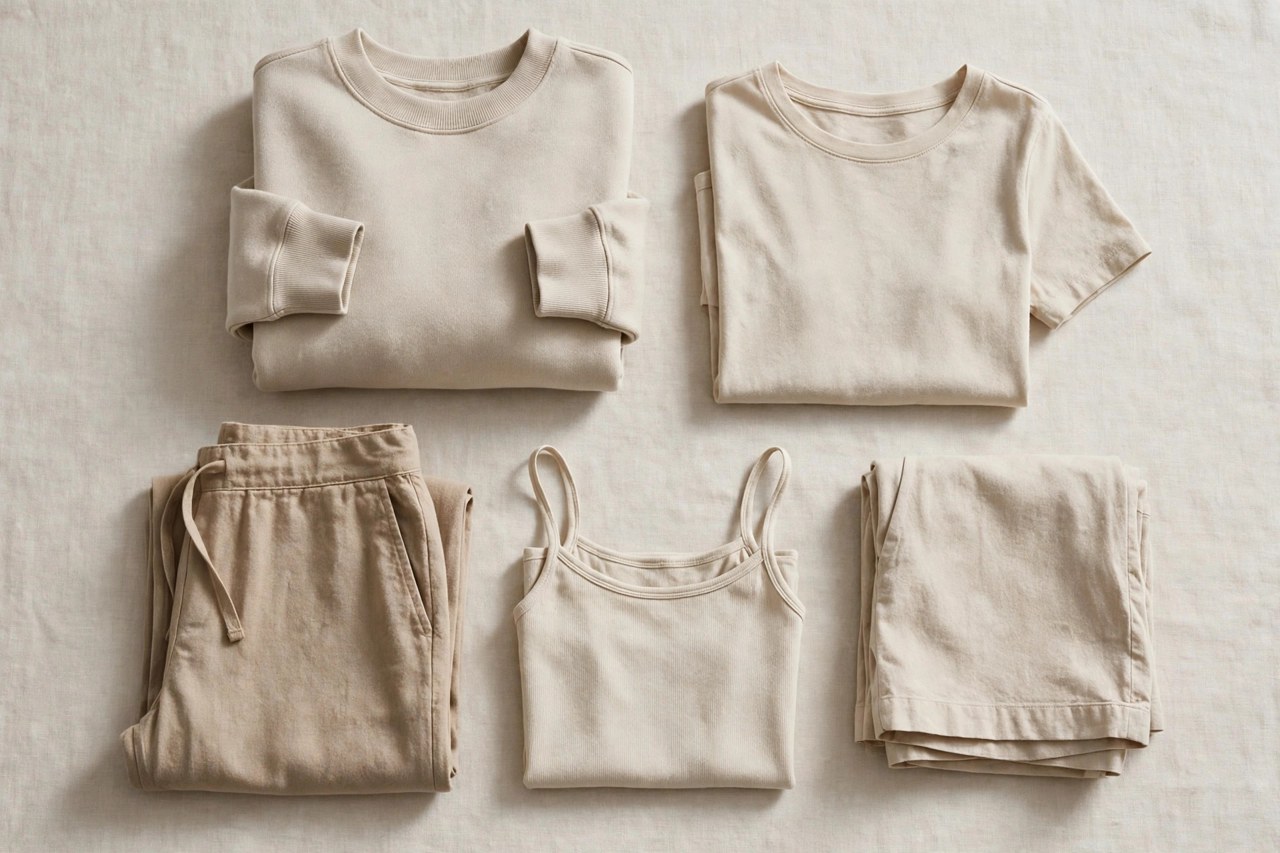
Organic cotton apparel is the broadest category in this section: every kind of women's garment — tees, shirts, pants, dresses, knitwear, sleepwear, underwear — made from cotton grown to organic standards. This page takes the fiber-level view, because that is where the word organic actually lives. Organic describes how the cotton plant was farmed: no synthetic pesticides, no synthetic fertilizers, no genetically modified seed, and soil managed through rotation and compost rather than chemical inputs. Everything after the farm gate — spinning, weaving, dyeing, finishing, sewing — is covered only if the garment also carries a processing certification such as GOTS. Keeping those two layers separate in your mind is the key skill this umbrella guide teaches, because most confusion, and most misleading marketing, comes from blurring them.
Farm-Level Certification: What Organic Guarantees
Certified organic cotton starts with the field. Farms are inspected, typically annually, against standards set by bodies such as the USDA National Organic Program or equivalent international programs, and fiber is tracked with transaction certificates as it moves from farm to gin to spinner. The guarantees are real but specific: the crop was grown without the synthetic agrochemicals that dominate conventional cotton farming, seed was not genetically modified, and soil fertility came from rotation, cover crops, and organic matter. For farmworkers and nearby ecosystems, that reduction in toxic chemical exposure is the clearest, best-documented benefit of organic production. What farm certification does not cover is everything shoppers sometimes assume: it sets no rules for dyes, no rules for factory labor, no guarantee about water use on a specific farm, and no promise that the finished shirt will be softer or last longer. Those depend on fiber quality and making.
GOTS Versus Fiber-Only Claims
Because farm certification stops at the fiber, processing standards grew up beside it. GOTS certifies the whole textile chain and requires high organic content, restricts dyes and chemical finishes to an approved list, mandates wastewater treatment, and includes social criteria for workers. OCS, the Organic Content Standard, takes the opposite approach: it verifies only that organic fiber is present in the stated amount, with no rules about dyes, finishes, or labor. Both logos are legitimate; they simply promise different things. A third category is the unverified claim — eco cotton, natural cotton, conscious cotton — which may reflect genuine effort or nothing at all. The practical rule is simple. If a garment shows a certification logo with a license number, you can look it up. If it shows only adjectives, treat organic as an ingredient claim about the fiber, assume nothing about the garment's processing, and judge the piece on its fabric and construction like any other.
Why Organic Apparel Costs More
Organic apparel usually costs more than its conventional twin, often by a fifth to a half, and occasionally more for small brands. The premium starts in the field, where organic yields per acre are frequently lower and hand-weeding and rotation cost more than chemical shortcuts. It continues through the supply chain: organic fiber must be segregated in storage, ginning, and spinning so it never mixes with conventional lots, which means smaller, more expensive production runs. Certification itself is a business cost at every stage — audits, paperwork, transaction certificates. Brands making organic apparel also tend to be smaller, with less buying power and shorter runs. None of this means every premium is justified; design brands charge for design, and an organic label on a poorly made garment is still a poorly made garment. Read the premium as the price of a verified farming method, then judge the garment's cloth and sewing separately.
Environmental Trade-Offs, Stated Honestly
Organic cotton's environmental story is a trade, not a triumph, and honest guides should say so. On the credit side: no synthetic pesticides or fertilizers means less chemical runoff, healthier farm soil biology, no fertilizer manufacturing emissions, and safer conditions for the people who grow and pick the crop. On the debit side: lower yields can mean more land is needed to grow the same amount of fiber, and organic cotton still drinks water — much of the world's cotton, organic included, is irrigated, so organic is not automatically low-water. Dyeing and finishing, if not GOTS-controlled, can erase much of the farm-level benefit. The largest variable is often the garment's lifespan: an organic tee washed and worn for five years beats a conventional tee replaced every season on almost every measure. Buy organic for the verified farming benefits, wear pieces long, and the ledger comes out clearly ahead.
Softness, Skin, and Choosing Well
Many women first meet organic cotton through sensitive skin. Because GOTS restricts formaldehyde finishes, harsh resins, and many common dye chemicals, certified garments tend to arrive with fewer chemical residues, and the cotton itself is often hand-picked or carefully ginned, which can leave fibers longer and the hand feel smoother. But organic alone does not make cotton soft — long-staple conventional cotton can feel finer than short-staple organic. Judge softness with your hands, check fiber length clues such as combed or long-staple descriptions, and look for garments washed without heavy softeners that mask a coarse base cloth. To build an organic apparel wardrobe sensibly, start where skin contact is longest — underwear, tees, sleepwear — then add shirts, pants, and knitwear as pieces wear out. That replacement rhythm keeps the cost manageable and puts the certification where it matters most.
More to Explore on Apparel Search
- Apparel
- Cotton
- Cotton Definition
- Cotton News
- Organic Clothing
- Organic Cotton
- Women's Apparel
- Women's Cotton Clothing
- Women's Organic Cotton Athleticwear
- Women's Organic Cotton Loungewear
- Women's Organic Cotton Pajamas
- Women's Organic Cotton Pants
- Women's Organic Cotton Shorts
- Women's Organic Cotton Sleepwear
- Women's Organic Cotton Socks
- Women's Organic Cotton Sportswear
- Women's Organic Cotton T-shirts
- Women's Organic Cotton Tees
- Women's Organic Cotton Underwear
- Women's Organic Fashion
Looking for Women's Clothing Stores?
This guide helps you choose women's organic cotton apparel by certification and category. To browse where to buy, visit our women's clothing store directory, where you can find retailers that carry them.