Women's Organic Cotton Socks Guide
Small, hard-working and replaced often — organic cotton socks raise the certification questions in miniature, elastane included.
Shop Women's Organic Cotton Socks Now
Shop Women's Organic Cotton Socks on Amazon Shop Women's Organic Cotton Socks on eBayThe Amazon and eBay links on this page are affiliate links. If you make a purchase through them, Apparel Search may earn a commission.
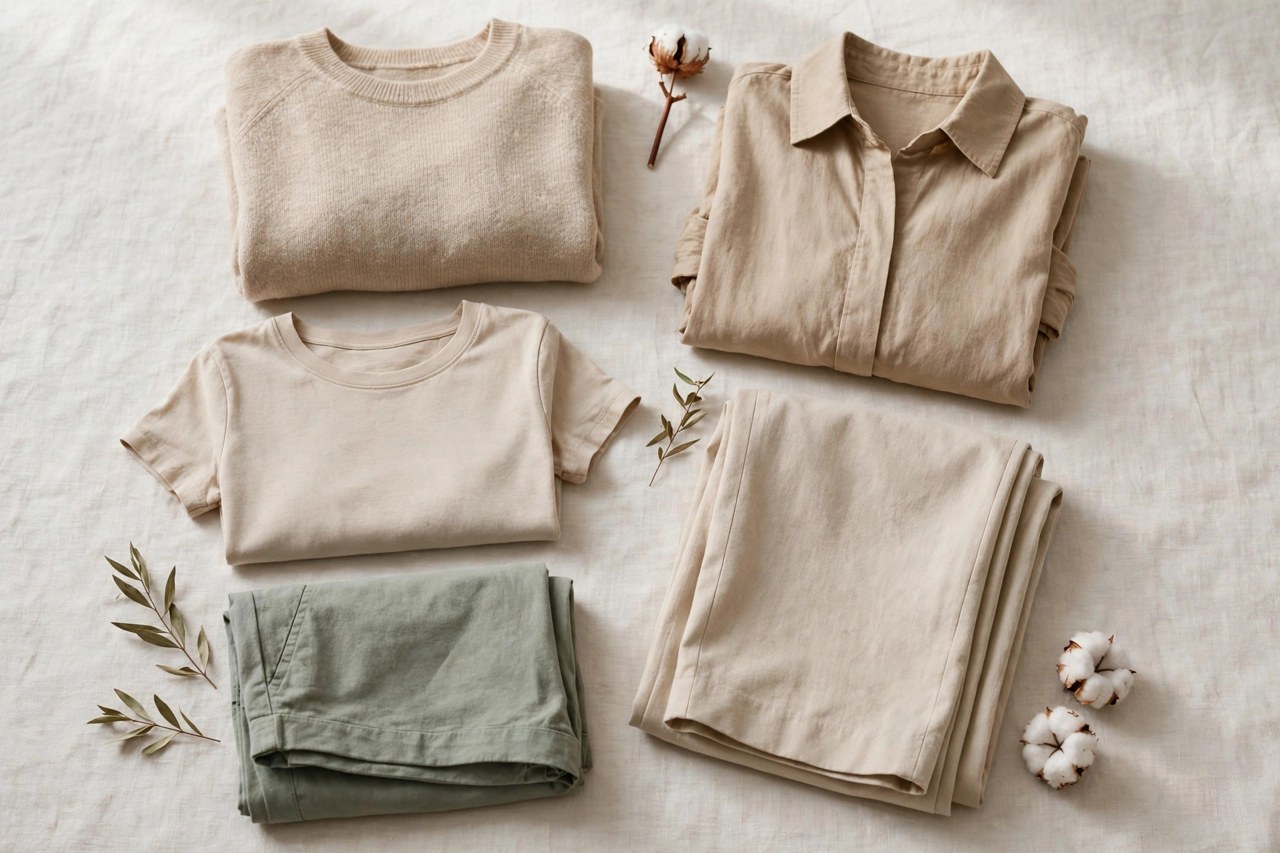
Organic cotton socks look like the simplest possible certified purchase: a small, inexpensive staple knitted mostly from one fiber. In practice they teach the most useful lesson in the whole organic wardrobe, because a sock cannot do its job on cotton alone. Every wearable sock blends fibers for stretch, recovery and abrasion resistance, so the organic claim always covers a share of the sock rather than the whole thing, and the honest questions are how large that share is and what the rest consists of. This guide explains the blend arithmetic in plain terms, the styles worth stocking, the economics of swapping a sock drawer gradually, and the care that keeps any cotton-rich sock from thinning early at the heel.
The Blend Caveat: Why No Sock Is Pure Cotton
A 100 percent cotton sock would stretch out within an hour, slide into the shoe and wear through at the heel in weeks, because cotton has almost no elastic recovery and only moderate abrasion resistance. Real socks therefore add elastane, usually one to three percent, so cuffs grip and the knit snaps back, and many add nylon or recycled nylon in the heel and toe for durability. Under GOTS, a certified garment needs at least 95 percent certified organic fiber for its strongest grade, with limited allowances for additional fibers where function requires them; sock labels may instead show figures such as 70 or 80 percent organic cotton under a made-with grade or a fiber-only verification. Prefer the highest organic cotton share with reinforcing fiber placed where wear actually happens, and regard any sock marketed as purely organic without a composition line as a labeling shortcut.
Knits, Cushioning and Styles Worth Owning
Sock construction decides comfort more than fiber marketing does. A fine-gauge jersey knit makes dress and everyday crew socks that sit smoothly inside shoes; terry-loop cushioning through the sole adds padding for walking, work on hard floors and cooler weather; ribbed cuffs hold position without tight elastic bands. Lengths run from no-show and ankle socks for trainers and summer shoes, through quarter and crew lengths that anchor a year-round drawer, to knee-highs for boots and cold weather. Organic ranges usually concentrate on the core crew and ankle styles in natural, undyed and softly dyed shades, since approved dye palettes and small production runs discourage novelty colors. Cotton-rich socks breathe well and feel pleasant in mild conditions, but they absorb moisture and dry slowly, so for long hikes or intense sport a wool or technical synthetic sock remains the more practical tool.
Certification Claims, Checked Proportionately
Because a pair of socks is inexpensive, certification checking should be quick rather than obsessive, but the basics still apply. A GOTS claim should come with a license number and applies to the finished sock, including its dyes; a fiber-content claim verifies only that the stated share of cotton was organically grown. Also read where the organic share sits: a sock that is 80 percent organic cotton with nylon reinforcement is a stronger purchase than one at 55 percent padded with conventional cotton to reach a price point. Multipacks deserve the same glance as singles, since value packs sometimes quietly lower the organic percentage. Treat certification here as you would anywhere — a verified floor for farming and processing standards, not a promise that the sock will fit, cushion or last; those still depend on the knit in your hand.
Swap Economics: Replacing a Sock Drawer Sensibly
Nobody needs to discard a drawer of serviceable socks to buy organic ones, and doing so would waste the wear left in them. The sensible pattern is replacement economics: socks wear out faster than almost any other garment, so simply make each replacement pair organic and the drawer converts itself within a year or two at no extra outlay beyond the per-pair premium, which on socks is small in cash terms even when the percentage looks steep. Buy in threes or multipacks of one style you have tested, because identical pairs solve the lost-sock problem by making every sock match every other. Spend the premium where it returns value: daily-wear crews and cushioned walking socks first, novelty and rarely worn styles last, if at all. Track cost per wear honestly — a slightly dearer organic pair that survives eighty washes beats a bargain pair whose heel thins at twenty, in money and in impact.
Washing and Wear Habits That Extend Sock Life
Cotton-rich socks last longest washed inside out in cool or warm water, which protects the outer knit from abrasion against other garments, and dried on low heat or a rack, since repeated high heat is what stiffens cotton loops and exhausts the small elastane share that keeps cuffs alive. Avoid chlorine bleach, which attacks both cotton and elastic, and wash dark organic shades with similar colors for the first few cycles. Small habits at wearing matter as much: trim toenails are unglamorous but genuinely extend toe life, rotating pairs gives elastic a day to recover between wears, and pairing socks loosely rather than balling one inside the other prevents cuffs stretching in storage. A sock drawer managed this way needs fewer replacements each year, which quietly delivers more environmental benefit than the fiber label alone ever could.
More to Explore on Apparel Search
- benefits of cotton
- breathable
- Cotton
- Cotton Definition
- Organic Clothing
- Organic Cotton
- wicking
- Women's Cotton Clothing
- Women's Cotton Hosiery
- Women's Organic Cotton Activewear
- Women's Organic Cotton Apparel
- Women's Organic Cotton Athleticwear
- Women's Organic Cotton Clothes
- Women's Organic Cotton Clothing
- Women's Organic Cotton Fashion
- Women's Organic Cotton Loungewear
- Women's Organic Cotton Pajamas
- Women's Organic Cotton Sleepwear
- Women's Organic Cotton Sportswear
- Women's Organic Cotton T-shirts
- Women's Organic Cotton Tees
- Women's Organic Cotton Womenswear
- Women's Organic Fashion
- Women's Socks
Photos

Looking for Women's Clothing Stores?
This guide helps you choose women's organic cotton socks as certified everyday staples. To browse where to buy, visit our women's clothing store directory, where you can find retailers that carry them.