Women's Socks Guide
A sock is a small garment with a big job — cushioning, warmth and moisture control between foot and shoe — and length, fiber and fit decide how well it does it.
Shop Women's Socks Now
Shop Women's Socks on Amazon Shop Women's Socks on eBayThe Amazon and eBay links on this page are affiliate links. If you make a purchase through them, Apparel Search may earn a commission.
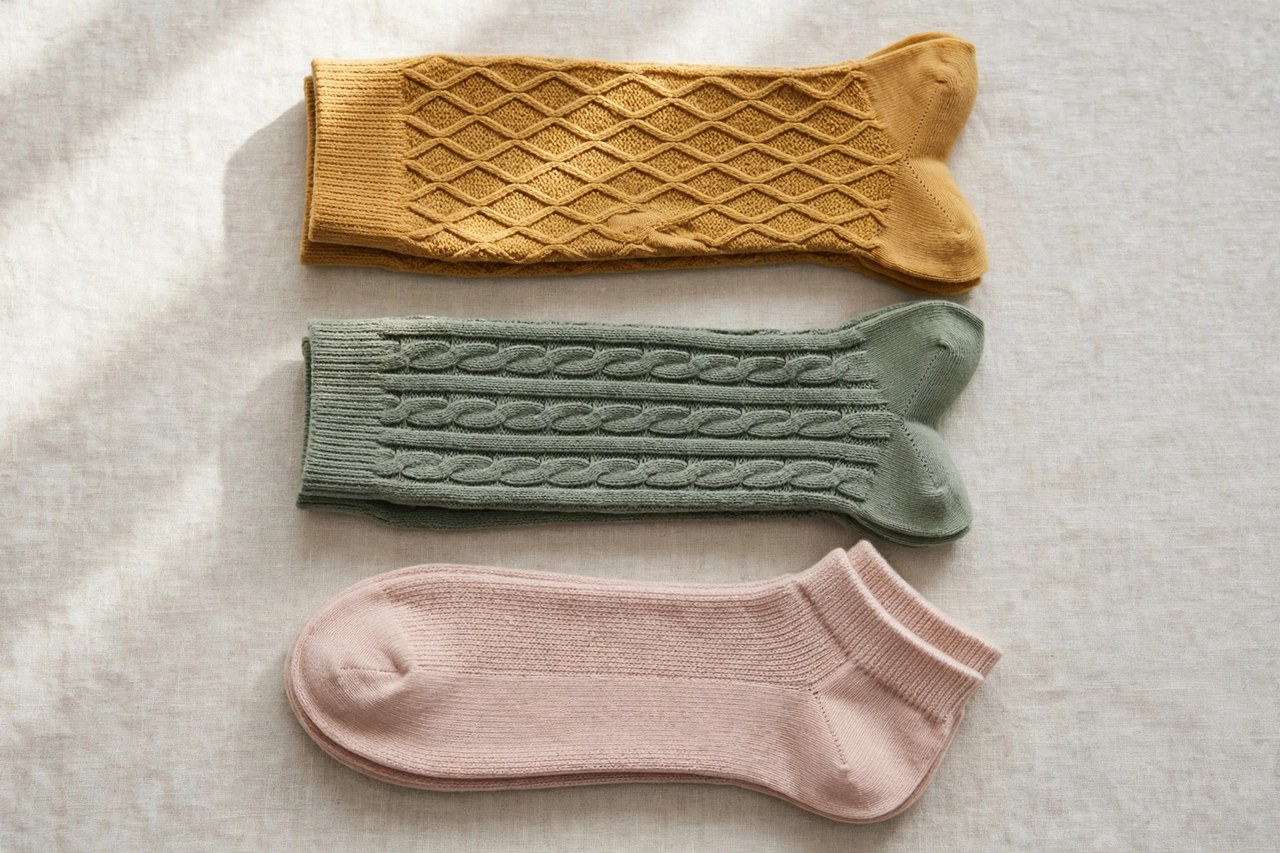
A sock is an item of clothing worn on the feet, usually covering the ankle or part of the calf, with a shoe or boot typically worn over it. That simple definition hides a wide category: socks are made in many lengths, colors, styles and fabrics, from invisible liners to thick thermal boot socks, and the right pair changes how a shoe fits and how a foot feels at the end of the day.
This guide treats socks as a wardrobe system rather than an afterthought. It covers the main lengths and what each is for, the fibers that matter — cotton, wool, silk and modern synthetics — specialty types such as business socks and thermal socks, and how sock sizing actually works, so the pairs you buy match the shoes and the seasons you bought them for.
Lengths: From No-Show to Knee-High
Length is the first sorting decision. No-show and low-cut socks hide inside loafers, flats and low trainers, protecting the foot without showing above the shoe line. Ankle socks sit just above the shoe and are the casual default with sneakers and shorts. Crew socks rise to mid-calf, the classic athletic and everyday length, while knee socks and over-the-calf socks add warmth, support trousers and boots, and keep a clean line under longer hems.
Boot socks are cut and cushioned for wear inside boots, usually crew or knee length with extra padding at the shin and sole. Quarter socks end between ankle and crew and are a quiet favorite for walking shoes. Match length to the shoe first and the outfit second: a sock that peeks out unintentionally, or one that slides down inside a boot because it is too short for the shaft, fails at the one job it had.
Fibers: Cotton, Wool, Silk and Synthetics
Cotton socks are the everyday standard — soft, breathable, inexpensive and easy to wash — but cotton holds moisture, so all-cotton pairs feel clammy on long, active days. Wool socks, especially merino, regulate temperature in both directions, resist odor and cushion well, which is why they dominate hiking and cold-weather drawers. Silk socks are fine, smooth dress and liner socks, worn alone for a sleek finish under formal shoes or as a thin insulating layer inside heavier socks.
Modern blends try to combine the virtues: cotton or wool spun with nylon for durability and a little elastane so the sock keeps its shape and stays up. Moisture-wicking synthetics rule athletic socks, pulling sweat off the skin during running and training. Bamboo-derived viscose appears in soft everyday socks. Read the fiber content as a use label: high natural fiber for comfort days, engineered blends for sport, and a reinforced heel and toe whatever the fiber, since that is where socks wear through.
Business, Thermal and Novelty Socks
Three specialty ideas deserve room here. A business sock is a colored sock chosen for a conservative appearance with casual or office footwear — usually dark, solid and long enough that no skin shows when you sit and cross your legs, which is a length test, not a color rule. Thermal socks are thicker socks for cold environments, worn for skiing, skating and winter sports; their loft provides insulation and, because of the thickness, extra padding as well.
At the other end of the drawer sit novelty socks — prints, bright colors and playful patterns worn as a cheerful accent to an everyday outfit, the one place a conservative wardrobe often allows a joke. Between the extremes are patterned dress socks such as argyle, sheer hosiery-weight socks for formal shoes, and compression styles. A balanced drawer holds all three registers: plain pairs that disappear, warm pairs that perform, and a few fun pairs that show on purpose.
Sock Sizing, Fit and Care
Sock sizing confuses shoppers because it rarely matches shoe size numbers directly. Most women's socks are sold as one size fitting a shoe-size range, printed on the packaging, while premium and athletic brands offer small, medium and large. Fit by the heel: the sock's heel pocket should sit on your heel, not pulled under it or riding up the Achilles. Too-large socks bunch inside the shoe and cause blisters; too-small socks overstretch, thin out and wear through fast.
Care is simple and decides lifespan. Wash socks inside out to protect the outer face, avoid very hot water on elastic-rich pairs, and tumble dry low or line dry — heat is what kills the elastane that keeps a sock up. Pair socks before washing so mates survive, replace pairs when the heel or toe thins rather than when they hole, and keep thick winter socks folded rather than balled, which stretches the cuff. A drawer organized by length and fiber makes every other guide on this page easy to use.
Related Women's Guides
Photos

More to Explore on Apparel Search
- Women's Cotton Socks
- Women's Cotton Tennis Socks
- Women's Tennis Socks
- Women's Cotton Crew Socks
- Women's Argyle Socks
- Women's Bamboo Socks
- Women's Crew Socks
- the benefits of wool
- Women's silk socks
- black socks
- blue socks
- brown socks
- green socks
- orange socks
- pink socks
- purple socks
- red socks
- tan socks
- white socks
- yellow socks
- women's hosiery
- Fashion Designer Directory
- Thermal Socks
- Ski Socks
Looking for Women's Clothing Stores?
This guide helps you choose women's socks. To browse where to buy, visit our women's clothing store directory, where you can find retailers that carry them.