Women's Cotton Crew Socks Guide
The everyday construction story — ribbed cuffs, cushion levels, and the mid-calf length that works with everything.
Shop Women's Cotton Crew Socks Now
Shop Women's Cotton Crew Socks on Amazon Shop Women's Cotton Crew Socks on eBayThe Amazon and eBay links on this page are affiliate links. If you make a purchase through them, Apparel Search may earn a commission.
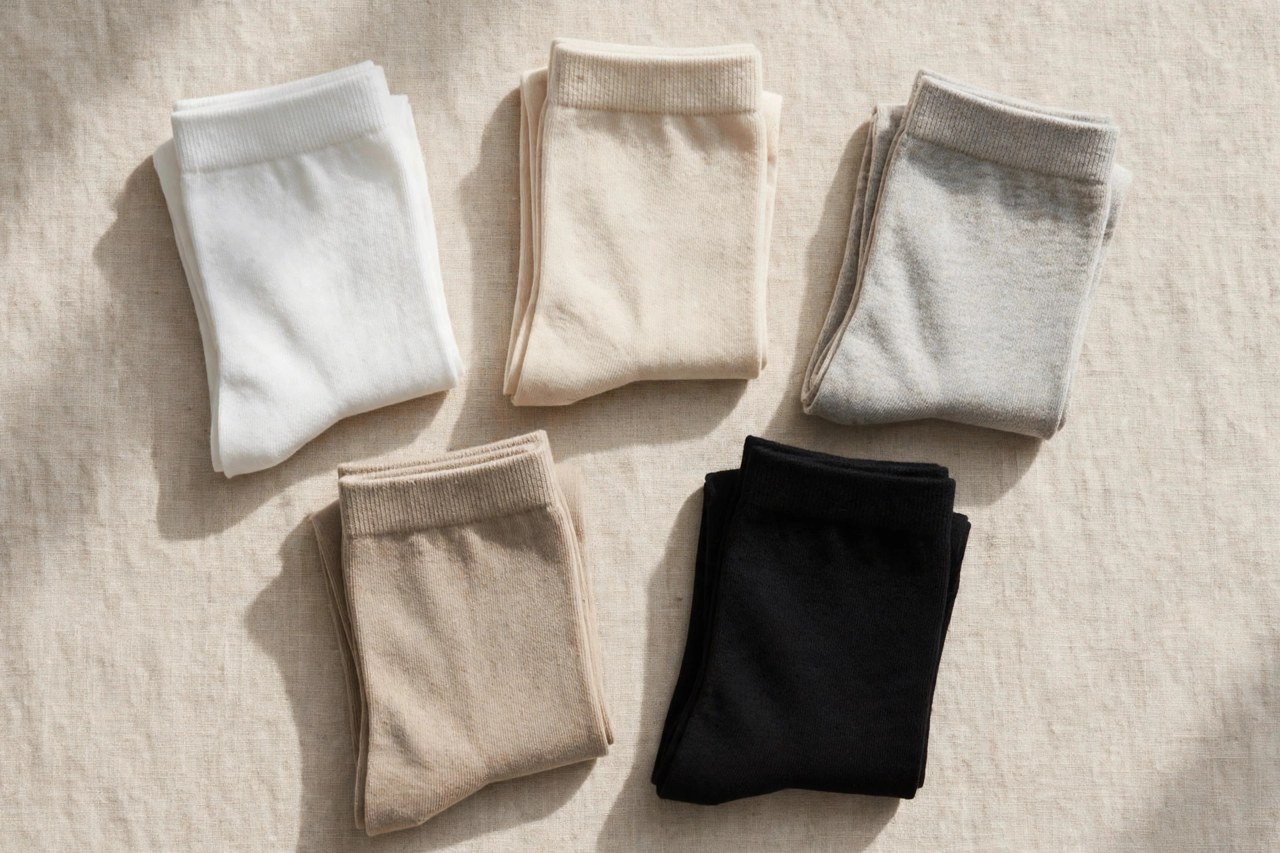
The crew sock is the default sock of the modern wardrobe: a mid-calf length that rises above the ankle and the top of most shoes and boots, ending below the calf's widest point. Women's cotton crew socks fill drawers by the multipack because they suit more days than any other style, under trousers, with boots, with sneakers, and around the house. Their construction is a study in useful basics: a ribbed cuff that stays up, a leg and foot knitted from cotton-rich yarn with nylon for durability and elastane for fit, and a choice of cushion levels that quietly changes what the sock is for. This guide separates the everyday crew from its sportier tennis cousin, explains combed and ringspun cotton in sock yarns, and covers the fit and care details that decide whether a crew sock stays up, stays smooth, and stays in rotation for years.
The Crew Blueprint: Cuff, Leg, Heel, and Toe
A crew sock is knitted as a shaped tube with four functional zones. The cuff at the top is ribbed, alternating raised and recessed columns of stitches that act like springs, gripping the leg gently so the sock stays at mid-calf without a tight elastic band. Below it, the leg may continue the rib for a classic look or switch to a smoother knit for dressier styles. The heel is a short-row pocket knitted into the tube so the sock bends with the foot instead of bunching at the ankle; a well-shaped heel pocket is the difference between a sock that stays planted and one that rotates or slides down into the shoe. The toe closes with a seam, ideally flat or hand-linked on better socks.
Cushion Levels: Dress, Half, and Full
Cushioning in a cotton crew comes from terry loops knitted into the sole, extra yarn that forms tiny loops on the inside face of the foot. A dress crew has no terry at all: a fine, flat knit that fits inside loafers and dress shoes and reads smooth under trousers. A half-cushion crew loops the sole only, leaving the top of the foot flat; this is the versatile everyday standard, comfortable in sneakers without adding bulk across the instep. A full-cushion crew loops sole, heel, and toe for maximum padding in work boots and long walking days, at the cost of a thicker sock that needs a roomier shoe. Match cushion to the shoe, not just to preference: cramming a full-cushion sock into a snug shoe compresses the loops flat, defeating the cushion and crowding the toes.
Cotton Yarns: Combed, Ringspun, and the Blend
Sock labels increasingly name the cotton type, and the terms mean something. Combed cotton has been brushed to remove short fibers, leaving longer, aligned fibers that spin into a smoother, stronger yarn with less pilling, the right choice for dress and everyday crews. Ringspun cotton is spun on ring frames that twist the fibers more fully, producing a softer, slightly loftier yarn common in casual crews. Carded, open-end cotton is the budget option, serviceable but quicker to pill. Pure cotton alone would bag and wear through at the heel, so nearly every crew blends in nylon, concentrated in the heel and toe, and a few percent elastane through the leg for recovery. A typical good everyday recipe is 70 to 80 percent cotton; a 100 percent cotton crew exists, but it stretches out by midday and needs a snug initial fit to compensate.
Everyday Crew Versus Tennis Sock
Crew and tennis socks share a length and a cotton heritage, and the pages sit side by side in this guide because shoppers compare them constantly. The everyday crew is built for duration and versatility: moderate cushion, a ribbed cuff tuned to stay up during ordinary movement, and a smooth enough knit to work with many shoe types. The tennis sock, covered on its own page, is built for impact: heavier targeted cushioning under the ball and heel, a firmer arch, and a thicker cotton knit meant for court shoes and lateral movement. In practice, plenty of wearers use a good half-cushion crew for casual sport and a tennis sock for long standing days; the distinction matters most at the extremes, dress shoes on one side and real court play on the other. Knowing which construction you are buying prevents a thin dress crew being asked to do an athlete's job, or a bulky sport sock stuffed into a loafer.
Fit, Sizing, and Care for Crews That Stay Up
Sock sizes follow shoe sizes in ranges, and the range boundaries matter: a foot at the top of a range gets a better fit from the next size up, since an overstretched sock thins at the heel and slides down more, not less. A crew that constantly sinks usually has tired cuff elastane, a too-large size, or a leg knit that has lost recovery from hot drying. Wash crews inside out in warm water, which cleans the terry loops where odor collects, and tumble dry on low or air dry to protect elastane; consistently hot cycles are the main reason multipack crews give up within a year. Replace crews when the sole terry mats flat or the heel thins to a shine; a worn-through sock costs more in discomfort than a fresh pair costs at the till.
Related Women's Cotton Guides
More to Explore on Apparel Search
- Apparel
- benefits of cotton
- black socks
- blue socks
- brown socks
- Clothes
- Cotton
- Cotton Definition
- Cotton News
- green socks
- orange socks
- Organic Cotton
- pink socks
- purple socks
- red socks
- tan socks
- white socks
- Women's Clothes
- Women's Cotton Clothing
- Women's Crew Socks
- Women's Fashion
- women's silk socks
- Women's Socks
- yellow socks
Photos

Looking for Women's Clothing Stores?
This guide helps you choose women's cotton crew socks by cushion level and yarn. To browse where to buy, visit our women's clothing store directory, where you can find retailers that carry them.