Organic Cotton
Fiber Definitions — cotton grown without pesticides or genetic modification from Apparel Search
Search Apparel Search
At a Glance
Definition: Organic cotton is cotton grown without pesticides from plants that are not genetically modified, with crop rotation and biological pest control used instead of agrochemicals and artificial fertilisers.
Category: Fiber Definitions
Organic cotton is cotton grown without pesticides from plants that are not genetically modified. The definition is about how the crop is raised, not about a different fiber: conventional cotton production uses more chemicals per unit area than any other crop and accounts in total for 16 percent of the world's pesticides, and organic growing answers that record by replacing agrochemicals and artificial fertilisers with crop rotation, and pesticides with biological pest control. Because a shopper cannot tell the growing method from the cloth, certification schemes such as GOTS Certification exist to verify that a finished garment's fiber was actually grown and processed to an organic standard.
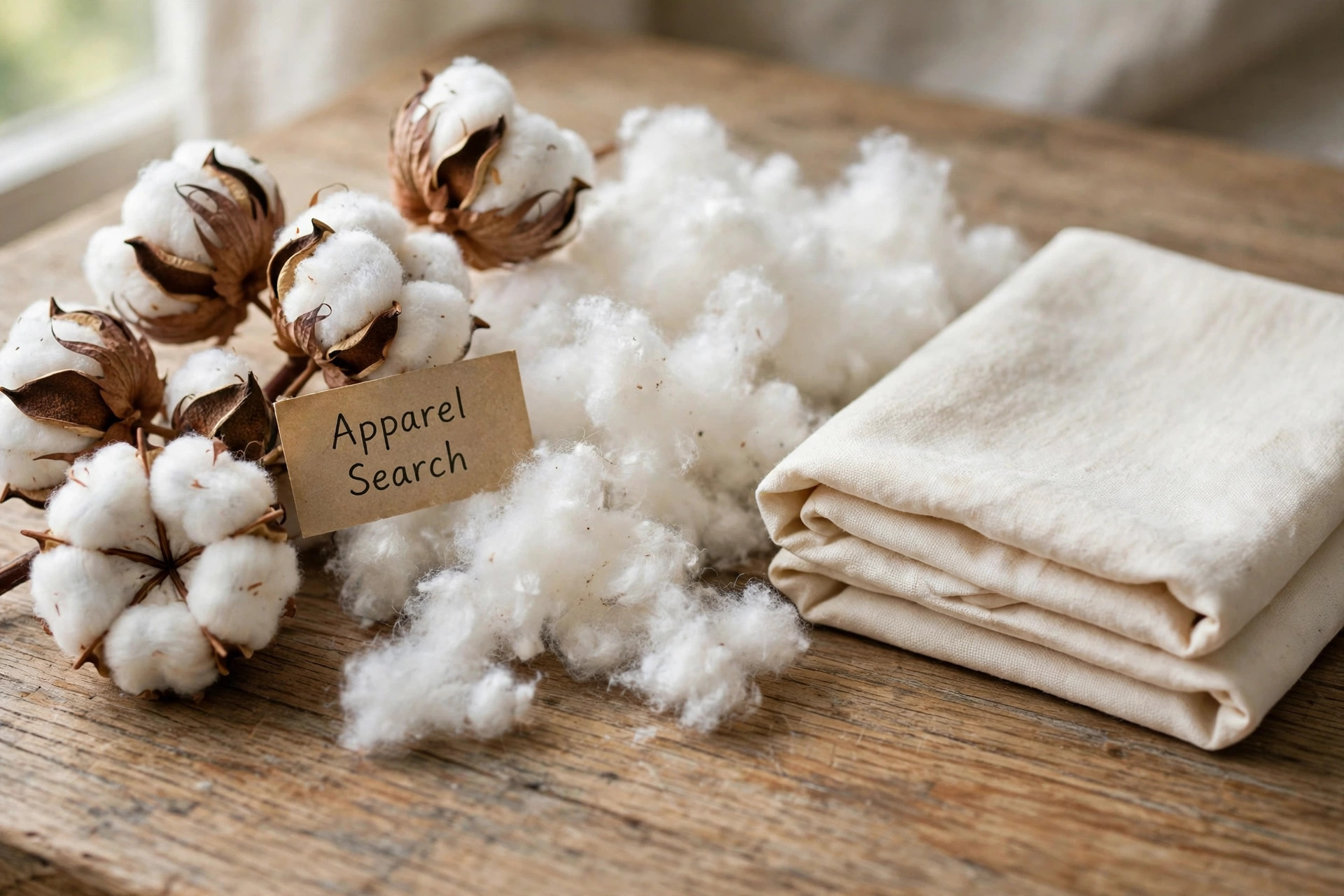
How Organic Cotton Is Grown
Organic agriculture works with system methods rather than product substitutions. Crop rotation maintains soil fertility instead of artificial fertilisers, and biological pest control — encouraging the insects and organisms that prey on cotton pests — replaces sprayed pesticides. Because the plants are not genetically modified, seed saving and traditional breeding remain part of the system, and the crop is kept separate and certifiable through the supply chain. Garments made from the fiber are covered by the Organic Clothing Definition, and the wider approach is set out under Sustainable Fashion.
The Conventional Crop It Answers
The argument for organic growing starts with the chemical load of the conventional crop. High levels of agrochemicals are used in the production of non-organic, conventional cotton, which uses more chemicals per unit area than any other crop and accounts in total for 16 percent of the world's pesticides while occupying a far smaller share of farmland. The chemicals used in the processing of cotton also pollute the air and surface waters, and residual chemicals may irritate consumers' skin — one reason organic cotton found an early market in baby clothing, underwear and other garments worn close to the body. On the measures its supporters track, organic cotton has less environmental impact than conventional cotton.
The Counter-Argument and the Price Question
Critics of organic farming in general point out that genetic modification of crops can itself have environmental benefits. Crops can be engineered to have higher yields, allowing smaller plots to be dedicated to farming, and engineering can reduce a crop's reliance on pesticides, making engineered plants potentially more suitable for no-pesticide techniques than conventional varieties. That debate is part of why organic cotton remains a premium niche rather than the default: it costs more to produce, yields and land use enter the comparison, and the shopper ultimately decides whether the growing method justifies the price difference on the label. For the fiber itself, nothing changes in the spinning mill — organic cotton is still cotton, with the same softness, absorbency and dye behaviour as the conventional fiber in finished fabric, which is why the distinction lives in farming practice and certification rather than in the hand of the cloth.
Common Questions
What makes cotton organic?
Organic cotton is grown without pesticides from plants that are not genetically modified. Organic agriculture uses crop rotation instead of agrochemicals and artificial fertilisers, and biological pest control instead of pesticides.
Why does conventional cotton draw criticism?
High levels of agrochemicals are used in its production: cotton uses more chemicals per unit area than any other crop and accounts for 16 percent of the world's pesticides. Processing chemicals also pollute the air and surface waters, and residual chemicals may irritate consumers' skin.
Why does organic cotton cost more?
It costs more to produce. Growing without synthetic pesticides and fertilisers, and keeping the crop separate and certifiable through the supply chain, adds cost at every stage.
Does organic cotton feel different from conventional cotton?
No. Organic cotton is still cotton, with the same softness, absorbency and dye behaviour as the conventional fiber; the distinction lies in farming practice and certification, not in the hand of the finished cloth.