Women's Organic Fashion Guide
Organic fashion is where the certified fiber meets design: the labels, silhouettes and slow-fashion thinking that turned organic clothing from a worthy niche into a style of its own.
Shop Women's Organic Fashion Now
Shop Women's Organic Fashion on Amazon Shop Women's Organic Fashion on eBayThe Amazon and eBay links on this page are affiliate links. If you make a purchase through them, Apparel Search may earn a commission.
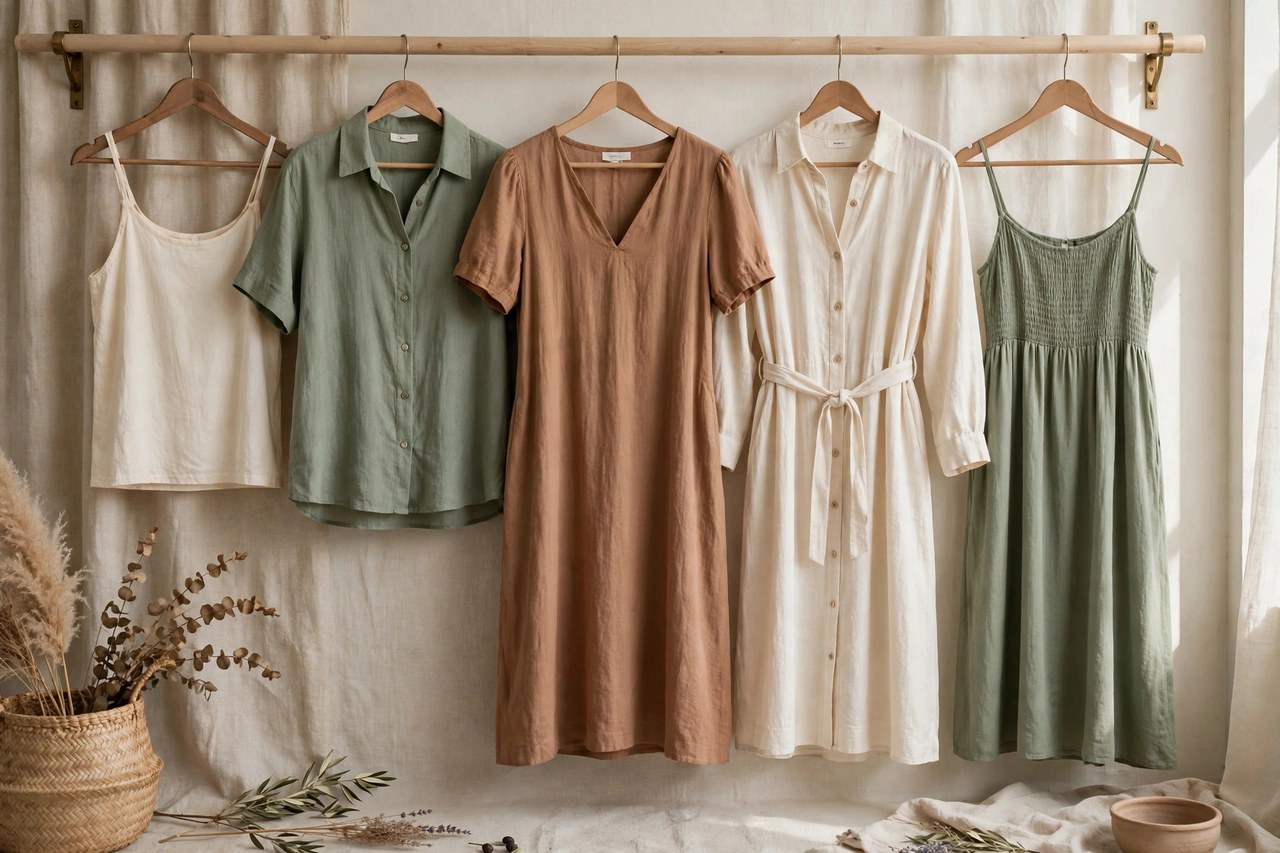
Organic fashion begins where our organic clothing guide ends. That guide covers the fiber and its certifications; this one covers what designers did with it. From the 1990s onward, a generation of labels set out to prove that clothing grown without synthetic chemicals did not have to look like a sack in three shades of beige. They were working against a real stereotype — early eco-clothing was earnest, shapeless and proud of it — and their answer defines the category today: organic fiber cut with the same ambition as any other fashion fabric.
The result is a recognizable style language: natural and garment-dyed colors, relaxed but deliberate silhouettes, visible texture (slub cotton, raw linen, undyed wool), and design that ages slowly on purpose. This guide maps that language, the fibers beyond cotton that the movement works in, and how to dress organically without surrendering either fit or personality.
The Organic Fashion Fibers
Organic cotton is the foundation, but the fashion end of the category works in a wider palette. Organic linen, from flax grown with minimal inputs even in conventional form, gives the crisp, breathable shirting and summer dresses at the movement's core. Organic wool comes from sheep raised on organic feed without synthetic hormone or pesticide treatments, and appears in the knitwear and tailoring of the premium labels. Hemp, naturally pest-resistant and usually grown with few chemicals even when not formally certified, supplies the durable canvas-like fabrics. Peace silk and organic silk serve the dressy end, and natural dyes — madder, indigo, weld, mineral pigments — color the most committed collections, with the softer, slightly variable tones that have become an organic signature.
Styling follows the fibers. Organic fashion's color card runs from undyed ecru through plant-dyed indigo, madder rose, sage and clay, with black achieved by low-impact dyes where brands allow them. Silhouettes favor ease: shirt dresses, wide trousers, unstructured jackets, wrap tops and knit sets — garments designed to be worn hard for years, which is itself the movement's central fashion claim: the most sustainable garment is the one that stays in the wardrobe.
Slow Fashion and the Labels
Organic fashion is the fiber wing of slow fashion: fewer pieces, better made, transparently sourced, designed against the trend cycle rather than for it. Its labels typically publish their certifications (GOTS above all), their factories, and their fiber percentages, and they design in permanent collections refined season to season instead of replaced. When evaluating an organic fashion brand, that transparency is the test: a label that names its standard, its certifier and its fiber content on every garment page is practicing the movement; a label with a leaf logo and no paperwork is borrowing its clothes.
Price in this category buys three things at once: the organic fiber premium, smaller production runs, and better construction intended for a long life. Judge it on cost per wear and on whether the design is genuinely timeless or merely plain — the distinction shows in the details: a considered neckline, a pocket placed where a hand falls, a hem finished to be let down. Organic fashion at its best is not a compromise aesthetic; it is a wardrobe of fewer, better, fully-traceable pieces.
Building an Organic Wardrobe With Style
Start with the silhouette you already love, in organic cloth. The organic versions of classic pieces — the white shirt, the wrap dress, the straight trouser, the Breton top — are the movement's strength, because the designs are proven and the fiber is the upgrade. Add texture deliberately (a slub-cotton tee, a raw-linen blazer) since texture is what keeps a natural palette from reading as bland, and use the plant-dyed colors as your neutrals: indigo, ecru and sage combine with nearly everything you already own.
Keep two habits from the clothing guide. First, check the certification on fashion pieces too — style does not exempt a garment from paperwork, and GOTS appears on designer labels as readily as on basics. Second, care gently: cold washes and line drying suit natural fibers and natural dyes alike, and they preserve exactly the soft, lived-in hand that makes organic fashion feel different from the rail next to it. The wardrobe that results is small, calm and entirely yours — which was the movement's promise from the start.
Related Women's Guides
More to Explore on Apparel Search
- Women's Organic Cotton Activewear
- Women's Organic Cotton Apparel
- Women's Organic Cotton Athleticwear
- Women's Organic Cotton Clothing
- Women's Organic Cotton Fashion
- Women's Organic Cotton Loungewear
- Women's Organic Cotton Pajamas
- Women's Organic Cotton Pants
- Women's Organic Cotton Shorts
- Women's Organic Cotton Sleepwear
- Women's Organic Cotton Socks
- Women's Organic Cotton Sportswear
- Women's Organic Cotton Sweaters
- Women's Organic Cotton Tees
- Women's Organic Cotton T-shirts
- Women's Organic Cotton Underwear
- Women's Organic Cotton Womenswear
- Going Green
- Organic Clothing Retailers
- Organic Clothing Wholesalers
- Organic Information Portals, Associations and Guides
Looking for Women's Clothing Stores?
This guide helps you choose women's organic fashion. To browse where to buy, visit our women's clothing store directory, where you can find retailers that carry them.