Women's Organic Clothing Guide
Organic clothing is clothing made from fibers grown without synthetic pesticides or fertilizers — and the word only means something when a certification stands behind it.
Shop Women's Organic Clothing Now
Shop Women's Organic Clothing on Amazon Shop Women's Organic Clothing on eBayThe Amazon and eBay links on this page are affiliate links. If you make a purchase through them, Apparel Search may earn a commission.
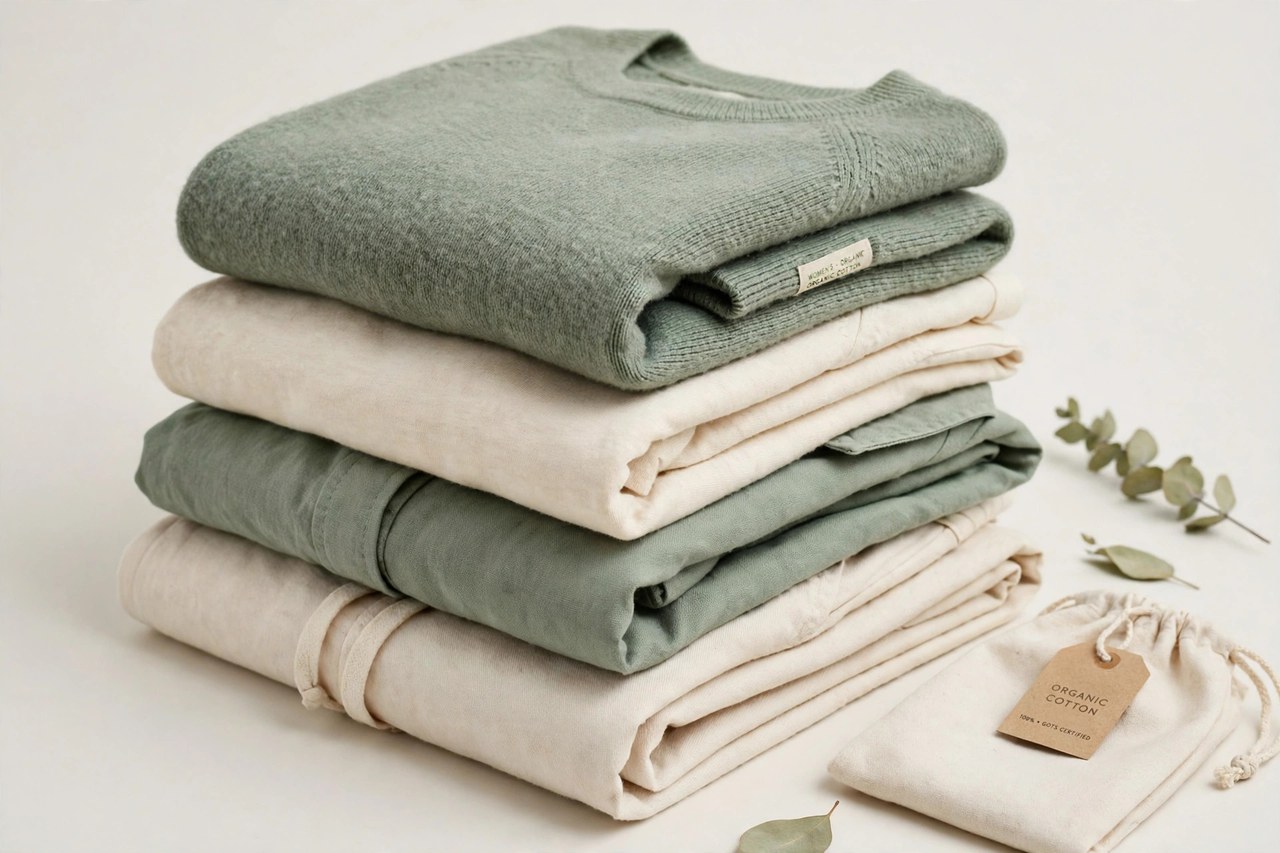
Organic clothing starts in the field, not the factory. A fiber is organic when the plant (or the feed and pasture behind an animal fiber) was grown or raised under certified organic agriculture: no synthetic pesticides, no synthetic fertilizers, no genetically modified seed for crops such as cotton, and farming practices that build soil rather than deplete it. Cotton is the dominant organic apparel fiber by a wide margin, because conventional cotton is one of the most chemical-intensive crops in the world — which is why ‘organic clothing’ in most shops means, first of all, organic cotton clothing.
This guide is the product guide to the category: what the certifications actually guarantee, how organic garments differ from conventional ones in wear, what they cost and why, and how to build an organic wardrobe sensibly. Our companion page on organic fashion (linked below) takes the wider view — the style movement and the brands. Here, the subject is the garment and its label.
Certifications: GOTS, OCS and the Words That Matter
Two certifications do most of the honest work in this category. GOTS (the Global Organic Textile Standard) is the strictest: it certifies the whole chain from fiber to finished garment, requires a high percentage of certified organic fiber, and restricts dyes and chemical finishes at the processing stage as well — a GOTS ‘organic’ label requires at least 95 percent certified organic fiber. OCS (the Organic Content Standard) verifies the organic fiber content and its chain of custody, without GOTS's processing rules; OCS ‘blended’ labels appear on garments mixing organic and conventional fiber.
Learn to read the label the way you would a food label. ‘Made with organic cotton’ without a certification logo may mean a small percentage. ‘Organic’ on a hangtag alone, with no certifier named, is marketing, not verification. The reliable form is a certification logo plus a license number you can check. Note also what organic does not certify: it governs the fiber's growing and (under GOTS) its processing, not the garment's cut, quality or durability — a badly made organic tee is still a badly made tee, which is why construction checks still apply.
Wearing Organic: Feel, Cost and Where It Counts
In the hand, good organic cotton often feels slightly softer and less chemically finished than its conventional equivalent, because GOTS processing limits the harsh softeners and formaldehyde-based easy-care resins used on conventional garments. That matters most in the categories worn against the skin and washed often: t-shirts and basics, underwear-adjacent layers, sleepwear, and baby-adjacent clothing women buy for sensitive skin. It matters least, practically, in a structured coat worn over everything. Spend the organic premium where the fabric touches you and where the garment will be washed fifty times.
The premium is real and has honest causes: organic yields are lower, certification and segregated processing cost money, and the supply chain is smaller. Expect organic basics to cost noticeably more than fast-fashion equivalents and roughly in line with good conventional mid-market clothing. The value calculation improves with cost-per-wear: an organic tee in a substantial knit that survives years of washing beats three cheap tees on every measure including price. Check the same quality markers as any garment — fabric weight, seam finishing, shrinkage behavior — because organic fiber deserves, and rewards, good making.
Care and Building the Wardrobe
Care for organic clothing is conventional gentle care: wash cold with a mild detergent, skip chlorine bleach (which most organic makers prohibit in processing and which ruins the point at home), and line dry or tumble low. Garments made without synthetic easy-care finishes may wrinkle a little more and soften a little more with washing — most wearers count both as features. Undyed and naturally colored organic pieces (the cream, sage and clay tones cotton grows in) fade least of all and age the most gracefully.
Build the wardrobe by replacement, not by purge. When a basic wears out, replace it with the certified organic version; within a couple of years the everyday layer of your wardrobe — the tees, underlayers and sleepwear that do the most skin time and the most laundry cycles — becomes organic without a single dramatic purchase. Keep the certification habit as you go: logo, standard, license number. In a category where the claim is invisible in the finished garment, the paperwork is the product.
Related Women's Guides
More to Explore on Apparel Search
Looking for Women's Clothing Stores?
This guide helps you choose women's organic clothing. To browse where to buy, visit our women's clothing store directory, where you can find retailers that carry them.