Women's Organic Cotton Loungewear Guide
Certified organic cotton made for hours at home — soft jersey, French terry and woven sets that stay gentle against skin all day.
Shop Women's Organic Cotton Loungewear Now
Shop Women's Organic Cotton Loungewear on Amazon Shop Women's Organic Cotton Loungewear on eBayThe Amazon and eBay links on this page are affiliate links. If you make a purchase through them, Apparel Search may earn a commission.
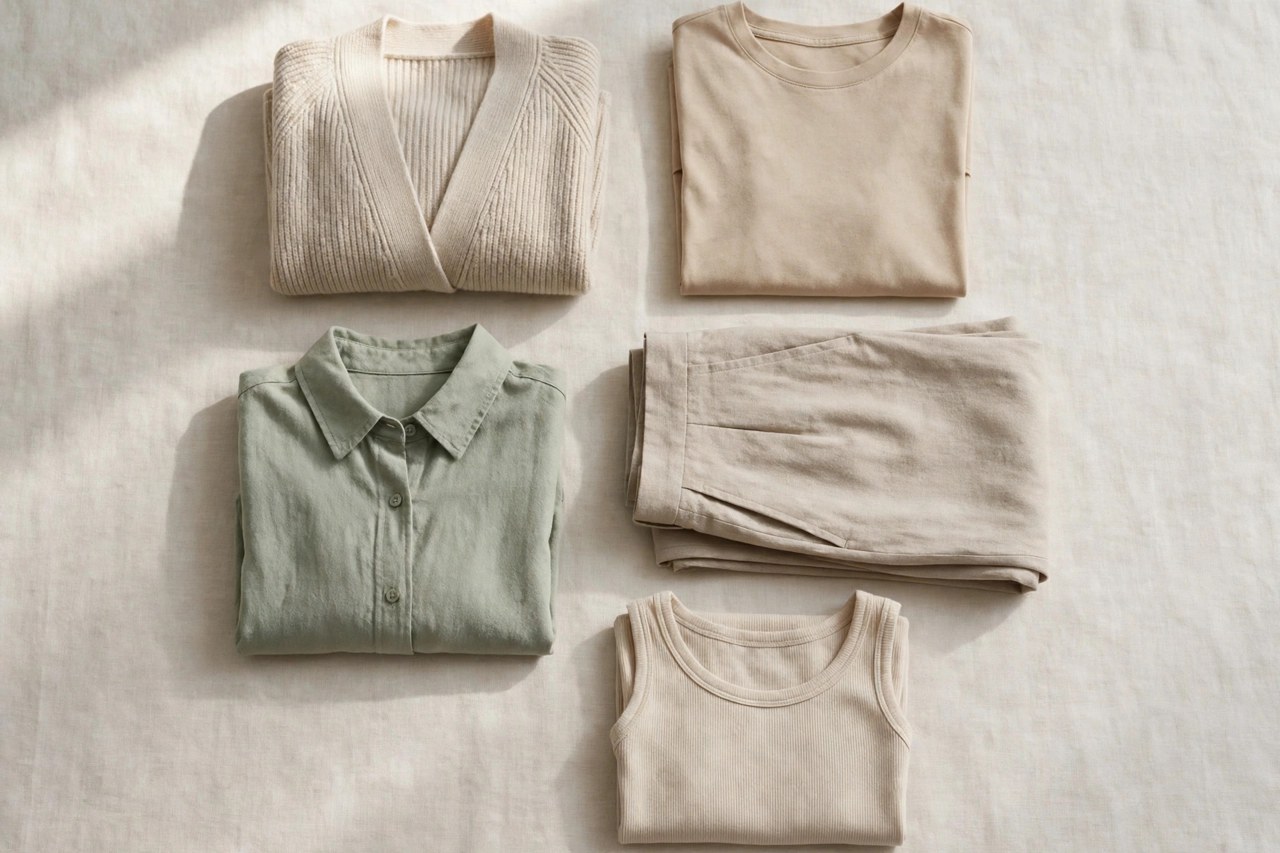
Organic cotton loungewear is clothing designed for time at home — relaxed tops, pull-on pants, shorts and coordinated sets — made from cotton grown without synthetic pesticides or genetically modified seed and processed under rules that limit harsh chemical finishes. The home-comfort case is straightforward: loungewear is worn for long, unbroken stretches, often straight after a shower or while resting, so the fabric spends more hours in direct skin contact than almost any day outfit. Certified organic jersey and French terry feel notably soft because the fibers have not been stripped by aggressive scouring and because reputable makers avoid formaldehyde-based wrinkle finishes and heavy silicone softeners. This guide explains what the certifications actually guarantee, why the price runs higher, where the environmental story is genuinely better and where it is more complicated, and how to choose weights and fits that suit the way you actually live at home.
What GOTS Certification Means for Loungewear
The most meaningful label is GOTS, the Global Organic Textile Standard. A garment marked GOTS-certified organic must contain at least 95 percent certified organic fibers, and the certification follows the cloth through dyeing, printing and finishing, restricting toxic chemicals, requiring wastewater treatment and setting basic labor standards. A weaker claim such as made with organic cotton may mean only part of the fiber is organic, blended with conventional cotton or synthetics. Look for a license number on the label and check whether certification covers the whole garment or only the fiber. For loungewear, garment-level certification matters most, because home clothes are usually undyed-soft or lightly dyed, worn loose, and washed often — exactly the conditions where finish chemistry and colorfastness show their quality over time.
Fabrics and Weights for Hours of Comfort
Most organic loungewear uses three cloth families. Single jersey, around 150 to 200 grams per square metre, makes breathable tees, tanks and lightweight lounge pants for warm homes. Interlock jersey is thicker and smoother on both faces, resists curling at the edges and suits cooler evenings. French terry loops inside for gentle insulation without the bulk of fleece, while brushed organic fleece appears in winter sets. Woven organic poplin and double gauze show up in relaxed shirts and wide-leg pants with a crisper, airier feel. Whatever the cloth, expect slight shrinkage on the first wash — typically two to four percent — because organic lines often skip harsh anti-shrink resins. Sizing a touch relaxed accounts for that settling and matches the category: lounge fit should skim, allow a full stride and a cross-legged sit, and never rely on tight elastic to stay comfortable.
Why Certified Loungewear Costs More
The premium has traceable causes rather than a mystery markup. Organic cotton yields are generally lower than conventional yields, the seed and approved inputs cost more, and farms carry certification and inspection fees. Segregating organic fiber through ginning, spinning and dyeing — so it never mixes with conventional stock — adds handling costs at every stage, and GOTS-approved dye houses charge more than unrestricted ones. Loungewear also uses generous yardage: wide legs, long tops and matching sets consume more cloth than a fitted tee. None of that guarantees a better garment by itself, so judge construction as you would any purchase: even stitching, waistbands that recover after stretching, drawstrings that actually function, and seams finished smoothly enough for bare skin. Paying more should buy softness, durability and verified standards together, not a logo alone.
Honest Environmental Trade-Offs
Organic farming removes synthetic pesticides and fertilizers from the field, which benefits farmworkers, soil organisms and local waterways, and that is a real advantage worth valuing. The fuller picture is more mixed. Organic cotton often needs more land per bale because yields are lower, and cotton of any kind is a thirsty crop in dry regions, so an organic label does not by itself promise low water use. Dyeing and finishing still consume energy and water, although GOTS rules reduce the most harmful chemistry. The strongest environmental choice is usually longevity: a well-made lounge set worn for years and washed cool beats a cheap set replaced each season, whatever its fiber claim. Treat organic certification as one verified chapter of the story — cleaner inputs and regulated processing — rather than a claim that the garment has no footprint at all.
Care That Keeps Organic Cotton Soft
Wash organic loungewear in cool or warm water with a mild detergent, and skip chlorine bleach, which weakens cotton fibers and can yellow undyed natural shades. Fabric softener is best used sparingly: heavy coatings flatten terry loops and reduce absorbency, while the natural softness of long organic fibers improves through the first several washes on its own. Tumble dry on low or line dry where possible, since high heat accelerates shrinkage and fades plant-based dyes faster than conventional dye systems. Store sets folded rather than hung, because jersey knits stretch under their own weight on hangers. Small habits — washing full loads, repairing a loose drawstring promptly, rotating two sets instead of laundering one relentlessly — keep certified loungewear comfortable and presentable for the long service life that justifies its price.
Looking for Women's Clothing Stores?
This guide helps you choose women's organic cotton loungewear for certified home comfort. To browse where to buy, visit our women's clothing store directory, where you can find retailers that carry them.