Women's Organic Cotton Underwear Guide
Everyday briefs, bikinis and shorts styles in certified organic cotton — the skin-contact case for regulated fiber, dyes and finishes, stated plainly.
Shop Women's Organic Cotton Underwear Now
Shop Women's Organic Cotton Underwear on Amazon Shop Women's Organic Cotton Underwear on eBayThe Amazon and eBay links on this page are affiliate links. If you make a purchase through them, Apparel Search may earn a commission.
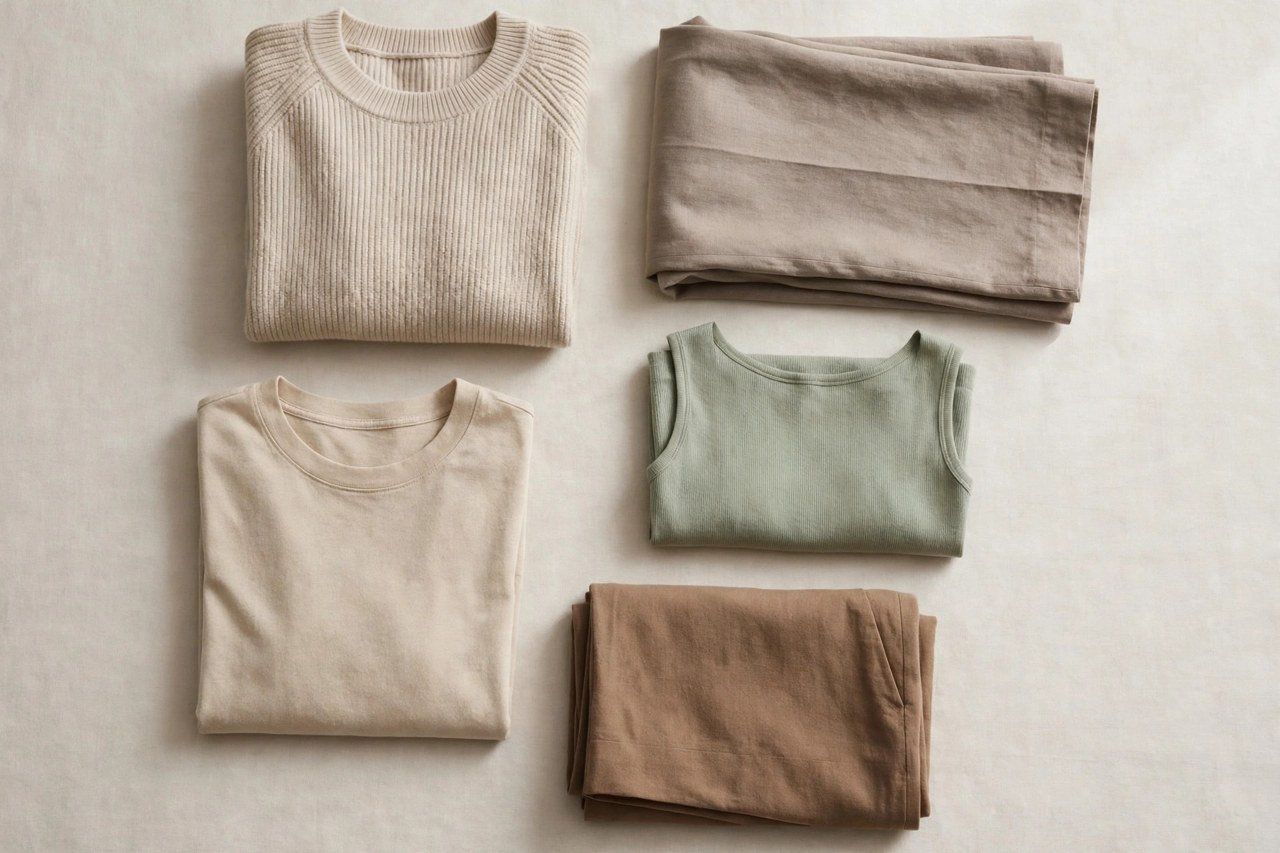
Organic cotton underwear is the skin-contact case for certified fiber in its simplest form: basic briefs, bikini briefs, hipsters, boy-short styles and high-waist cuts knitted or sewn from cotton grown without synthetic pesticides or genetically modified seed, and — in the strongest products — certified at garment level so that dyes, prints and finishes are regulated as well as the fiber. This guide keeps a strictly product focus: cuts, fabrics, waistband and leg construction, sizing, multipack value and care. Underwear sits against the skin all day, is worn closest and washed most often of any garment, and is usually bought in plain, undyed or lightly dyed form — which is exactly where certified organic cotton's documented differences, in farming inputs and processing chemistry, are most relevant and easiest to verify on a label.
Why Skin-Contact Basics Lead the Organic Wardrobe
If a wardrobe converts to organic one category at a time, underwear is the rational first step, and the reasons are concrete. The garments cover sensitive skin for the longest continuous hours, they are inexpensive enough per piece that the certification premium stays modest in cash terms, and they wear out on a predictable cycle, so replacements steadily convert a drawer without discarding usable clothing. Garment-level standards such as GOTS ban formaldehyde-based finishes and restrict dye chemistry on the finished product, while the cotton itself is grown without the synthetic pesticide load of conventional cultivation. Many organic ranges also favor undyed natural shades and flat, tagless construction, which reduce surface variables against the skin. The claim stays proportionate: verified cleaner inputs and cotton's familiar breathability, not a medical effect.
Fabrics, Gussets and the Elastane Rules
Most organic underwear uses single jersey or rib-knit cotton, sometimes interlock for a smoother, more opaque brief. The crotch gusset is conventionally lined in the same cotton, and straightforward product listings state the gusset composition explicitly — a detail worth checking, since the gusset is the highest-contact panel in the garment. Pure cotton has no recovery, so nearly every style adds elastane, commonly two to ten percent depending on how fitted the cut is, plus elastic at waist and leg openings. Certification accommodates this honestly: GOTS permits a limited share of additional fibers where function requires them, with its top grade requiring at least 95 percent certified organic fiber overall, so a brief described as 95 percent organic cotton and 5 percent elastane can carry a full certification while a stretchier style may sit under a made-with grade. Read the composition line rather than the headline, prefer the highest organic share that still fits and stays in place, and expect elastic components to sit outside the fiber percentage on any brand's label.
Cuts, Waistbands and Fit Without Fuss
The standard cuts cover the same range as conventional underwear. Full briefs give the highest rise and most coverage; bikini briefs sit lower with narrower sides; hipsters split the difference with a squared leg line; boy-short styles extend down the thigh in a longer leg; high-waist versions echo the full brief with a more defined waistband. Fit rules are simple and fiber-neutral: waist and leg elastic should hold the garment smoothly without digging, the gusset should sit flat and fully in place, and seams should lie smooth under the clothing you wear most. Cotton jersey softens and relaxes slightly with wear and washing, so a neat, comfortable fit when new is correct, and a fit that depends on tight elastic usually signals a size too small.
Price, Multipacks and Honest Trade-Offs
Organic underwear costs more per pair than conventional multipack basics, for the same accumulated reasons as other certified staples: pricier lower-yield fiber, segregation through spinning and knitting, approved dyes, inspection fees and smaller production runs. Multipacks narrow the gap considerably and are how most shoppers buy the category sensibly. The trade-offs deserve the same plain statement as elsewhere in this guide: organic farming removes synthetic pesticides and fertilizers and garment certification restricts processing chemistry, but cotton remains a water-intensive crop in dry regions and lower yields can mean more land per garment. Durability is the variable you control most: elastics, not cotton, usually end an underwear garment's life, so a pair whose waistband survives two years of washing delivers better value and lower impact than a cheaper pair replaced twice.
Washing, Rotation and When to Replace
Underwear is washed more than any other clothing, so a simple, repeatable routine matters. Machine wash in warm water with a mild detergent, skip chlorine bleach, which weakens both cotton and elastic, and tumble dry low or line dry — repeated high heat is the fastest way to exhaust waistband elastic and fade natural dyes. Wash new pieces before first wear, as with any next-to-skin garment, and wash darker shades with like colors initially. Rotation extends life more than any product: a drawer of seven to ten pairs, each rested between wears, outlasts a minimal set washed relentlessly, and identical multipack pairs keep rotation simple. Managed this way, certified organic basics deliver steady, unremarkable comfort — which is precisely what underwear is for — and the verified standards behind them remain a quiet, sensible bonus on every wear.
More to Explore on Apparel Search
Photos

Looking for Women's Clothing Stores?
This guide helps you choose women's organic cotton underwear as certified skin-contact basics. To browse where to buy, visit our women's clothing store directory, where you can find retailers that carry them.